ESOL Tutor Resume Example
A graduate ESOL tutor resume example with EFL teaching practice, CELTA, and multilingual classroom experience. See how to present your qualifications for ESOL teaching roles.

Laddro Team
Free to use. No account needed to start.
Free to use. No account needed to start.
Overview
ESOL (English for Speakers of Other Languages) tutoring in the UK is different from teaching EFL abroad. Learners are often refugees, asylum seekers, or settled migrants who need functional English for daily life, work, and integration. Employers in further education colleges and community organisations want to see that you understand this context, not just that you can teach grammar.
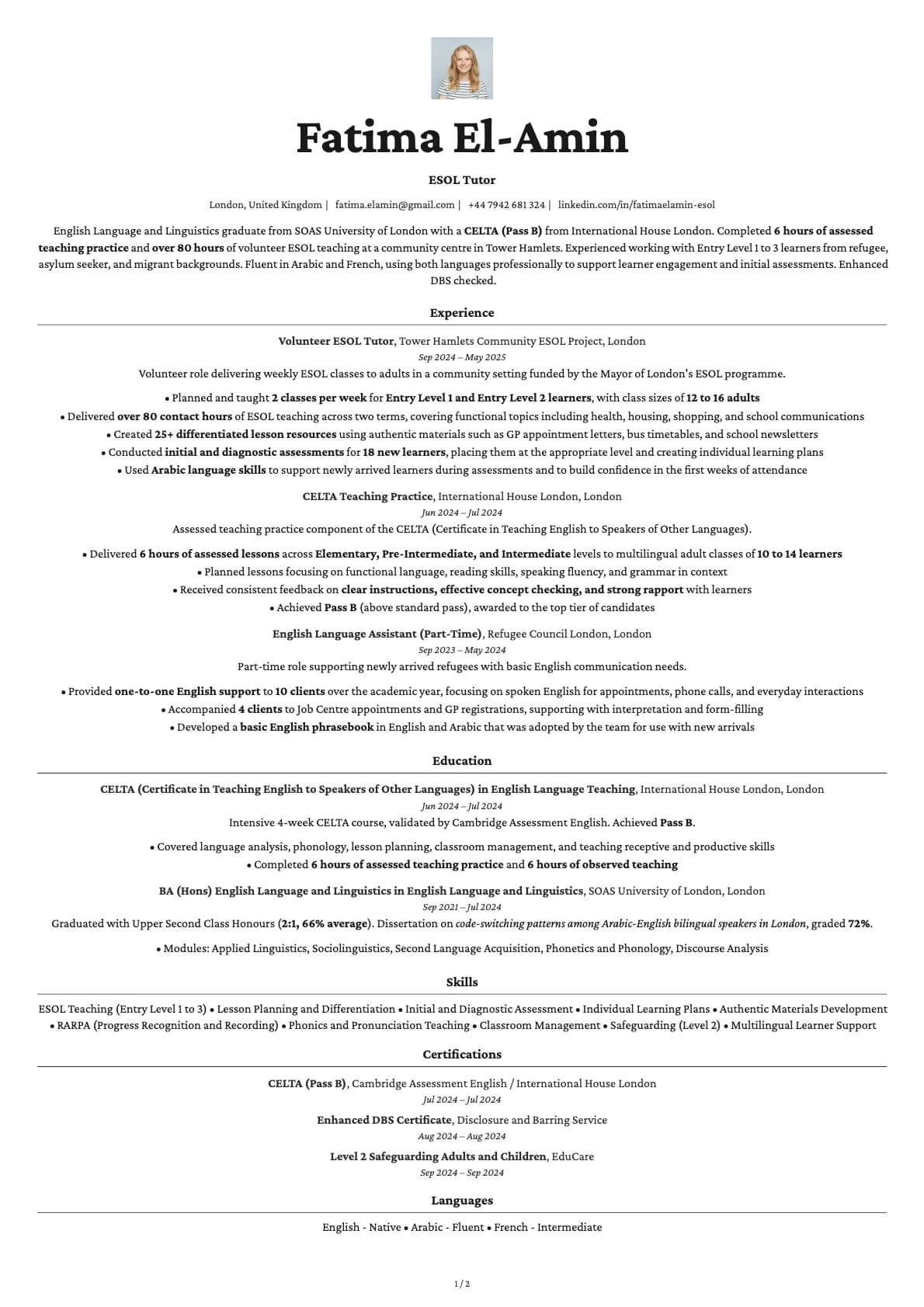
Fatima El-Amin completed a BA in English Language and Linguistics at SOAS University of London, followed by CELTA at International House London. She has teaching practice hours from both the CELTA course and a volunteer placement at a community ESOL centre, and she speaks Arabic and French alongside English. Her resume works because it connects her linguistic knowledge, her teaching skills, and her understanding of the learner population.
What Makes This Resume Work
Teaching practice is detailed, not vague. Fatima describes her CELTA teaching practice as 6 hours of assessed teaching across Entry Level 1, 2, and 3 learners, specifying class sizes and lesson focus areas. She does the same for her community placement, describing lesson plans, resources she created, and learner progress.
The learner context is clear. She names the backgrounds of her learners (refugees, asylum seekers, newly arrived migrants) and the functional contexts she taught in (health appointments, school communications, job applications). This tells an employer she understands ESOL in the UK, not just English teaching in general.
Multilingualism is positioned as a professional asset. Rather than just listing Arabic and French in a skills section, Fatima explains how she used her Arabic to support learners during initial assessments and to build trust with new arrivals. In ESOL, this is a genuine professional advantage.
Key Takeaways
For ESOL tutor applications, lead with your teaching qualification (CELTA, CertTESOL, or Level 5 Diploma in Teaching English) and your teaching practice hours. Describe the levels you taught, the class sizes, and the contexts you covered. If you speak community languages, explain how you used them professionally. Mention any experience with initial assessment, individual learning plans, and RARPA (Recognising and Recording Progress and Achievement), as these are standard in funded ESOL provision.
Build your own version
Open this layout in the builder and swap in your own details. It takes a few minutes.
Free to use. No account needed to start.
Was this resume example helpful?
Rate this example to help us create better content for you.
4.8 average from 104 ratingsRelated resume examples
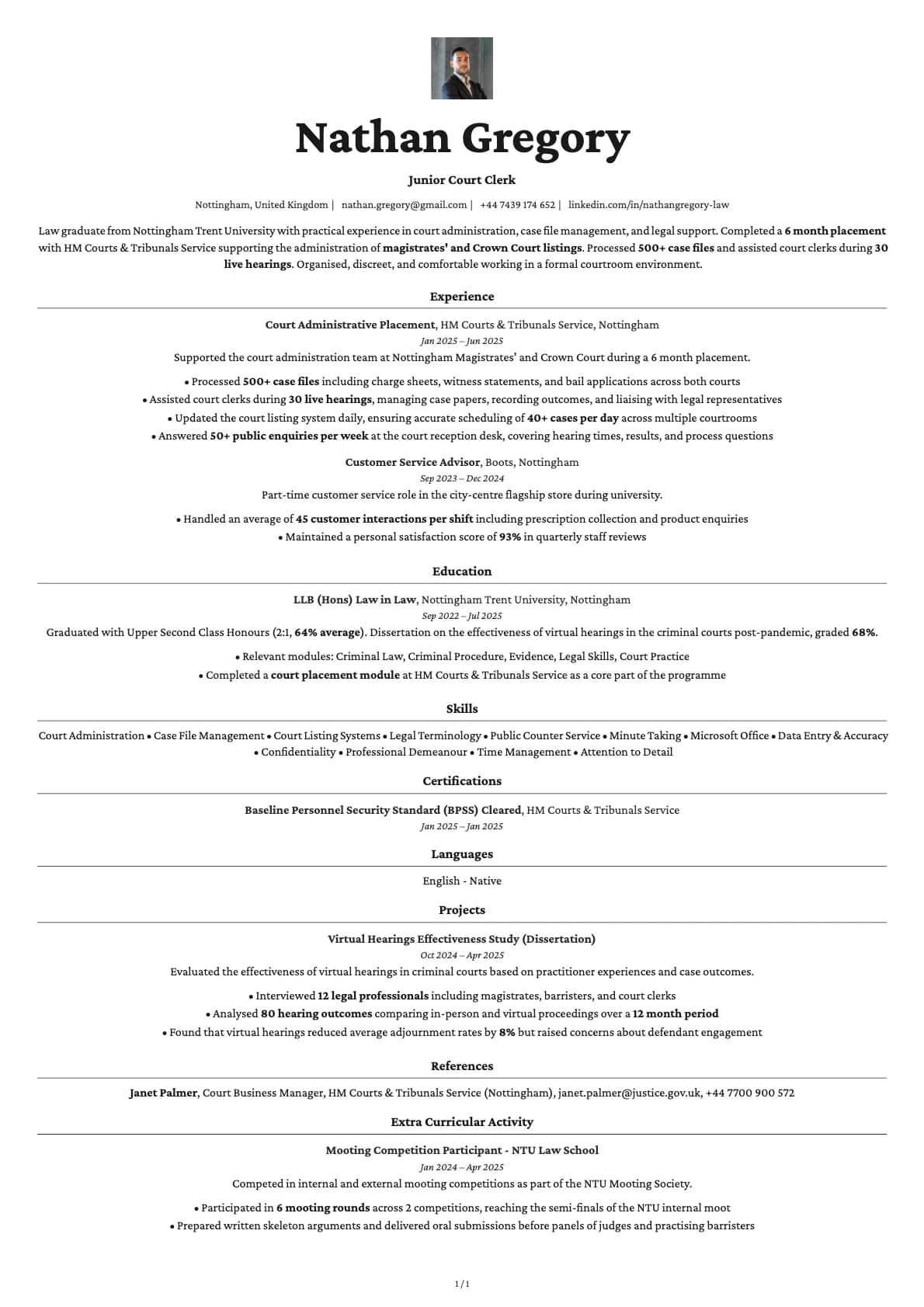
Junior Court Clerk
A junior court clerk resume example for law graduates. See how to present court administration experience, case file management, and HMCTS placement work to land your first court clerk role.
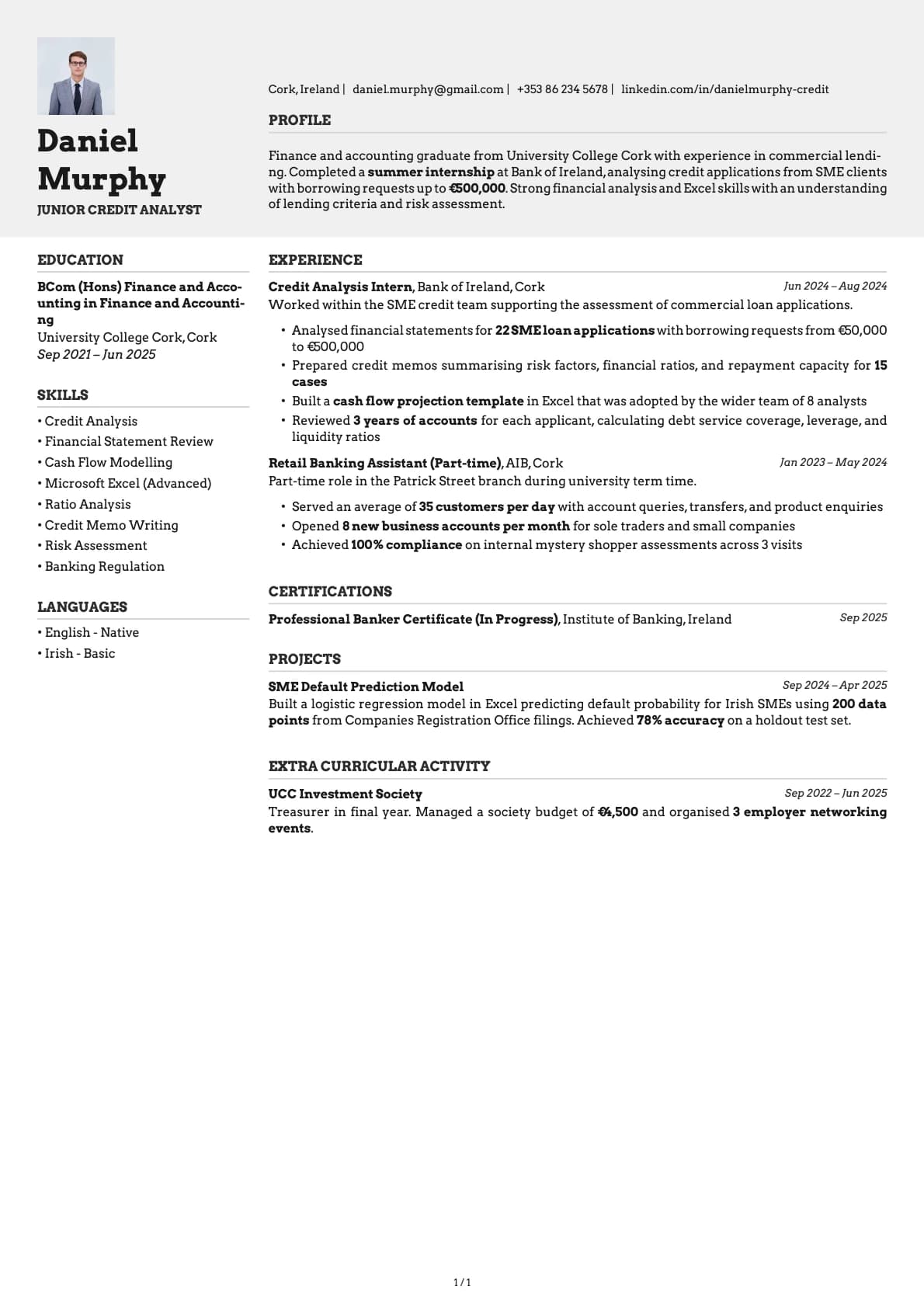
Junior Credit Analyst
A junior credit analyst resume example with Bank of Ireland internship experience and financial analysis skills.
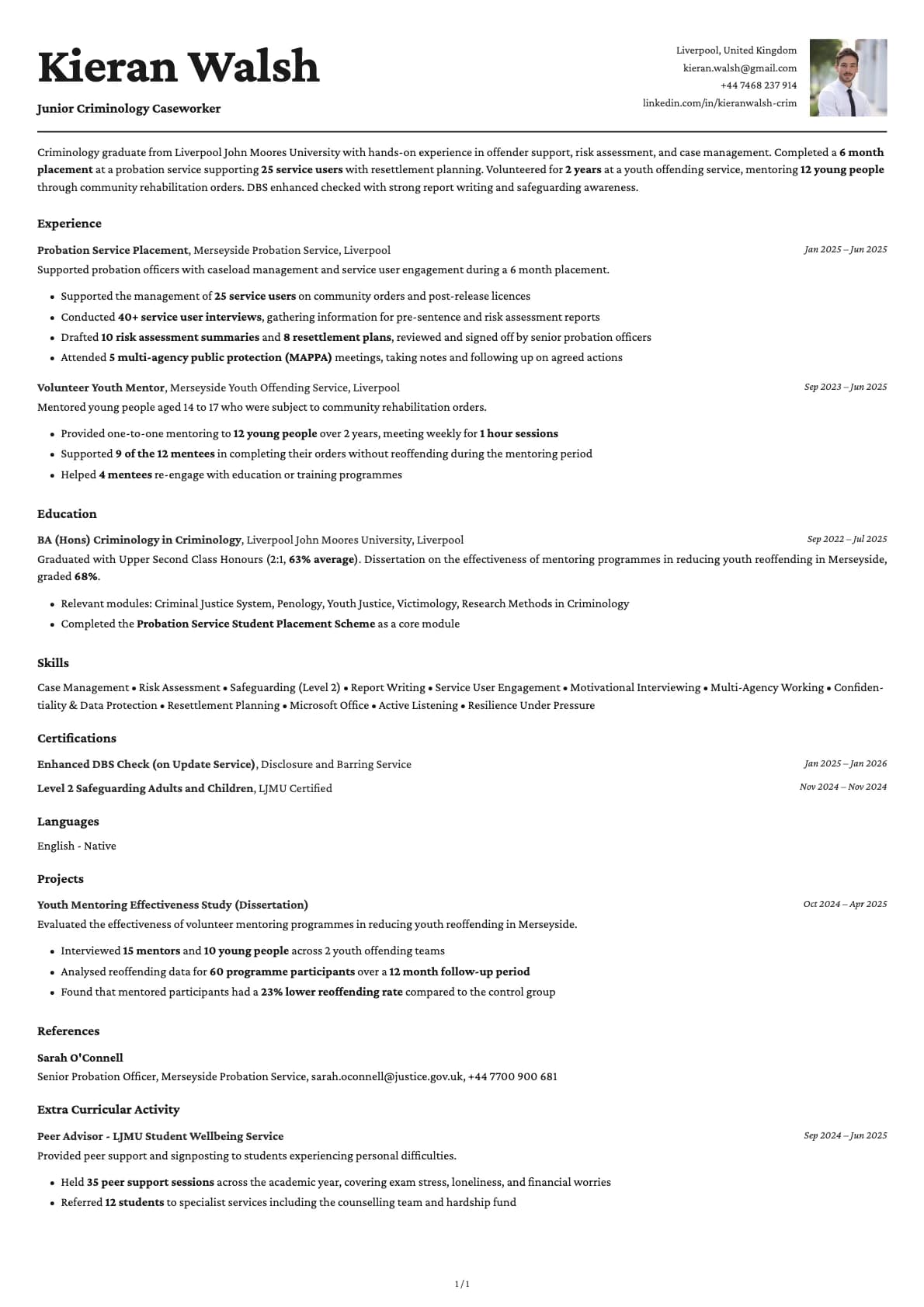
Junior Criminology Caseworker
A junior criminology caseworker resume example for graduates. See how to present probation experience, risk assessment skills, and mentoring work to land your first caseworker role.
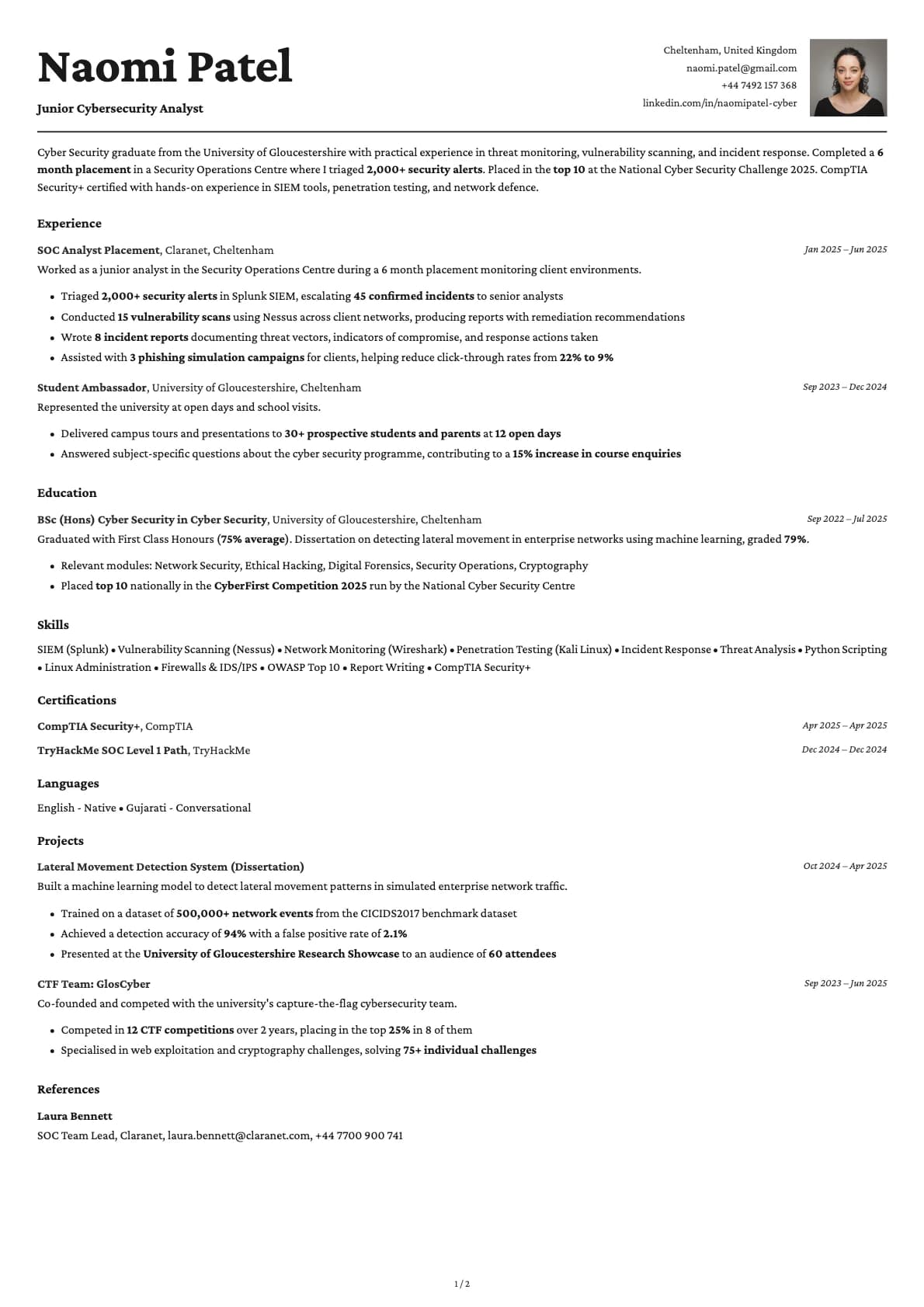
Junior Cybersecurity Analyst
A junior cybersecurity analyst resume example for graduates. See how to present SOC experience, CTF competitions, and Security+ certification to land your first cyber role.
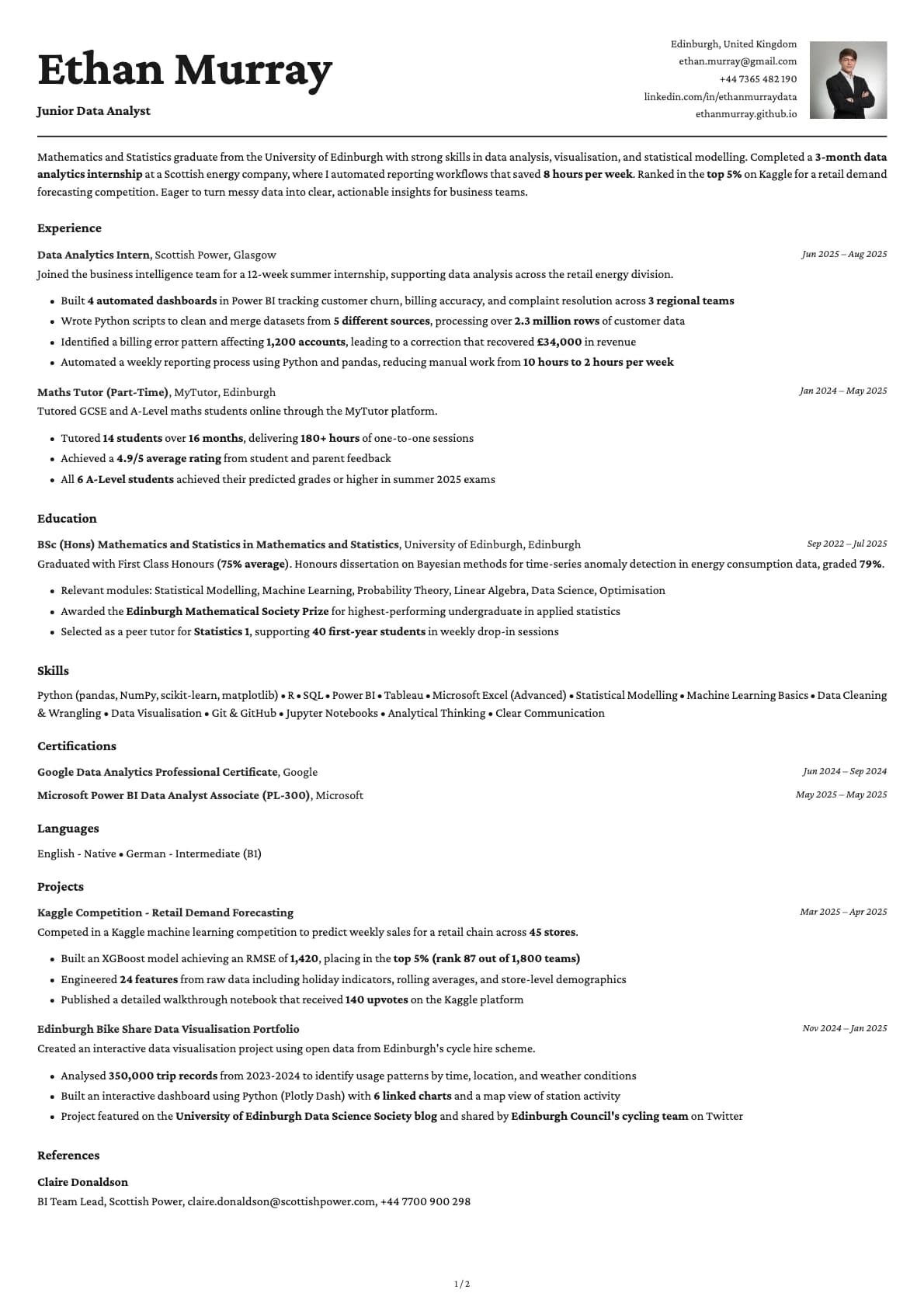
Junior Data Analyst
A junior data analyst resume example for recent graduates. See how to showcase your SQL skills, Python projects, and analytical experience to land your first analyst role.
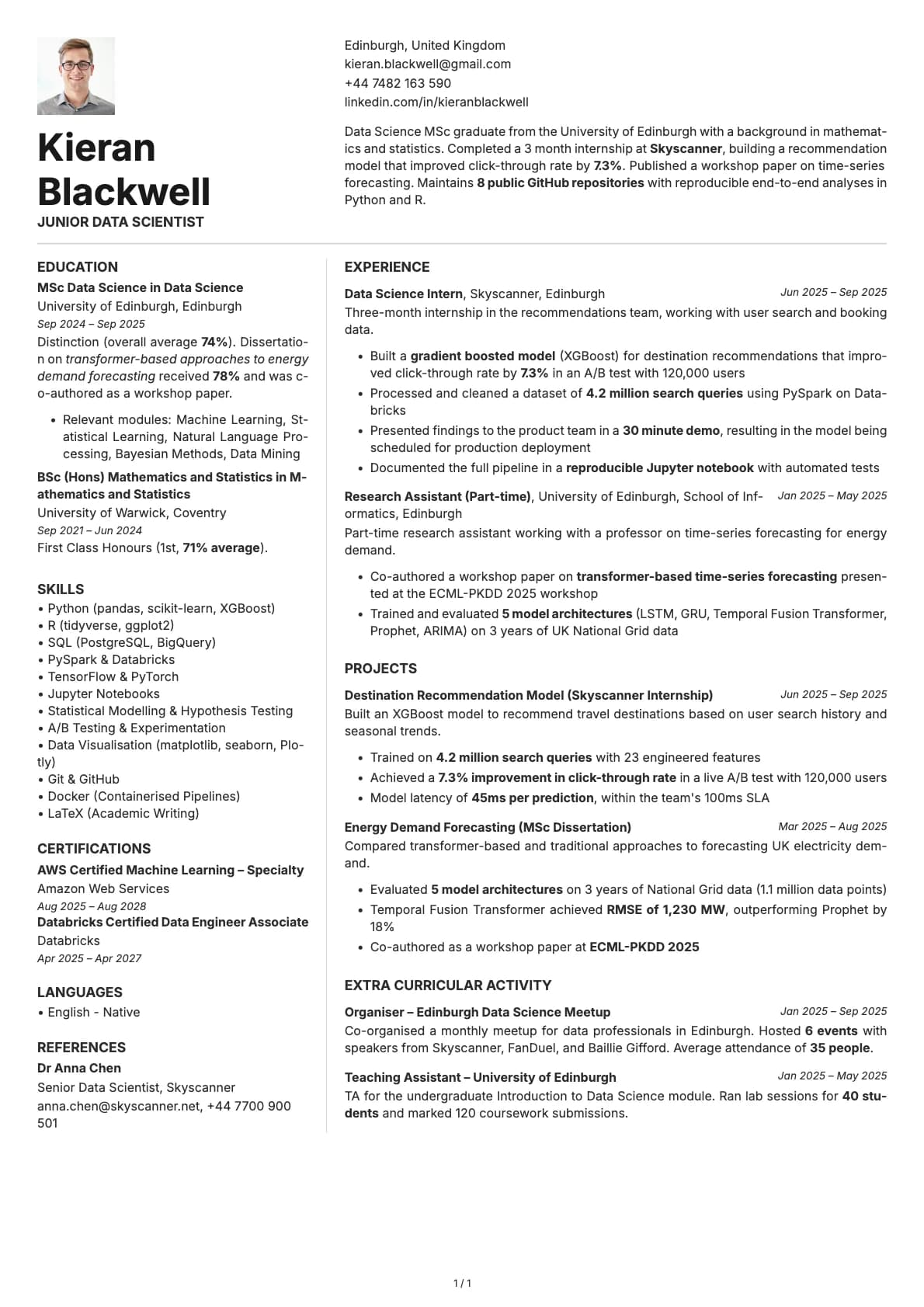
Junior Data Scientist
A junior data scientist resume example with Python projects, model accuracy metrics, and published research from a Data Science MSc graduate entering the field.
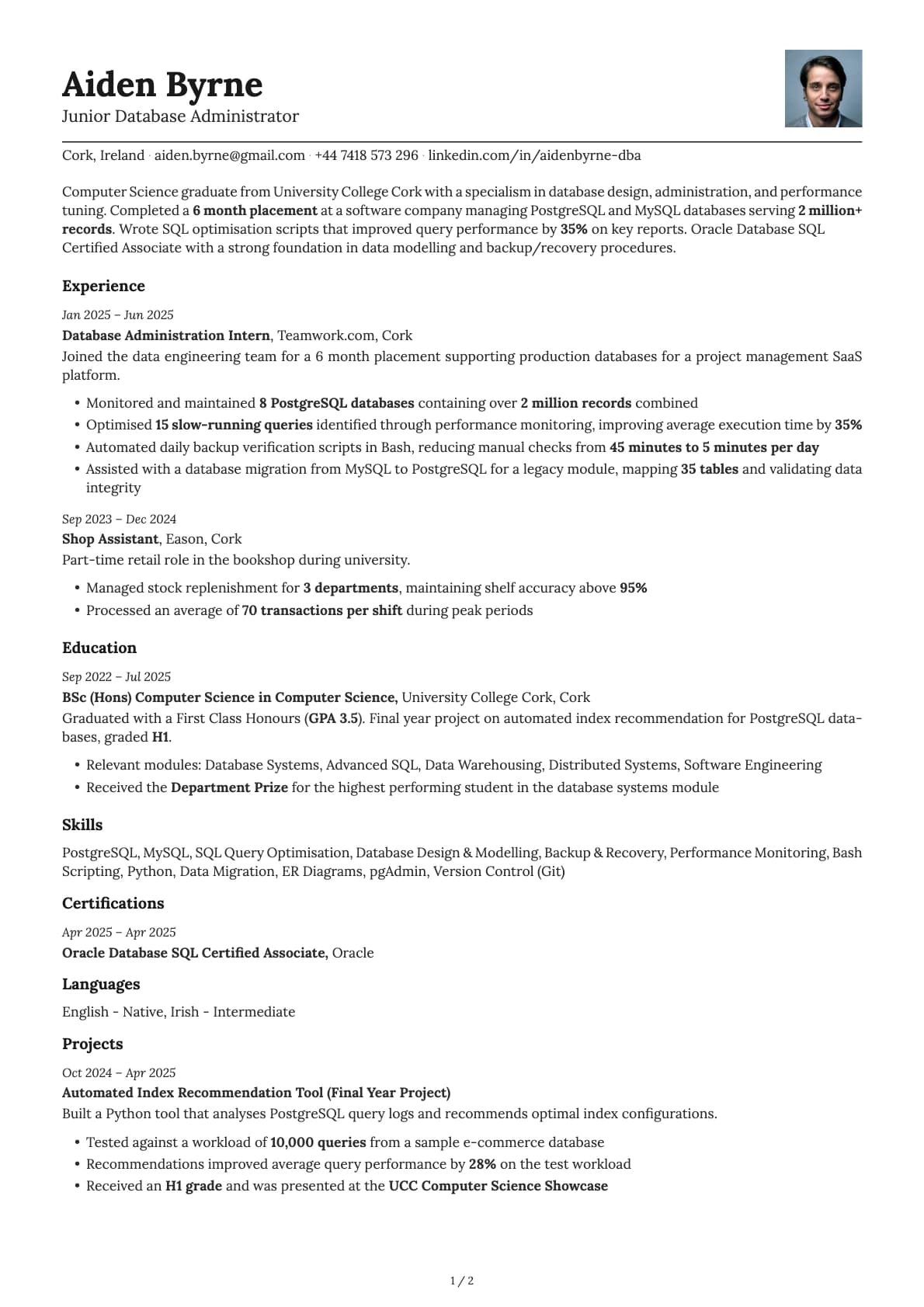
Junior Database Administrator
A junior database administrator resume example for graduates. See how to present SQL skills, performance tuning, and database management experience to land your first DBA role.
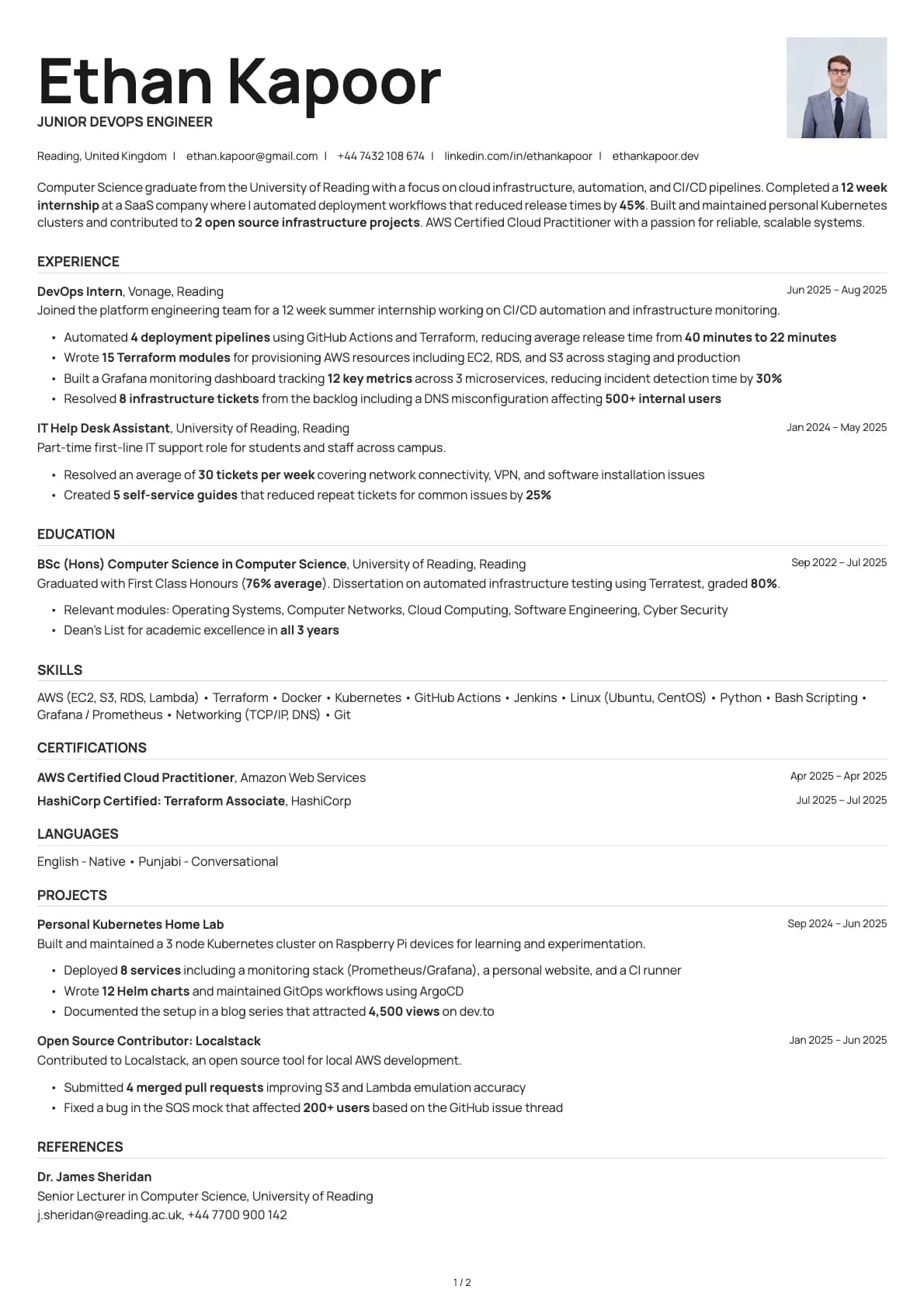
Junior DevOps Engineer
A junior DevOps engineer resume example for graduates. See how to present CI/CD experience, cloud certifications, and infrastructure projects to land your first DevOps role.
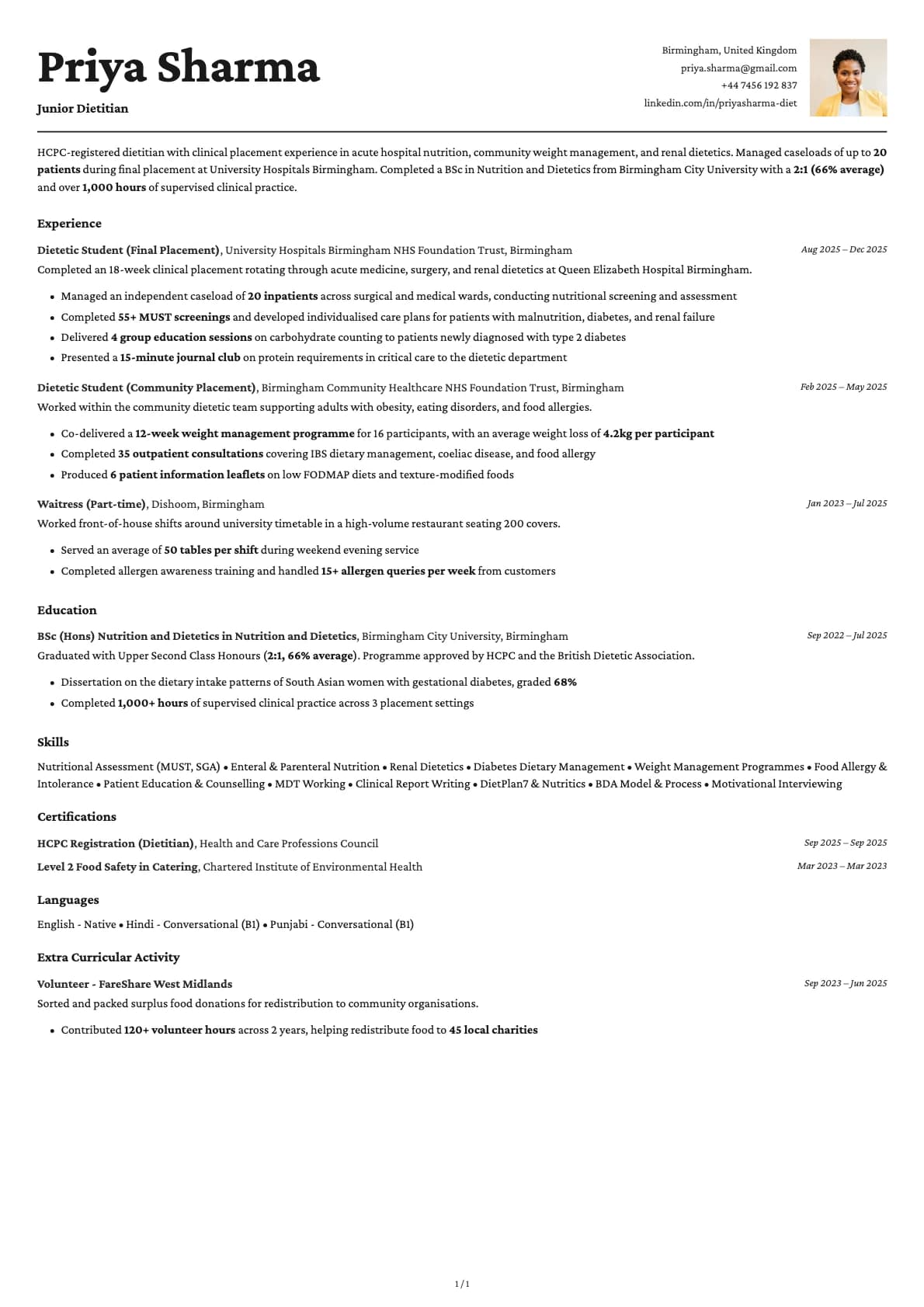
Junior Dietitian
A junior dietitian resume example with NHS clinical placement experience, HCPC registration, and patient caseload numbers for new graduates.
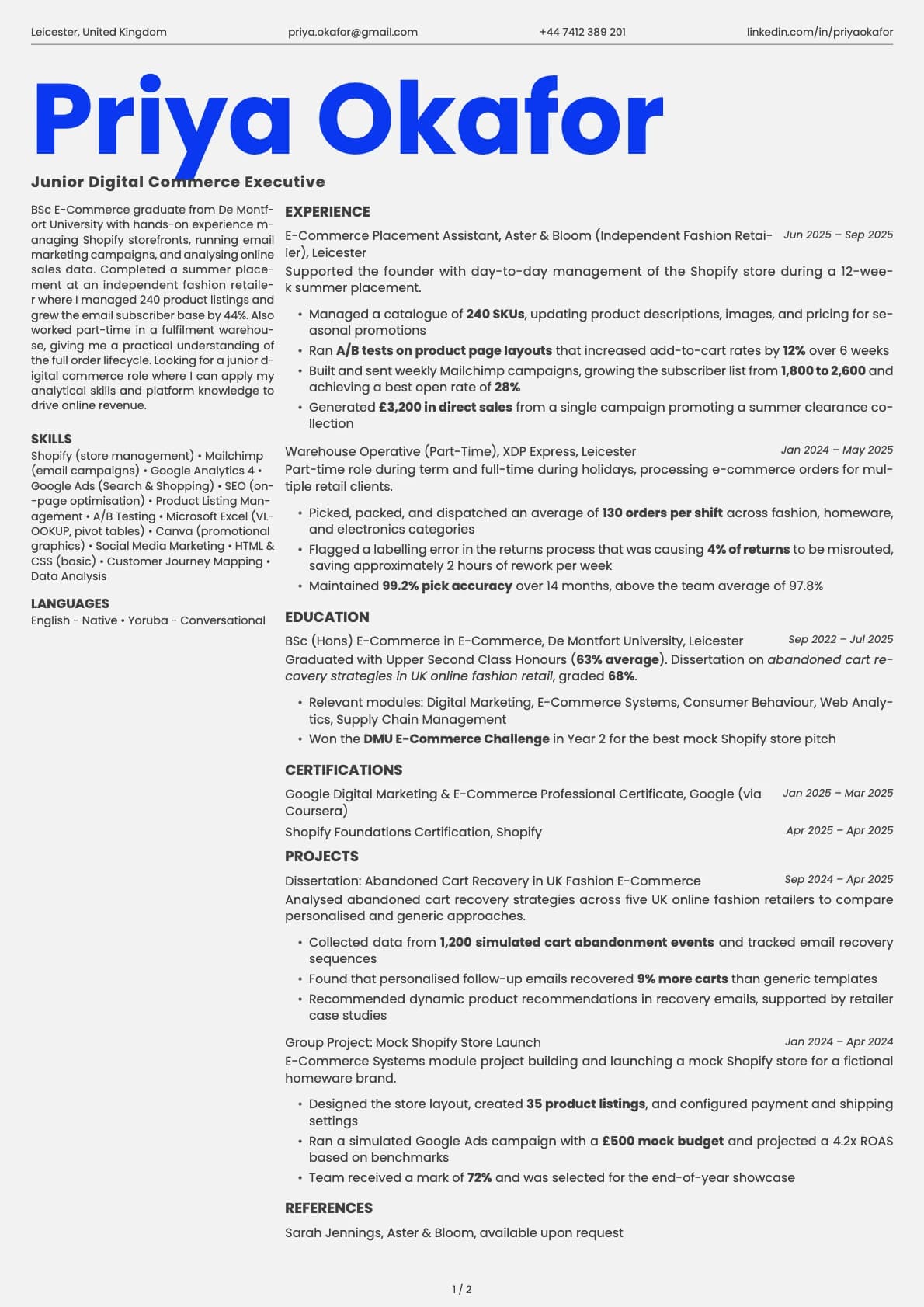
Junior Digital Commerce Executive
A junior digital commerce executive resume example showing how an e-commerce graduate used Shopify internships and campaign metrics to land a first role.
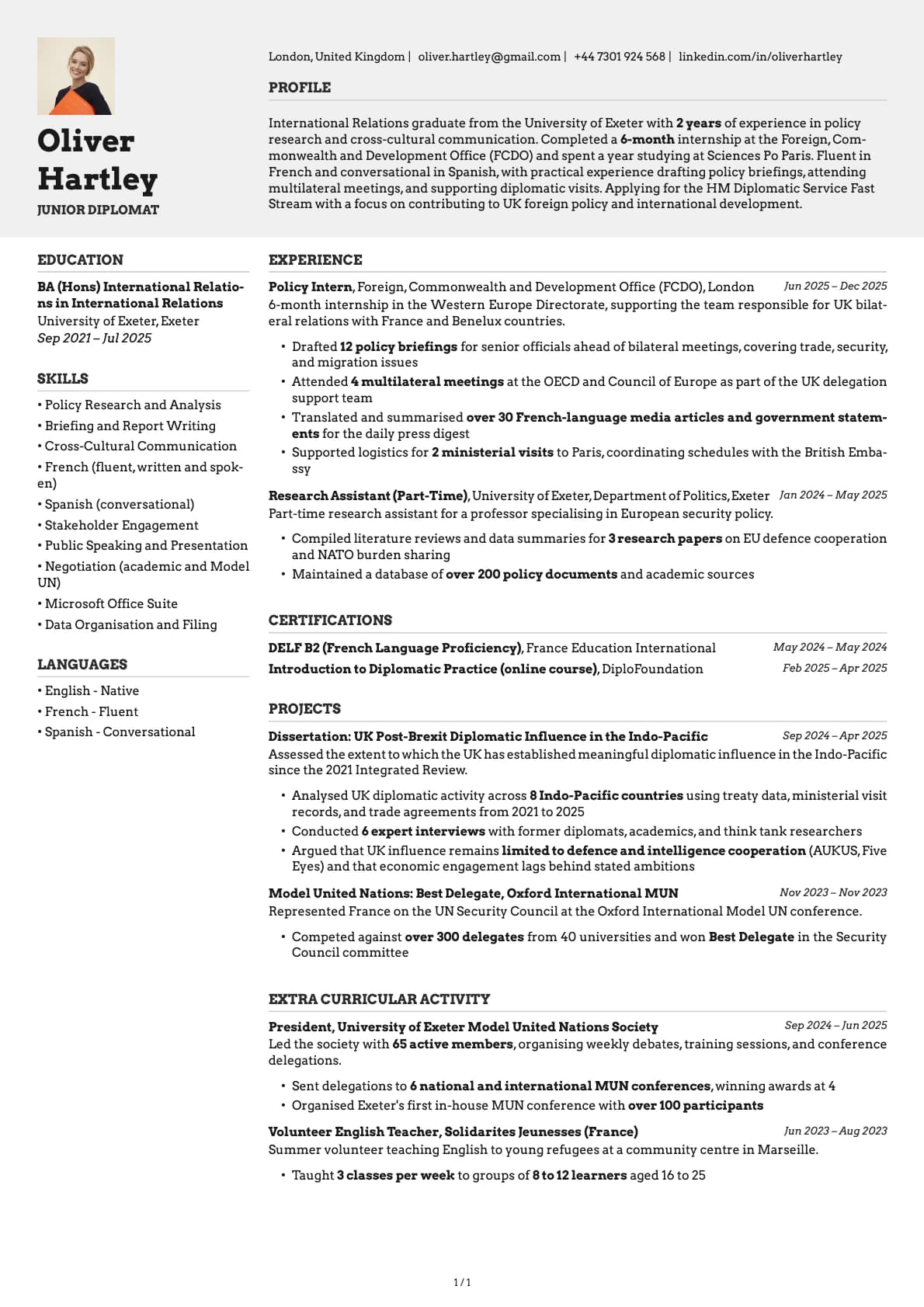
Junior Diplomat
A junior diplomat resume example showing how to combine an FCDO internship, a year at Sciences Po, and Model UN leadership into a Fast Stream application.
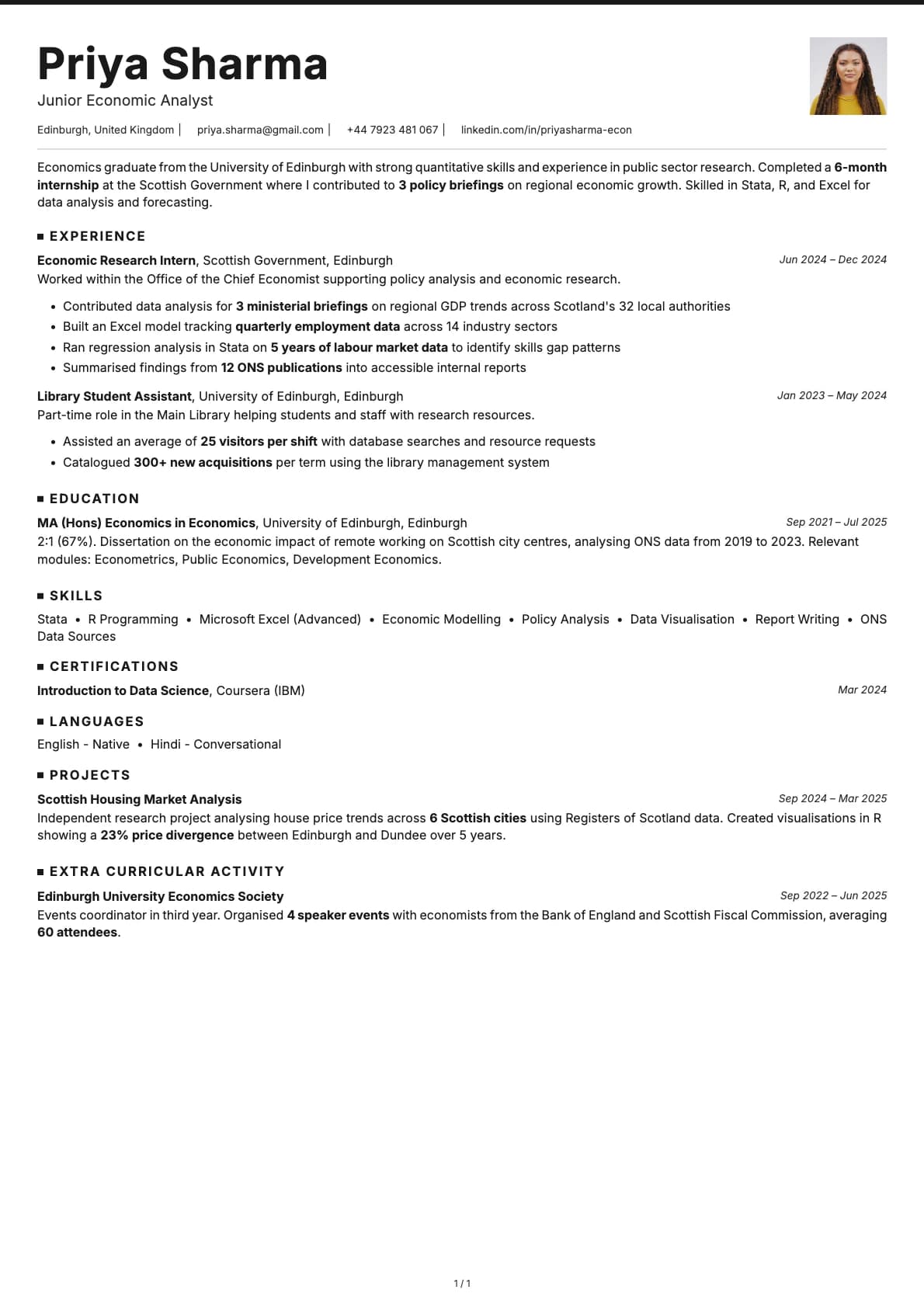
Junior Economic Analyst
A junior economic analyst resume example with government internship experience and strong quantitative skills.