Junior GIS Analyst Resume Example
A junior GIS analyst resume example with local authority placement experience, spatial analysis, and Python scripting skills for geography graduates.

Laddro Team
Free to use. No account needed to start.
Free to use. No account needed to start.
Overview
GIS analyst roles exist across local government, environmental consultancy, utilities, defence, and property sectors. Employers want graduates who can do more than just make maps. They need analysts who can conduct spatial analysis, automate workflows with Python, and manage geodatabases. Practical placement experience gives you a significant advantage over candidates who only used GIS in academic assignments.
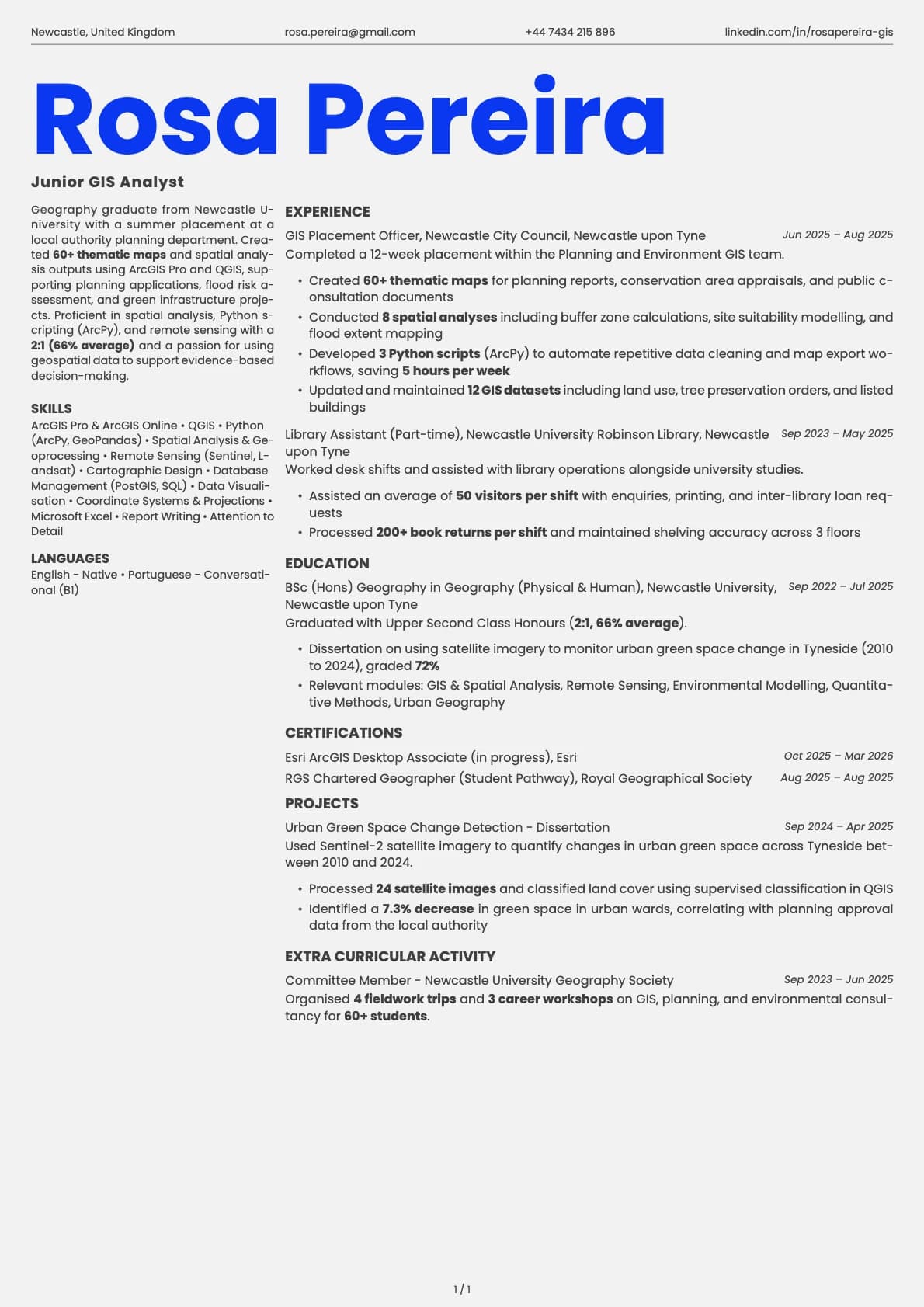
This resume belongs to Rosa Pereira, a geography graduate from Newcastle University who completed a 12-week GIS placement at Newcastle City Council. She created over 60 maps, conducted 8 spatial analyses, and wrote 3 Python scripts that saved the team 5 hours per week. Her dissertation used satellite imagery and land cover classification to quantify urban green space change, demonstrating both remote sensing and analytical skills.
What Makes This Resume Work
Map output volume demonstrates productivity. Creating 60 maps in 12 weeks shows Rosa can produce high-quality cartographic outputs at the pace required by a busy planning department. GIS managers hiring junior staff want to know you can deliver, and this number provides that assurance.
Python automation saves real time. Writing 3 scripts that saved 5 hours per week shows Rosa can add value beyond basic map-making. Automation skills are increasingly expected in GIS roles, and demonstrating time savings quantifies the impact.
The remote sensing dissertation adds analytical depth. Processing 24 satellite images and classifying land cover shows Rosa has experience with the full remote sensing workflow, from data acquisition to analysis to interpretation. This opens doors to roles in environmental monitoring, agriculture, and defence.
Key Takeaways
Junior GIS analysts should quantify their output with map counts, spatial analyses completed, and any automation scripts written. Include both ArcGIS and QGIS experience if you have it, and mention any database skills (PostGIS, SQL). Python proficiency (ArcPy, GeoPandas) is increasingly essential, so describe what your scripts did rather than just listing the language. Esri certification or progress towards it shows professional commitment, and a strong dissertation with a geospatial methodology adds depth.
Build your own version
Open this layout in the builder and swap in your own details. It takes a few minutes.
Free to use. No account needed to start.
Was this resume example helpful?
Rate this example to help us create better content for you.
4.5 average from 85 ratingsRelated resume examples
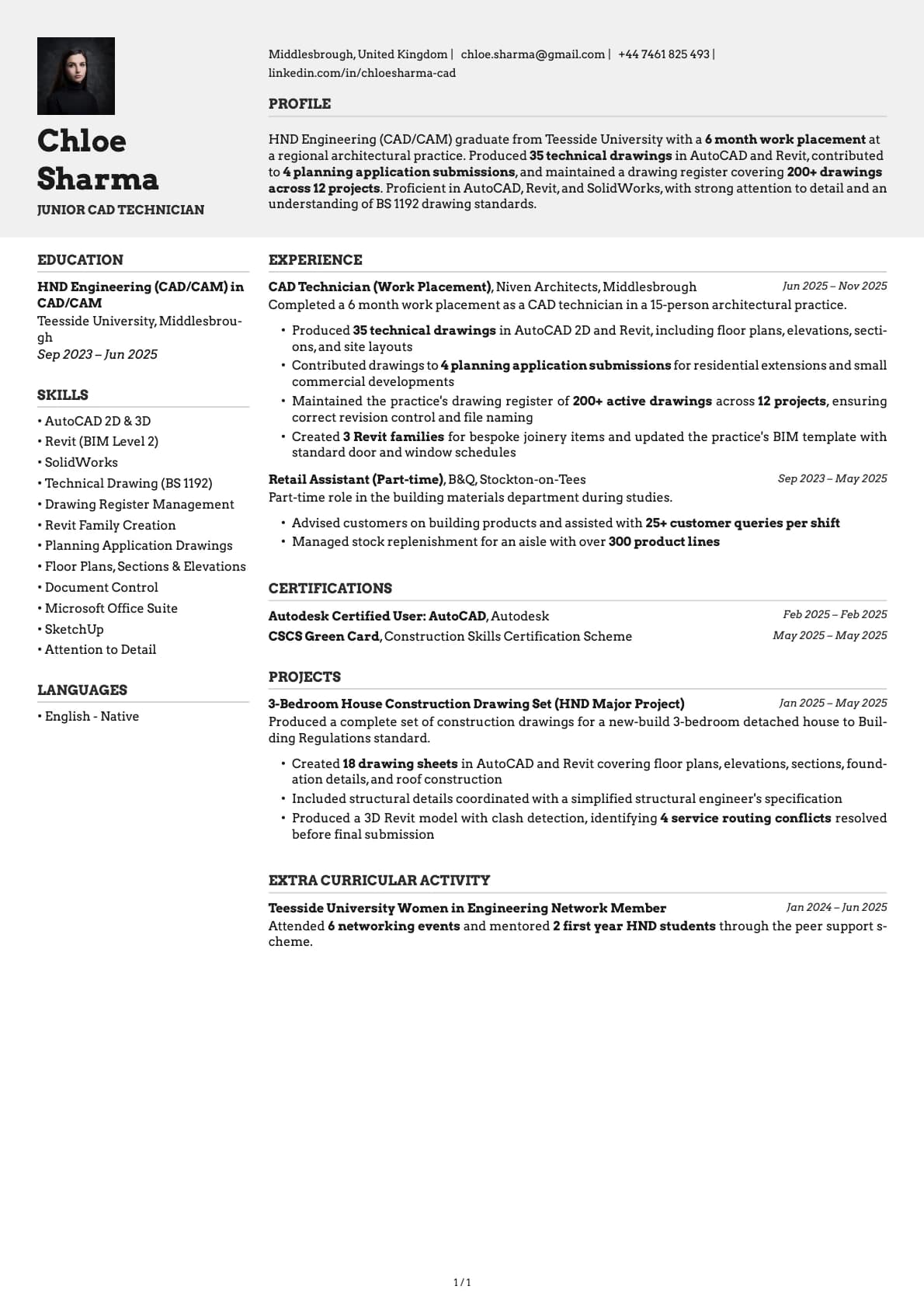
Junior CAD Technician
A junior CAD technician resume example with HND qualification, AutoCAD and Revit proficiency, and architectural practice experience.
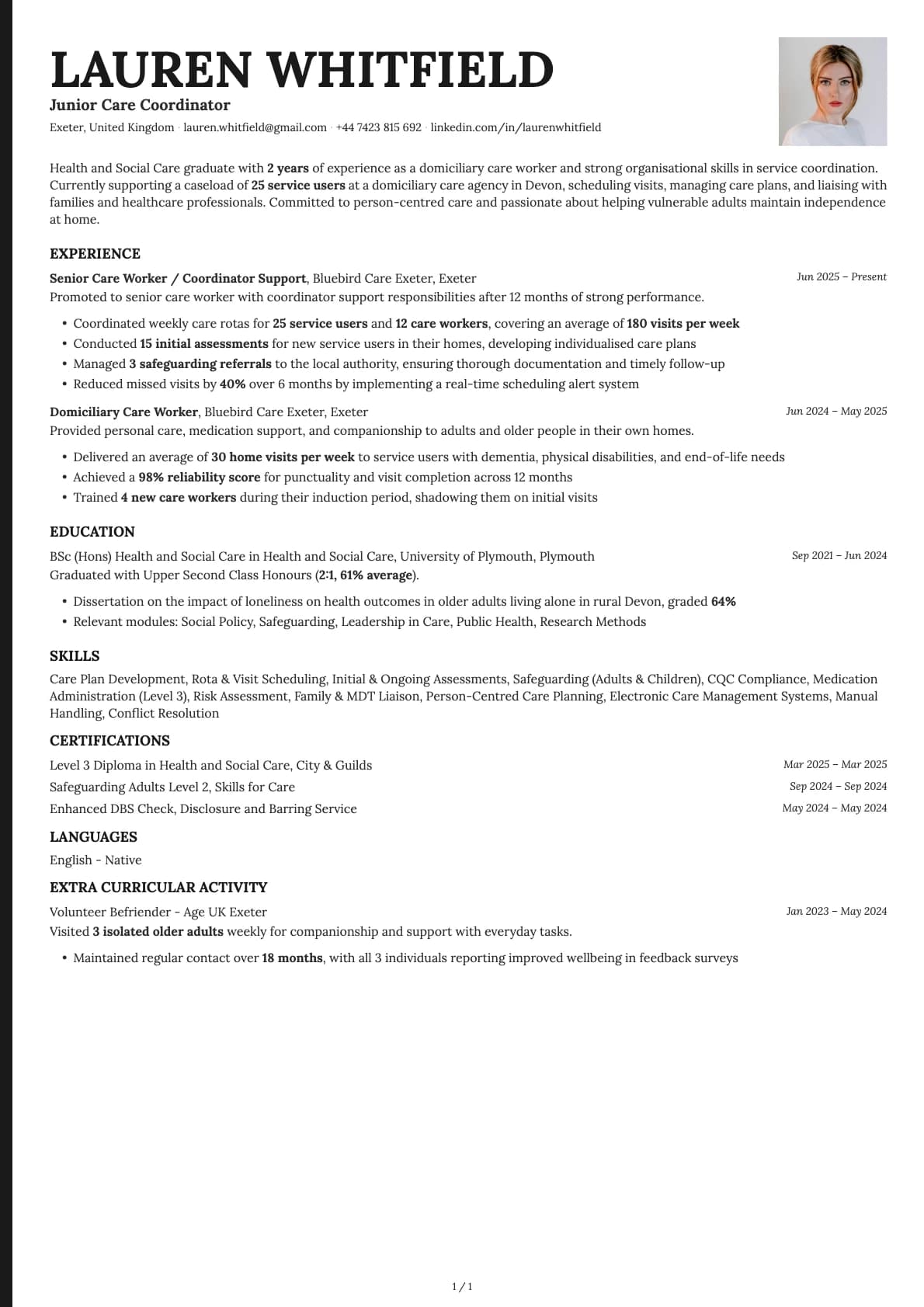
Junior Care Coordinator
A junior care coordinator resume example with domiciliary care experience, rota management numbers, and CQC compliance for new coordinators.
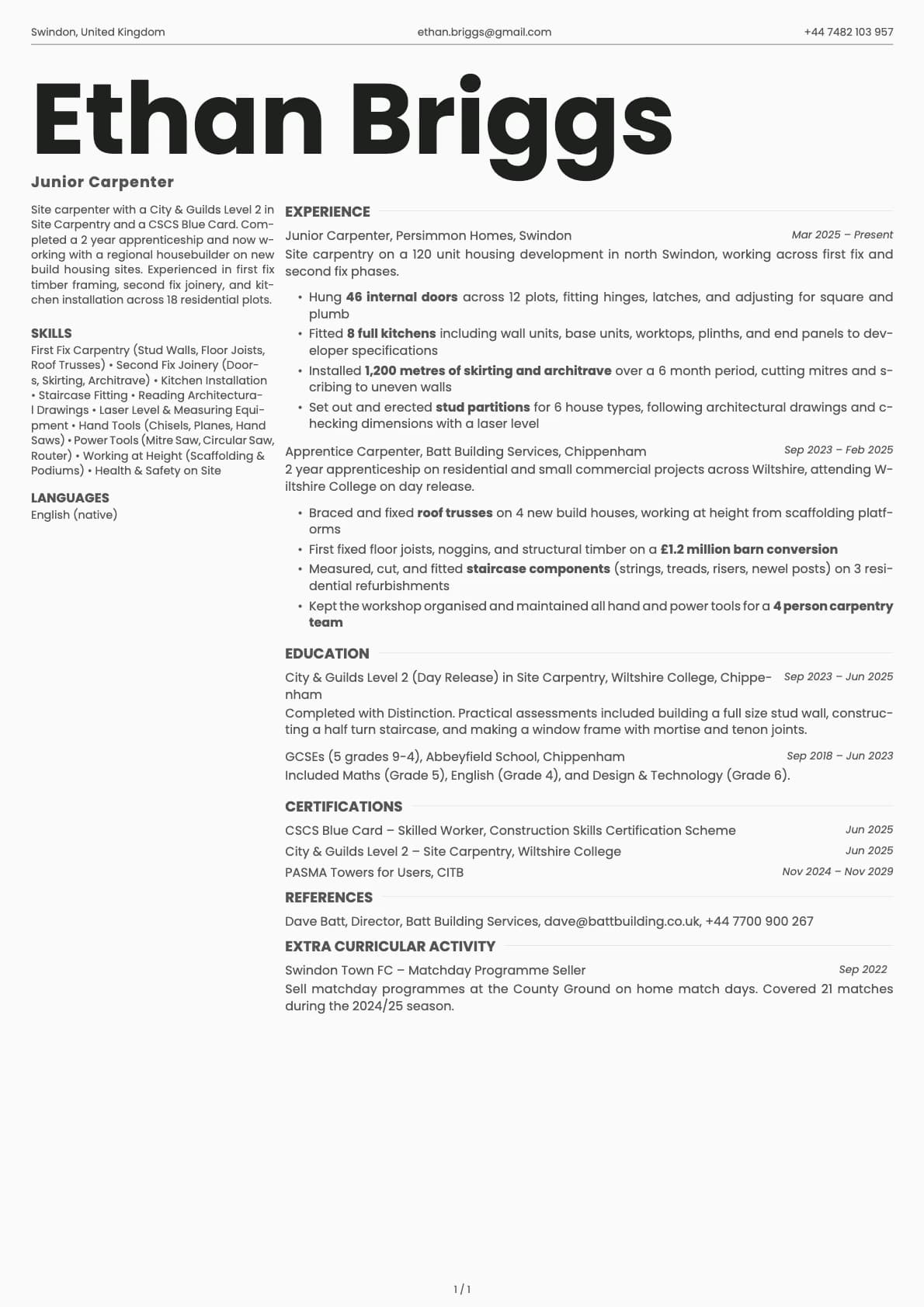
Junior Carpenter
A junior carpenter resume example for carpentry apprenticeship graduates. See how to present your City & Guilds, site joinery experience, and CSCS card details.
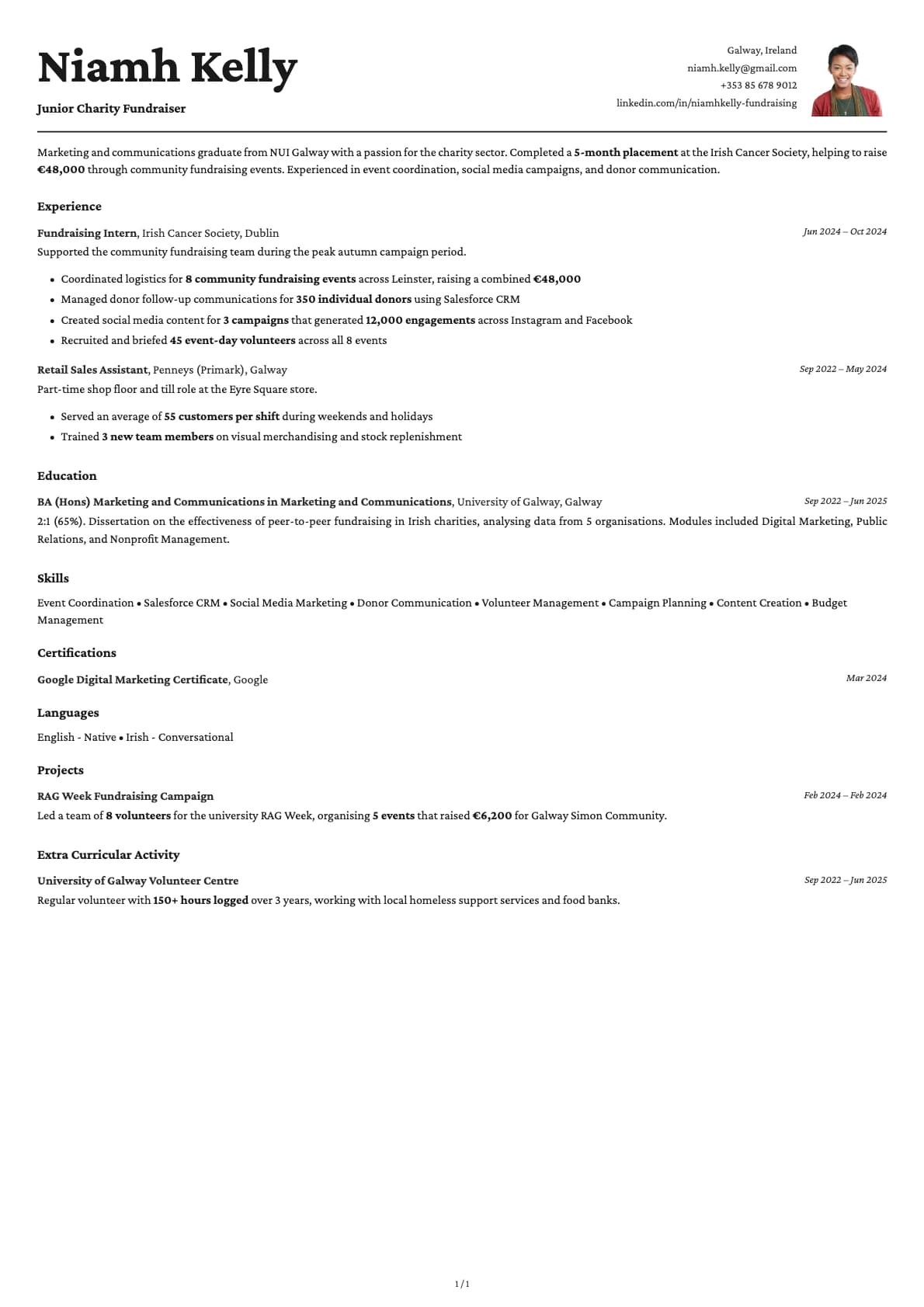
Junior Charity Fundraiser
A junior charity fundraiser resume example with Irish Cancer Society internship and event coordination experience.
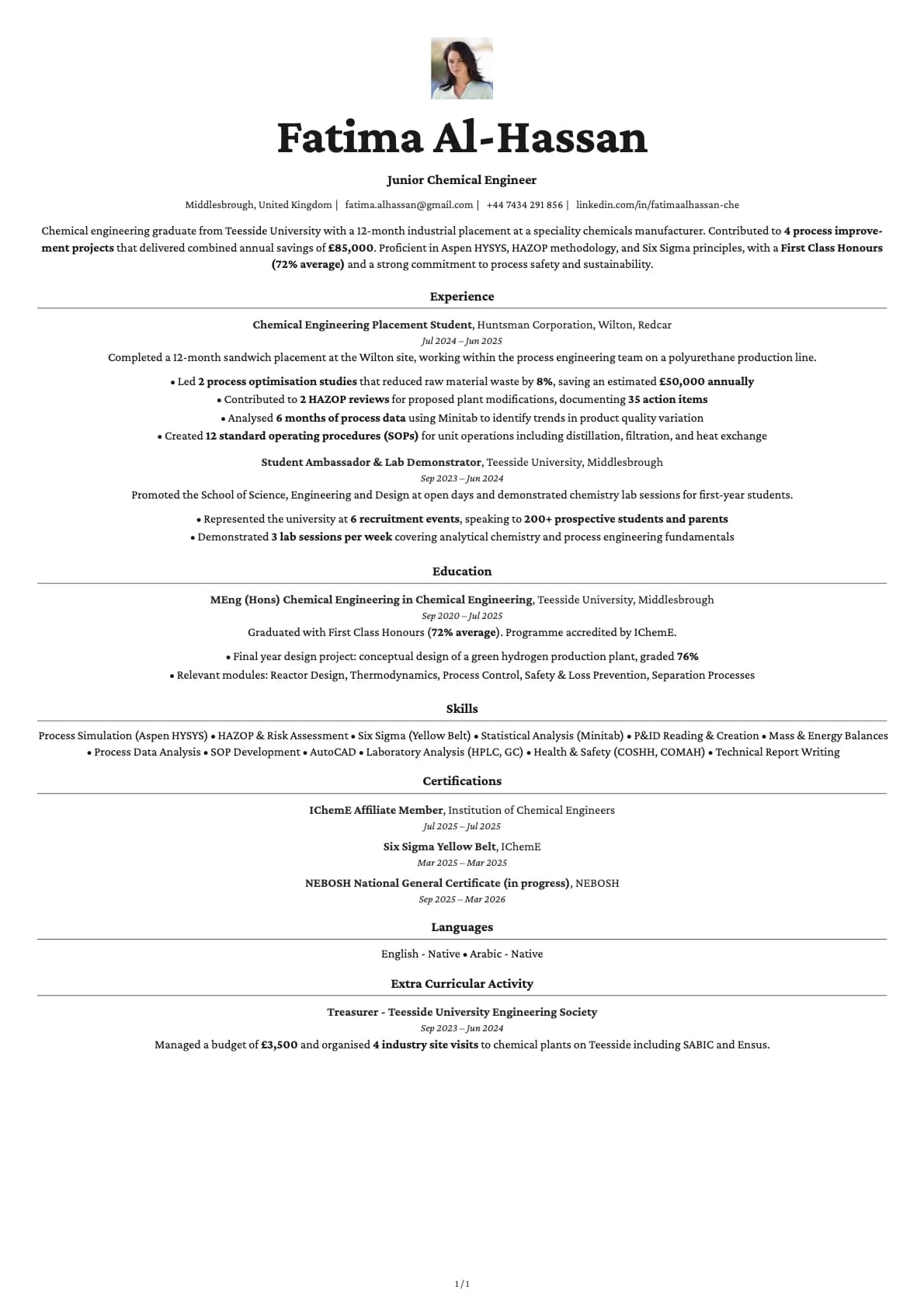
Junior Chemical Engineer
A junior chemical engineer resume example with industrial placement experience, process improvement savings, and IChemE membership for graduates.
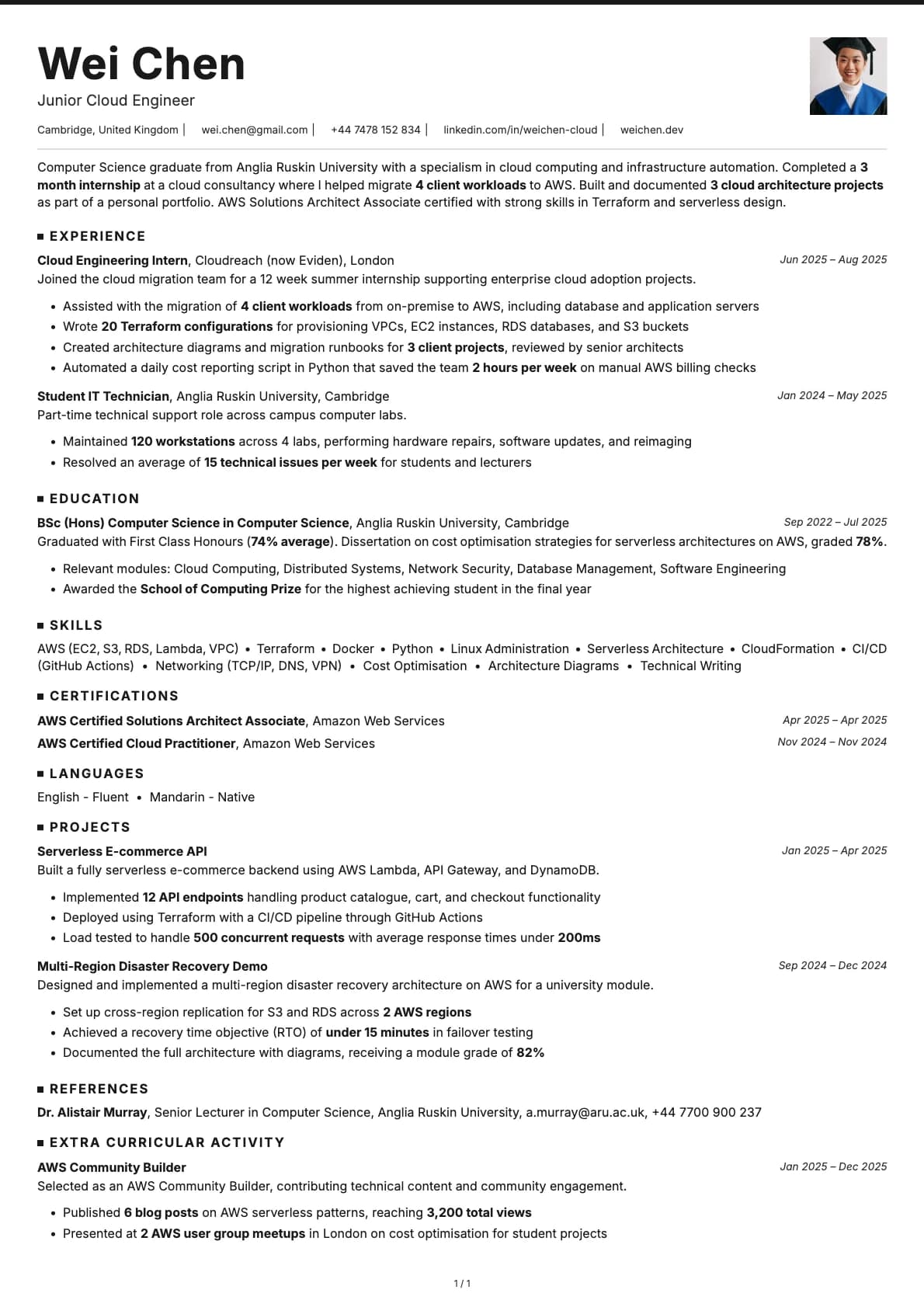
Junior Cloud Engineer
A junior cloud engineer resume example for graduates. Learn how to present AWS experience, Terraform skills, and cloud certifications to land your first cloud engineering role.
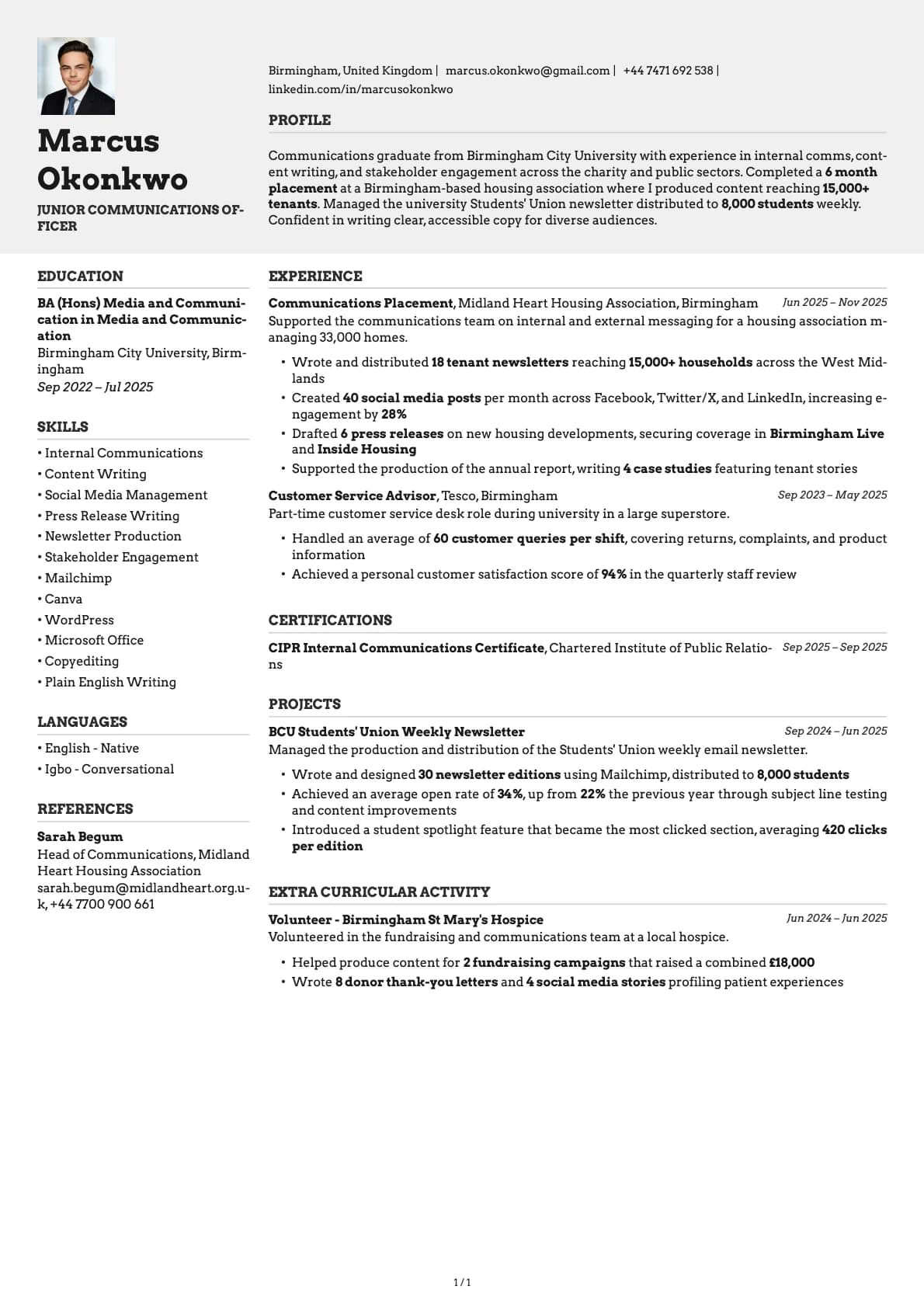
Junior Communications Officer
A junior communications officer resume example for graduates. See how to present internal comms, content writing, and stakeholder engagement experience to land your first comms role.
Junior Compliance Officer
A junior compliance officer resume example with insurance compliance internship experience and AML knowledge.
Junior Conservation Officer
A junior conservation officer resume example with wildlife trust placement experience, volunteer coordination, and habitat management skills.
Junior Consultant
A junior consultant resume example with management degree, Big Four internship, and client facing project delivery experience.
Junior Content Writer
A junior content writer resume example for recent graduates. See how to showcase your writing portfolio, SEO knowledge, and published work to land your first content role.

Junior Copywriter
A junior copywriter resume example for English graduates. See how to present freelance writing, student newspaper experience, and a portfolio to land your first agency or in-house role.