Junior Content Writer Resume Example
A junior content writer resume example for recent graduates. See how to showcase your writing portfolio, SEO knowledge, and published work to land your first content role.

Laddro Team
Free to use. No account needed to start.
Free to use. No account needed to start.
Overview
Content writing roles are flooded with applications from English graduates, journalism students, and self taught writers. Saying you "love writing" or have "a way with words" is not going to separate you from the pack. What will is showing that your writing has been published, read, and measured.
This resume belongs to Olivia Grant, an English and media graduate from the University of East Anglia. She wrote for her university newspaper, completed a content marketing internship, and ran a personal blog. Her resume works because it presents writing as a professional skill with measurable output, not just a hobby.
What Makes This Resume Work
Published work is quantified. Olivia wrote 35 articles for the university newspaper over two years, covering campus events and student opinion pieces. Four of her articles were the most read pieces of their respective month. She also published 12 blog posts on her personal site, with an average of 800 monthly page views. These numbers transform "I write" into "I write things people actually read."
The internship shows commercial writing ability. During her three month placement at a digital marketing agency, she wrote 20 SEO optimised blog posts for three different client websites. She learned to use keyword research tools like SEMrush and Ahrefs, and two of her articles ranked on the first page of Google within eight weeks. For a junior role, that is a strong demonstration of practical SEO skills.
The portfolio link is easy to find. Just like a designer, a content writer needs a portfolio. Olivia includes her blog URL directly under her contact information. She also mentions that writing samples are available on request, which signals confidence in the quality of her work.
Editing and proofreading experience is included. She copyedited articles for the newspaper and proofread marketing materials during her internship. Many junior content writers overlook this, but attention to detail is a core requirement. Showing that you can review and polish work, not just produce it, adds another layer of value.
Key Takeaways
Publish your writing somewhere and put numbers on it. A personal blog with tracked page views, a university publication with readership data, or guest posts on external sites. Anything that proves people have actually read your work.
If you have any SEO experience, highlight it clearly. Keyword research, on page optimisation, and search rankings are increasingly expected even for junior content roles. Mention the tools you used and any ranking results you achieved.
Include editing and proofreading as separate skills. Being able to write is half the job. Being able to review, tighten, and improve copy is the other half, and many applicants forget to mention it.
Build your own version
Open this layout in the builder and swap in your own details. It takes a few minutes.
Free to use. No account needed to start.
Was this resume example helpful?
Rate this example to help us create better content for you.
4.8 average from 122 ratingsRelated resume examples

Junior Marketing Coordinator
A junior marketing coordinator resume example for graduates entering the field. See how to turn retail work, volunteering, and a marketing degree into a strong application.
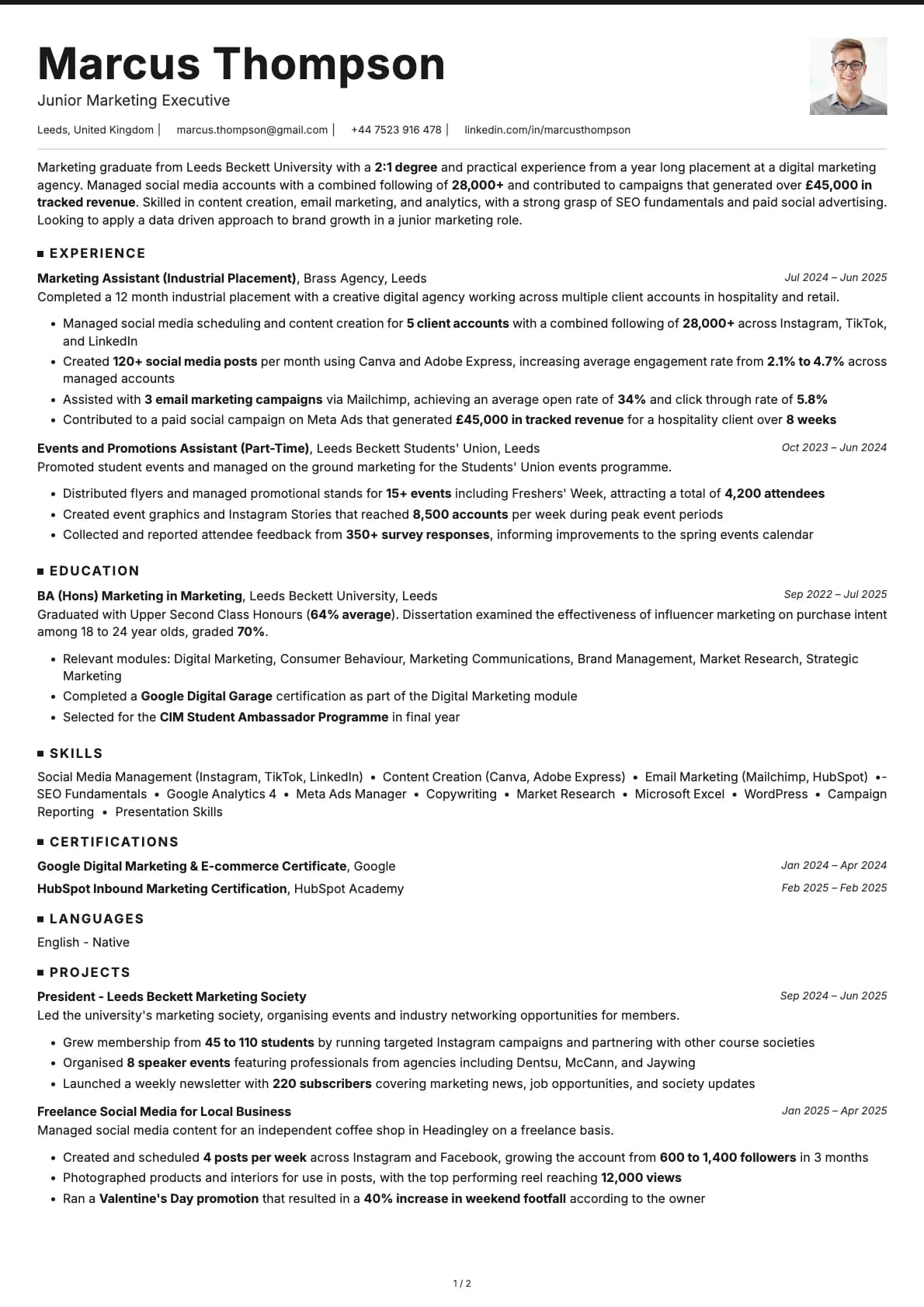
Junior Marketing Executive
A junior marketing executive resume example for recent graduates. See how to showcase social media skills, campaign results, and agency experience effectively.
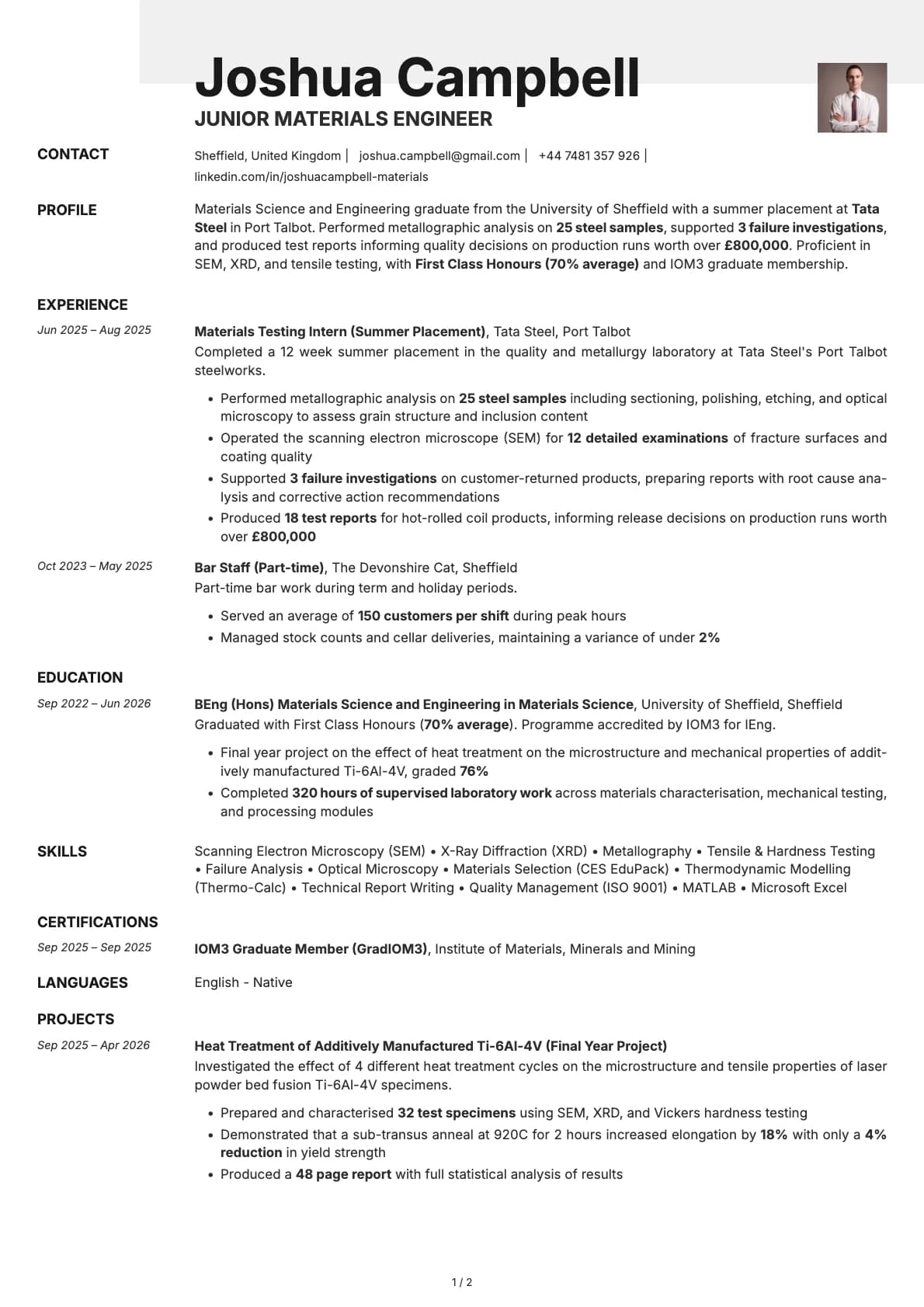
Junior Materials Engineer
A junior materials engineer resume example with metallurgical testing experience, SEM analysis skills, and IOM3 membership.

Junior Mechanical Engineer
A junior mechanical engineer resume example with a year in industry placement. See how to present CAD skills, FEA experience, and engineering projects on your graduate CV.
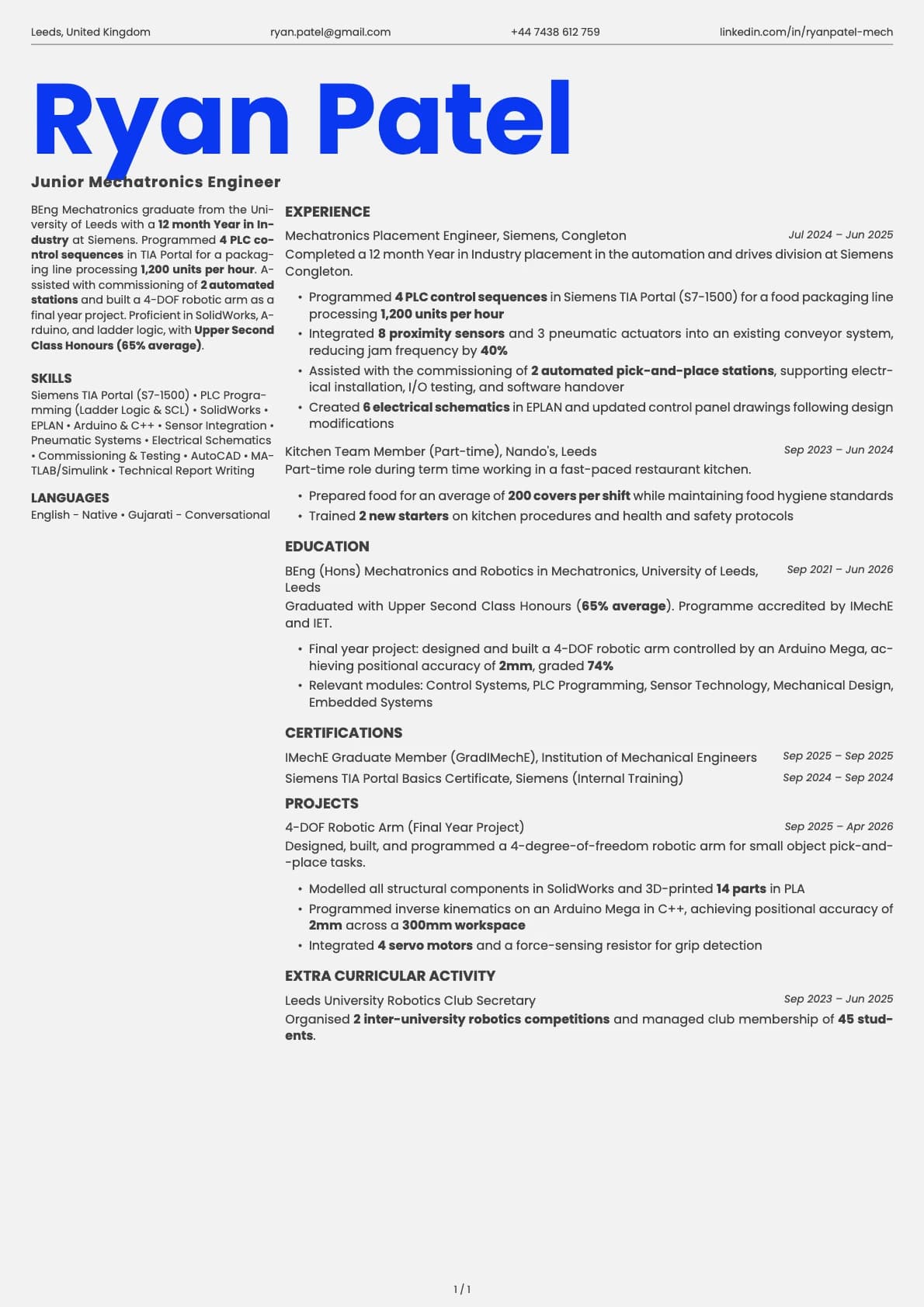
Junior Mechatronics Engineer
A junior mechatronics engineer resume example with PLC programming experience, SolidWorks proficiency, and an industrial automation placement.
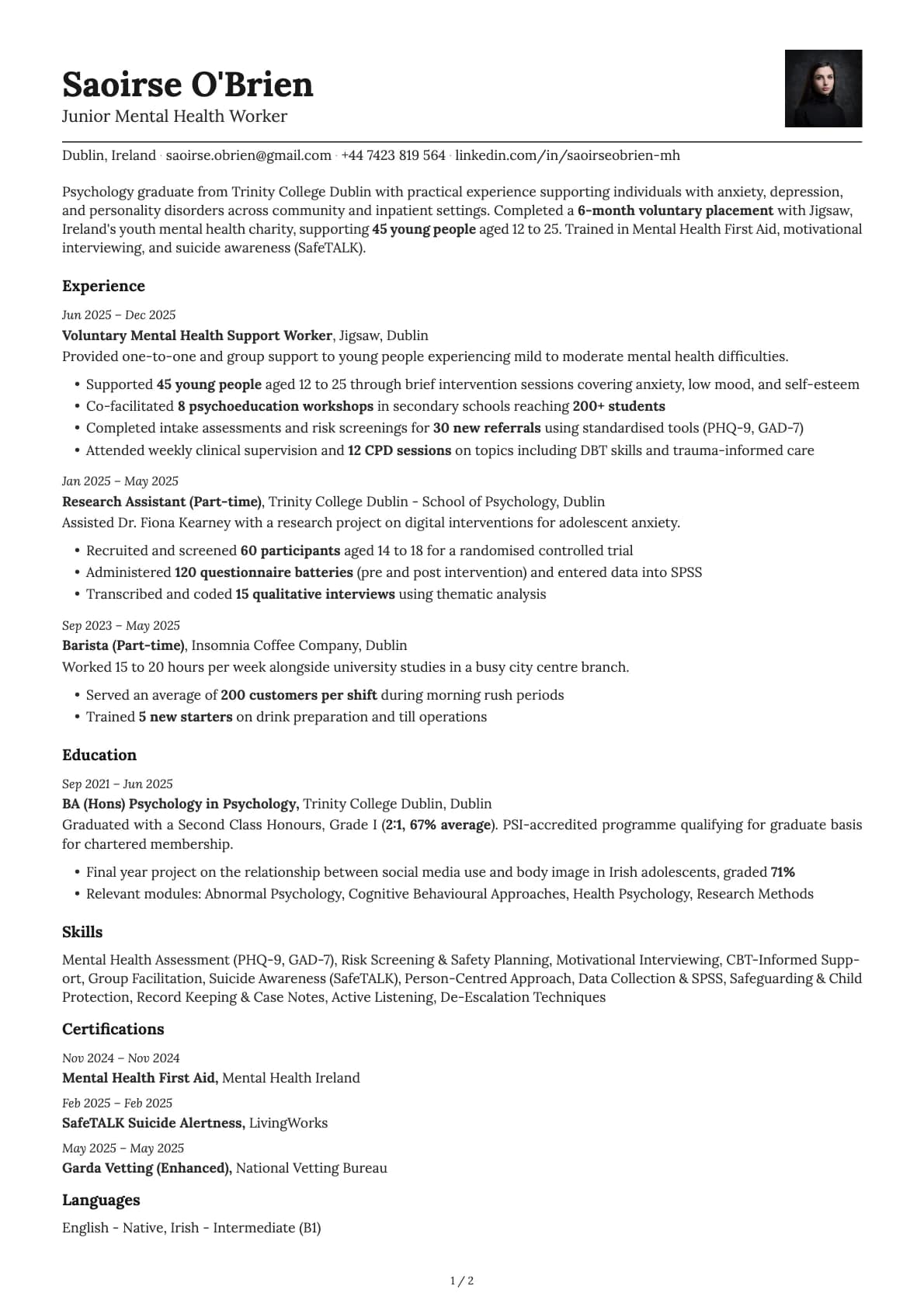
Junior Mental Health Worker
A junior mental health worker resume example with voluntary placement experience, assessment tools, and youth support numbers for psychology graduates.
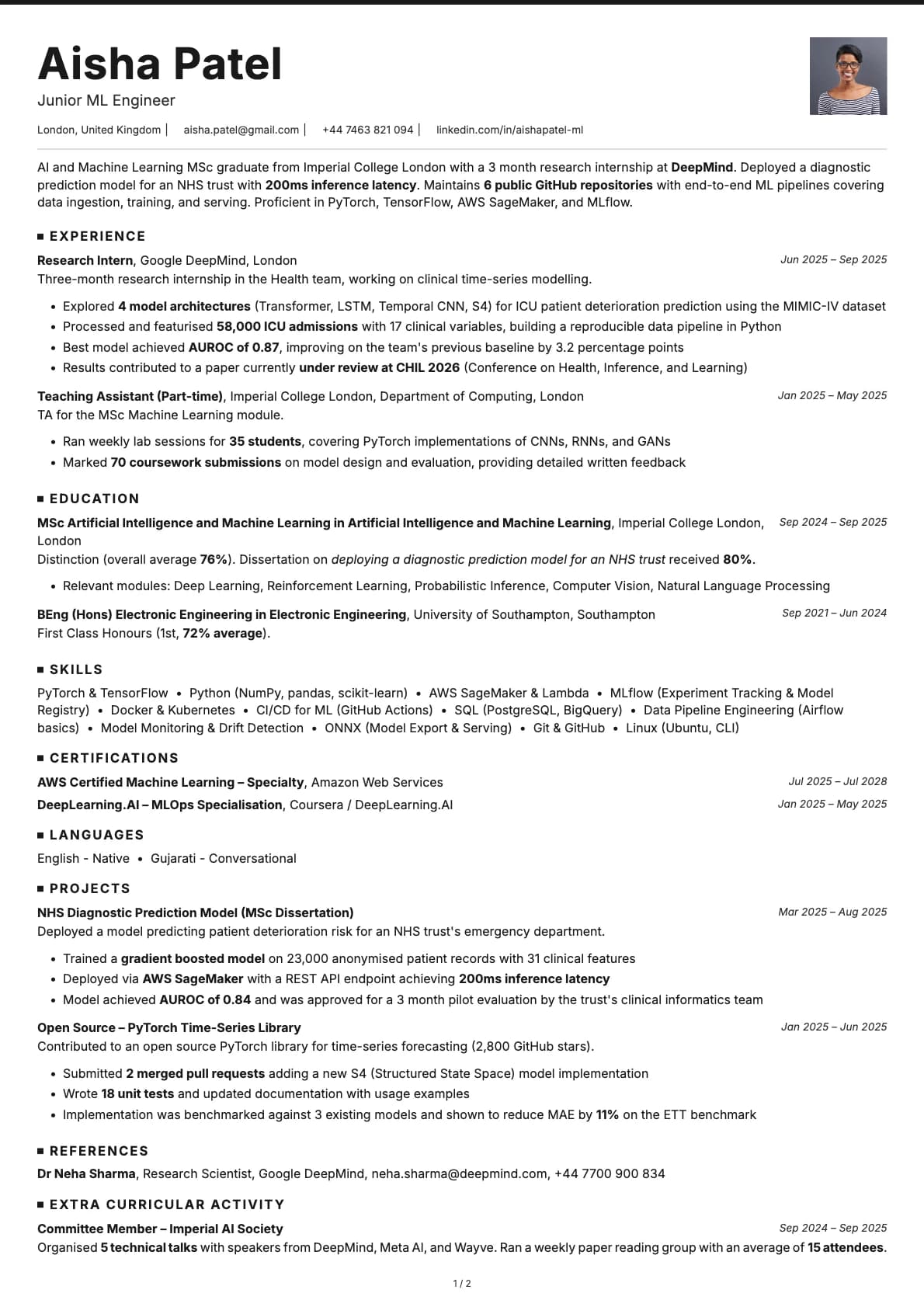
Junior ML Engineer
A junior ML engineer resume example with deployed models, TensorFlow projects, and AWS SageMaker experience from an AI and ML MSc graduate starting their career.
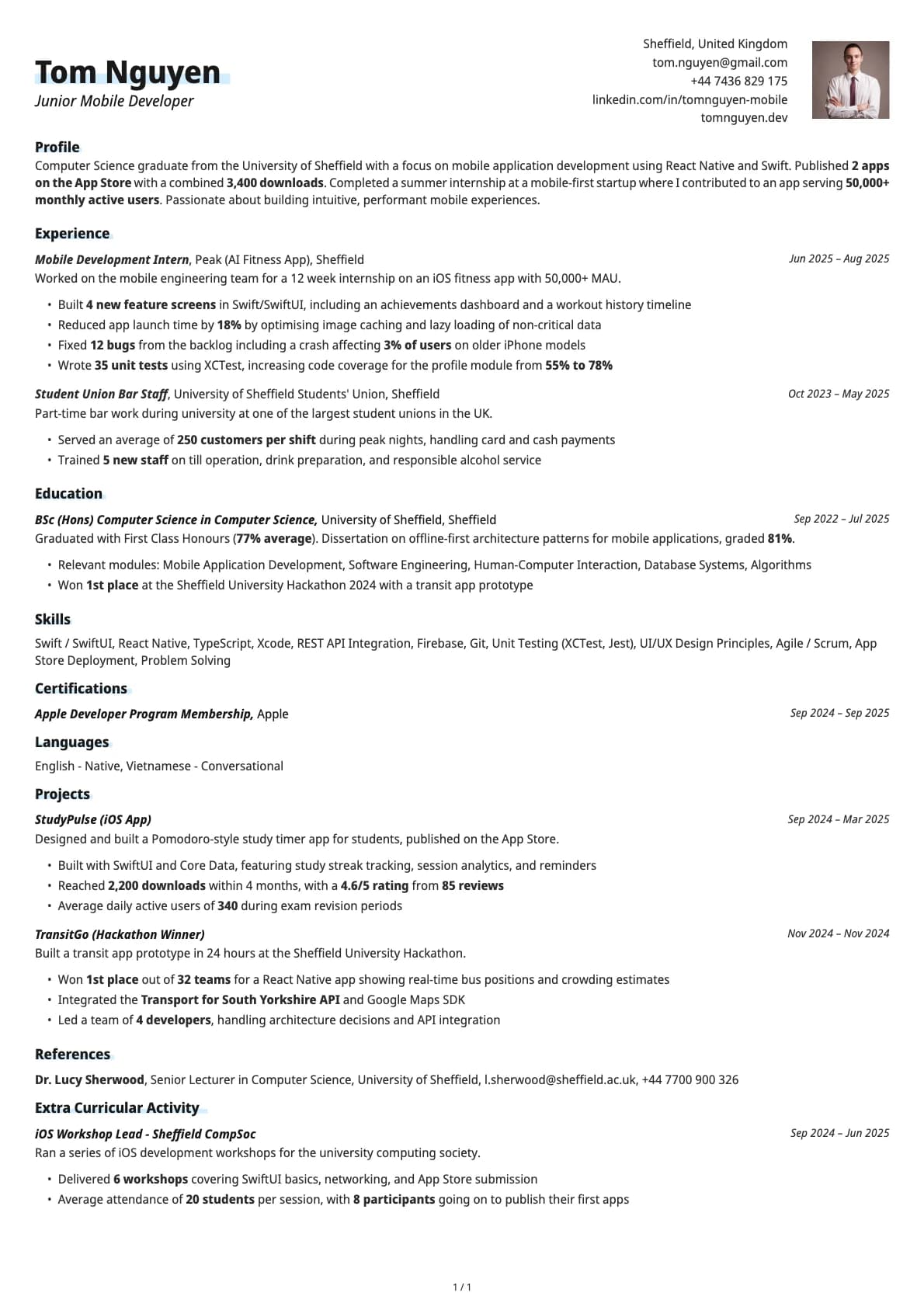
Junior Mobile Developer
A junior mobile developer resume example for graduates. See how to present published apps, App Store downloads, and mobile internship experience to land your first mobile dev role.
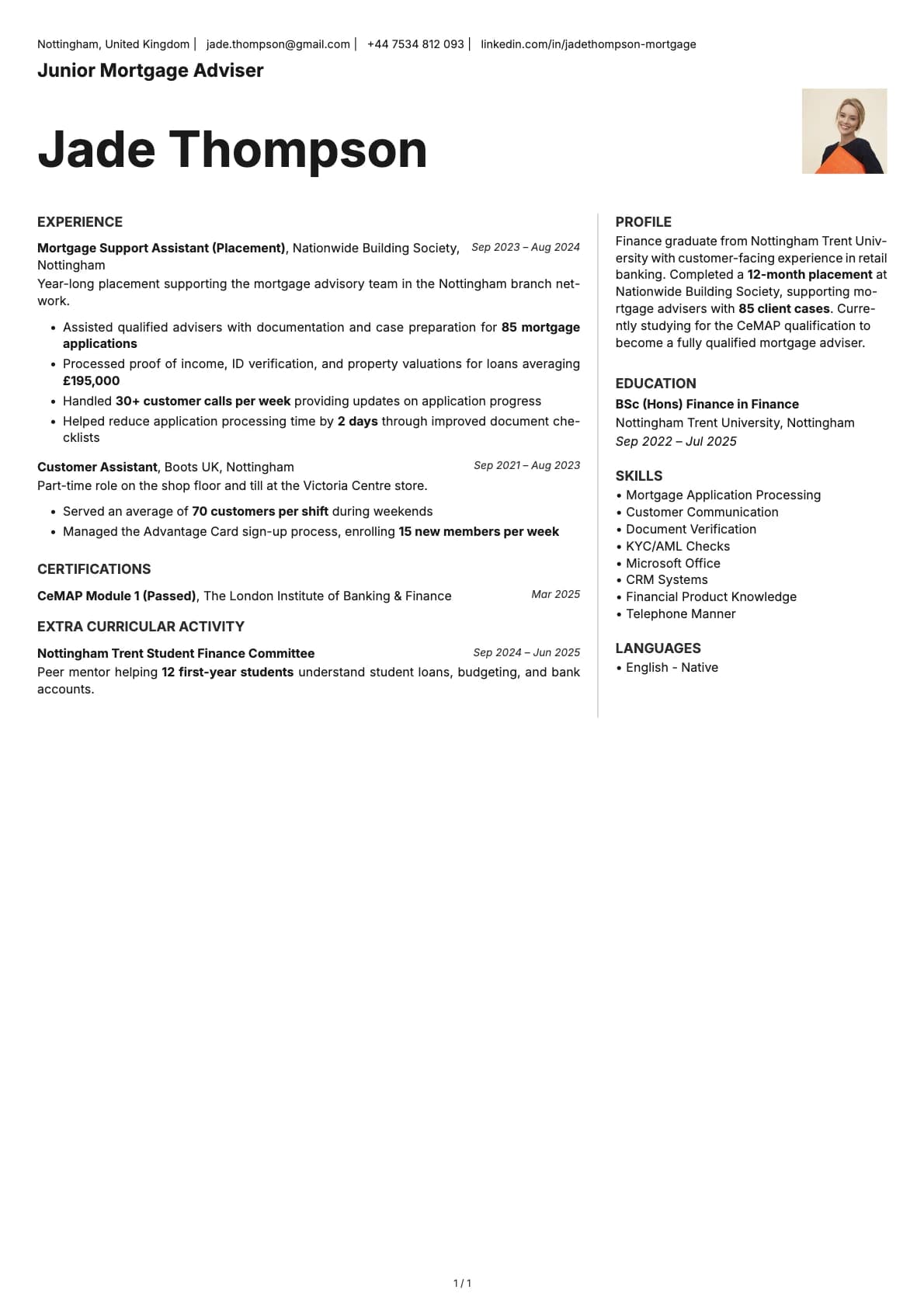
Junior Mortgage Adviser
A junior mortgage adviser resume example with Nationwide placement experience and CeMAP qualification in progress.
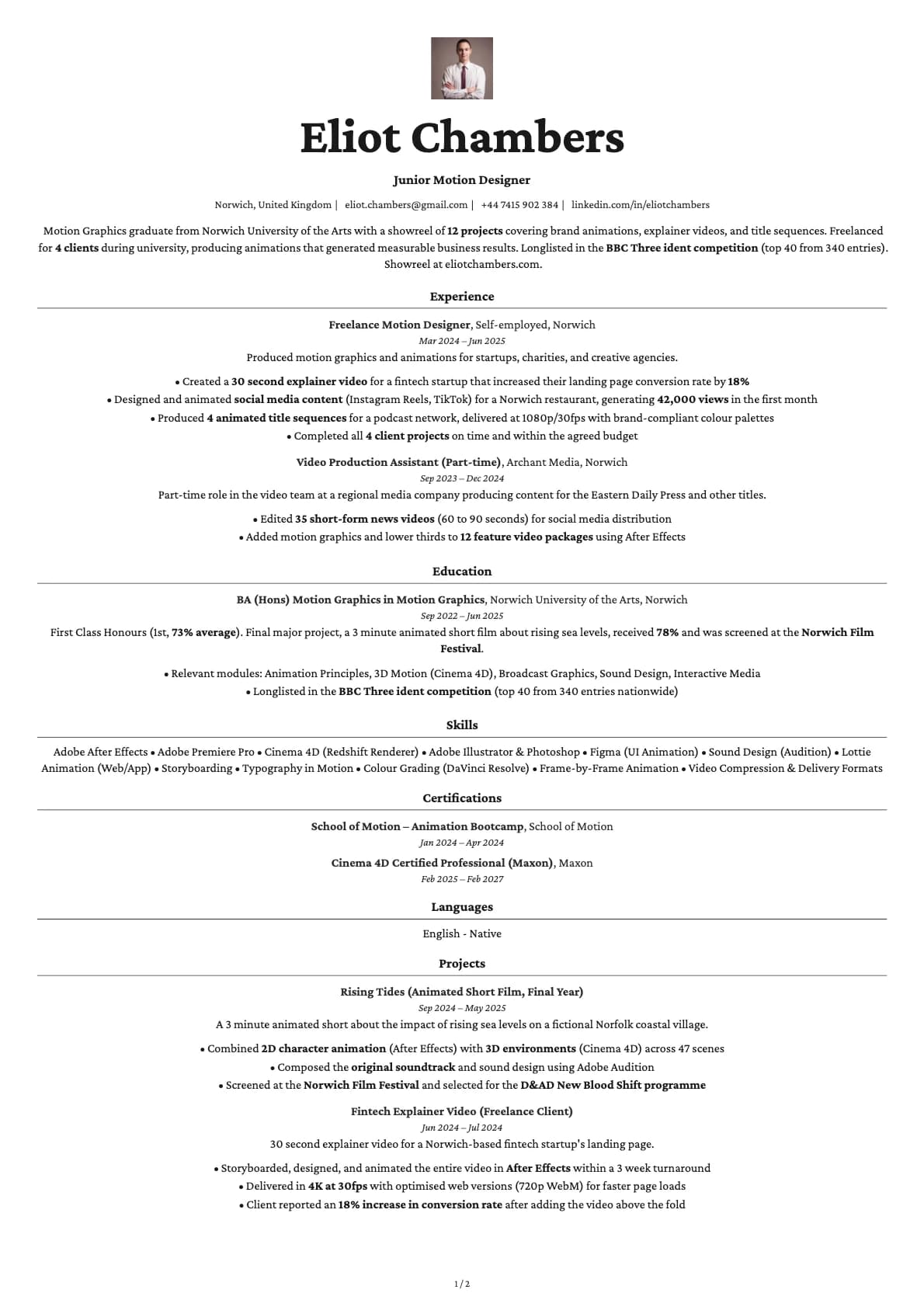
Junior Motion Designer
A junior motion designer resume example with After Effects projects, client animations, and showreel details from a Motion Graphics BA graduate entering the field.

Junior Network Engineer
A junior network engineer resume example with CCNA, an MSP apprenticeship, and a home lab. See how to present networking skills and certifications for your first engineering role.
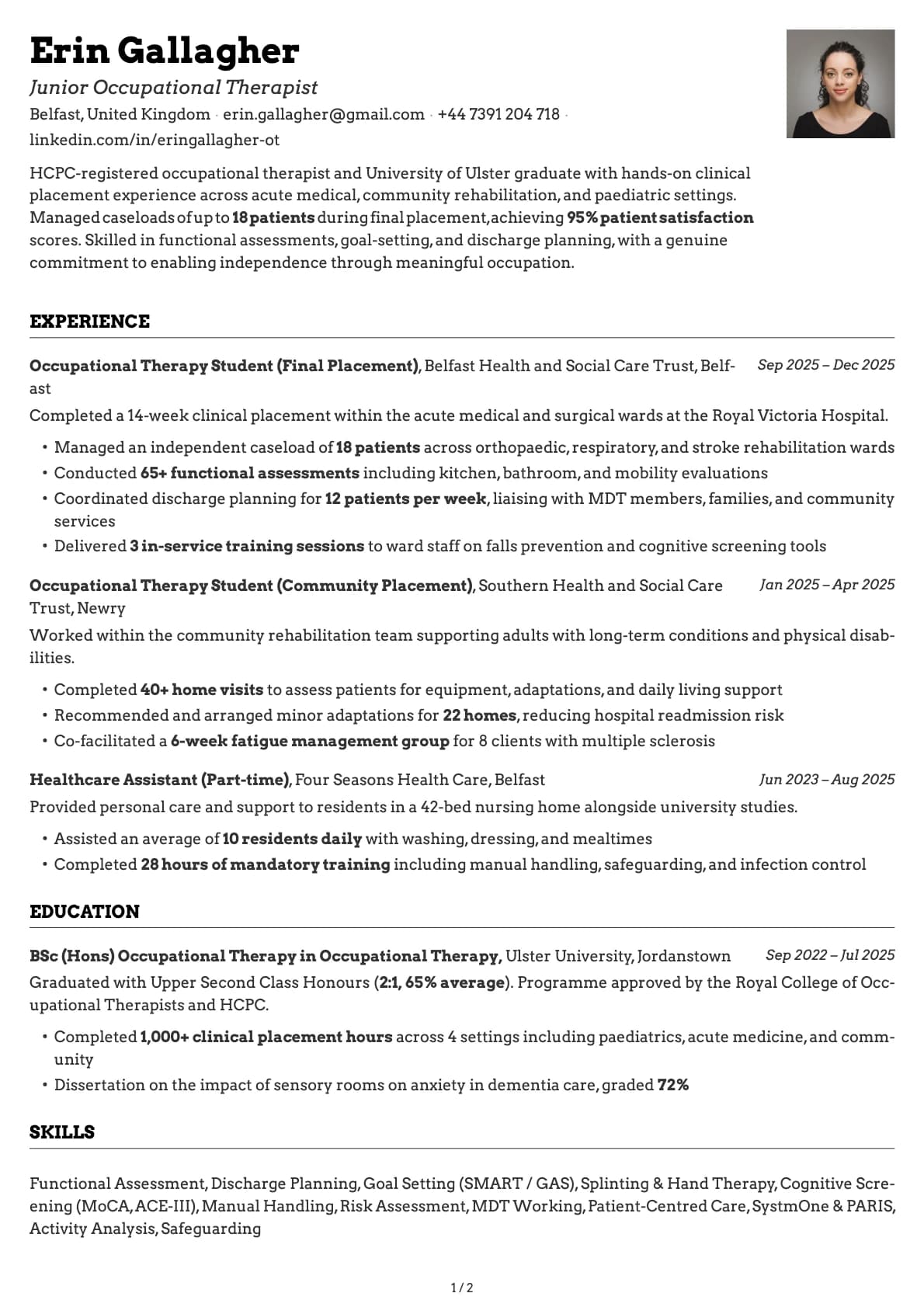
Junior Occupational Therapist
A junior occupational therapist resume example with clinical placement experience, HCPC registration, and real patient outcome numbers for new graduates.