Junior Auditor Resume Example
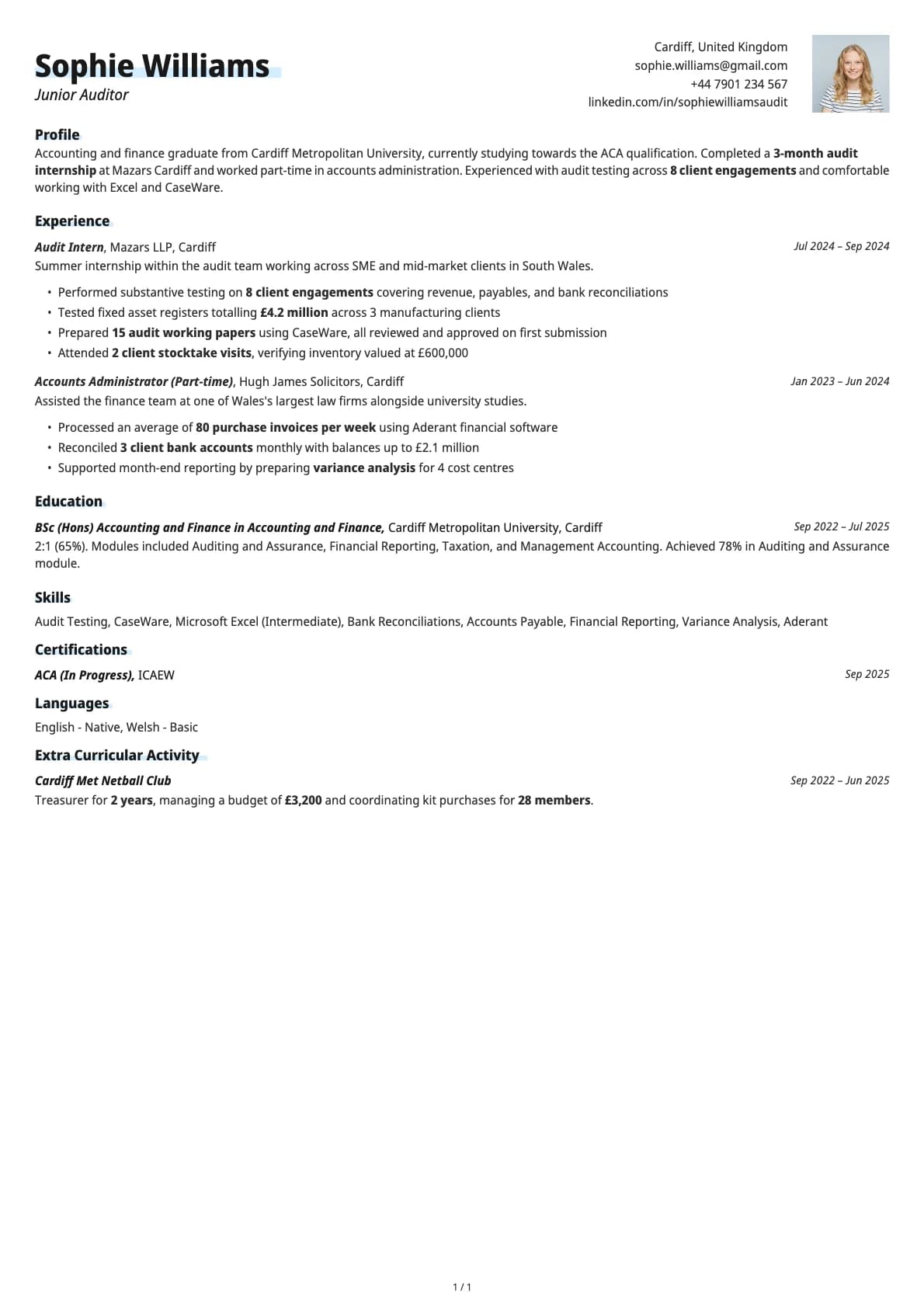
A junior auditor resume example with Mazars internship experience and accounts administration background.

Laddro Team
Free to use. No account needed to start.
Free to use. No account needed to start.
Overview
Junior auditor roles are the starting point for most accounting careers, and they are fiercely competitive. Firms like Mazars, BDO, Grant Thornton, and the Big 4 receive hundreds of applications per office, and they are looking for candidates who already understand what audit work actually involves: testing, documentation, and attention to detail under time pressure.
Sophie Williams is an accounting graduate from Cardiff Metropolitan University who completed a summer internship at Mazars and worked part-time in accounts administration at a large law firm. Her resume works because it shows she has already done the core tasks of an audit role and can describe them with precision.
What Makes This Resume Work
Audit internship with specific engagement numbers. Eight client engagements in 3 months is a solid volume for an intern. Sophie also names the types of testing she performed and the total value of the assets she reviewed, giving the reader a clear sense of scope.
Working papers approved on first submission. This is a small detail that speaks volumes. In audit, having your work reviewed and sent back for corrections is normal for juniors. Getting 15 papers approved first time signals thoroughness and attention to the firm's methodology.
Accounts administration that proves financial literacy. The Hugh James role is not audit, but processing 80 invoices a week and reconciling client accounts worth £2.1 million shows Sophie can handle financial data accurately and at pace. These are transferable skills that any audit team values.
Extracurricular role that mirrors the job. Being treasurer of the netball club, managing a £3,200 budget, might seem small. But it shows Sophie voluntarily took on a financial responsibility, which reinforces her interest in the field.
Key Takeaways
For junior auditor applications, focus on the detail of what you tested, the values involved, and the outcomes. If you completed an internship, describe each engagement type. If your only experience is in accounts administration or bookkeeping, highlight accuracy rates, volumes processed, and any reconciliation work. Audit firms want evidence that you can work methodically and produce clean documentation.
Build your own version
Open this layout in the builder and swap in your own details. It takes a few minutes.
Free to use. No account needed to start.
Was this resume example helpful?
Rate this example to help us create better content for you.
4.6 average from 103 ratingsRelated resume examples
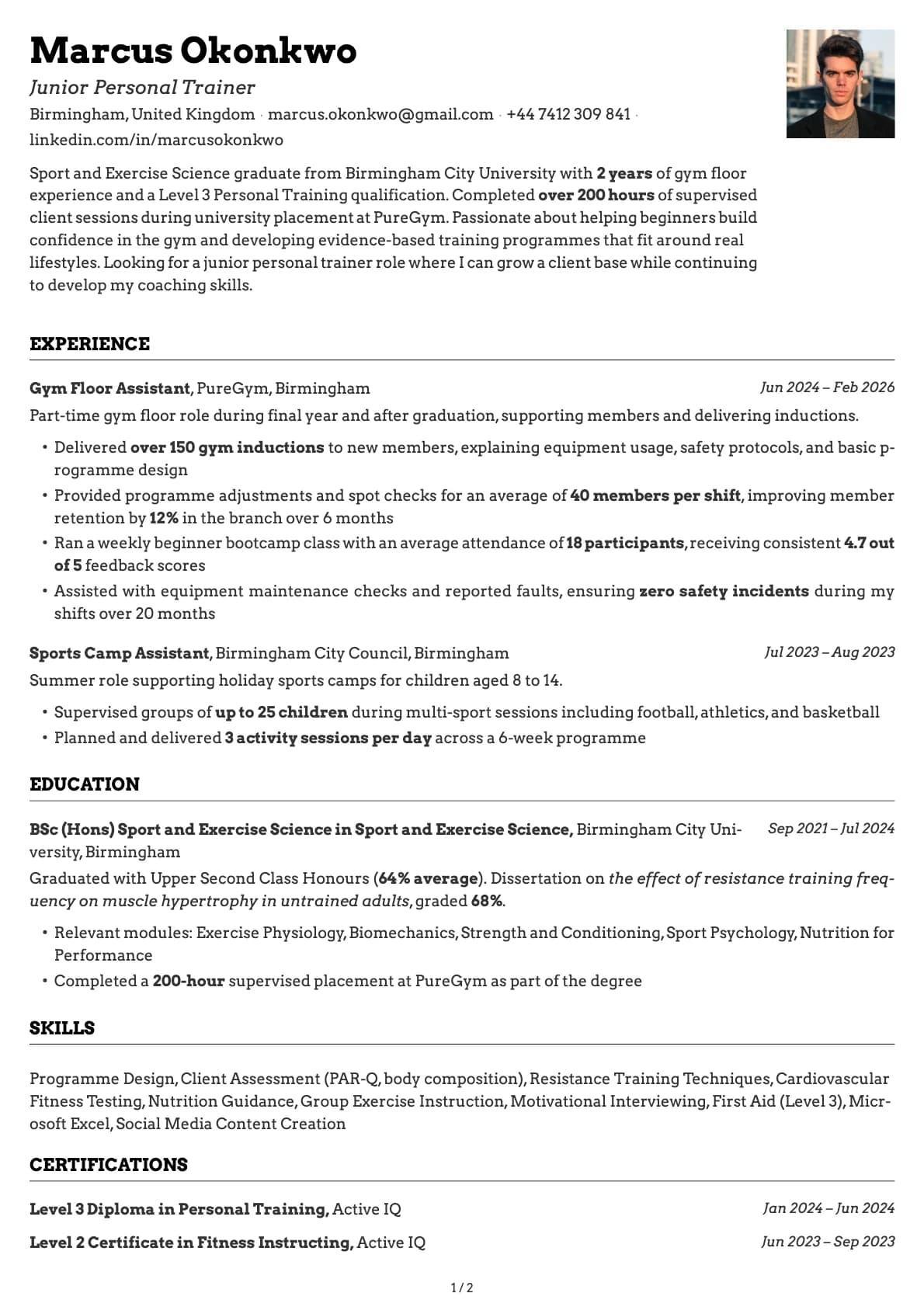
Junior Personal Trainer
A junior personal trainer resume example showing how to combine a sport science degree, Level 3 PT qualification, and gym floor experience at PureGym.
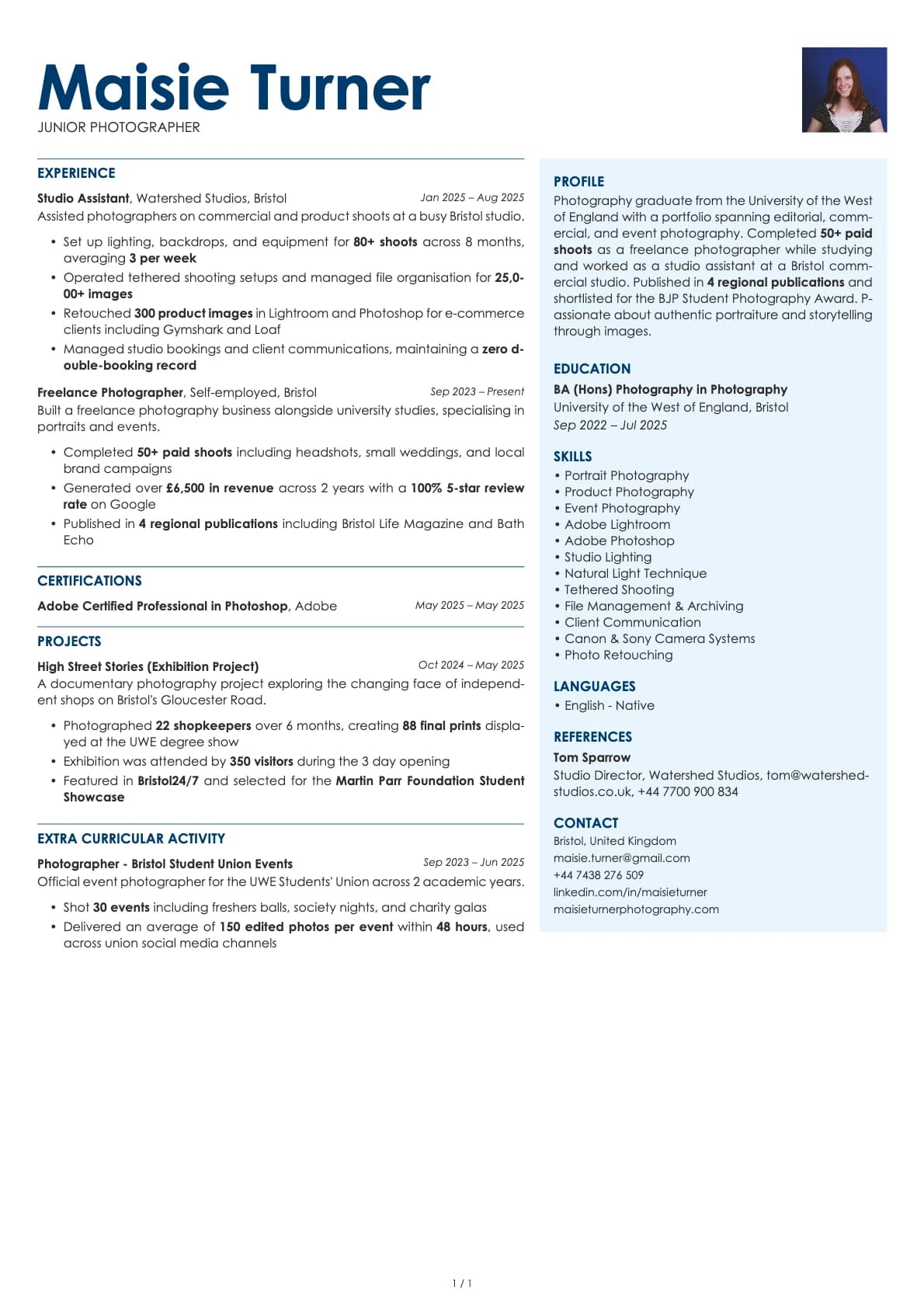
Junior Photographer
A junior photographer resume example for graduates. See how to present freelance work, studio experience, and published images to land your first photography role.
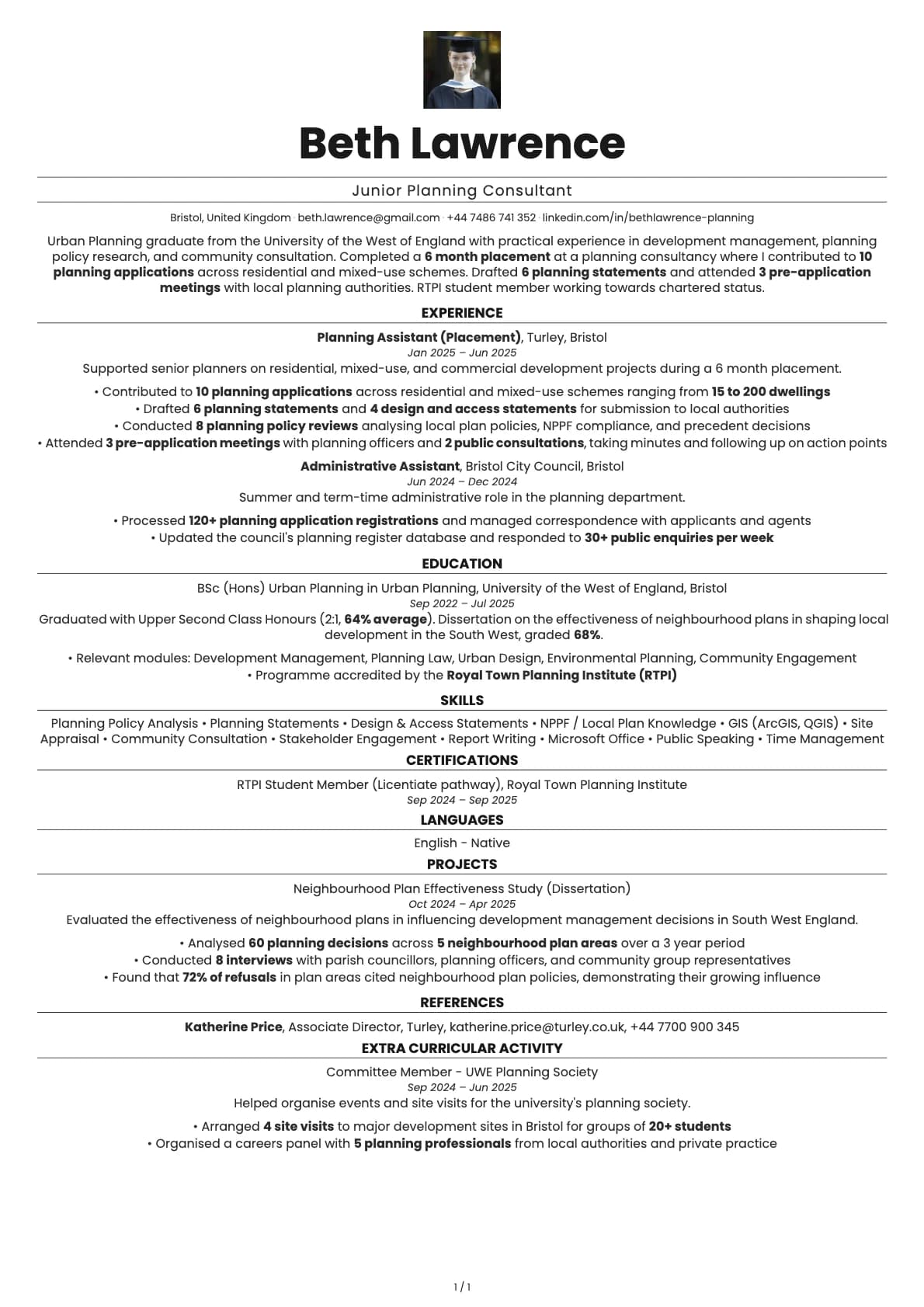
Junior Planning Consultant
A junior planning consultant resume example for graduates. See how to present planning application experience, policy analysis, and RTPI membership to land your first planning role.
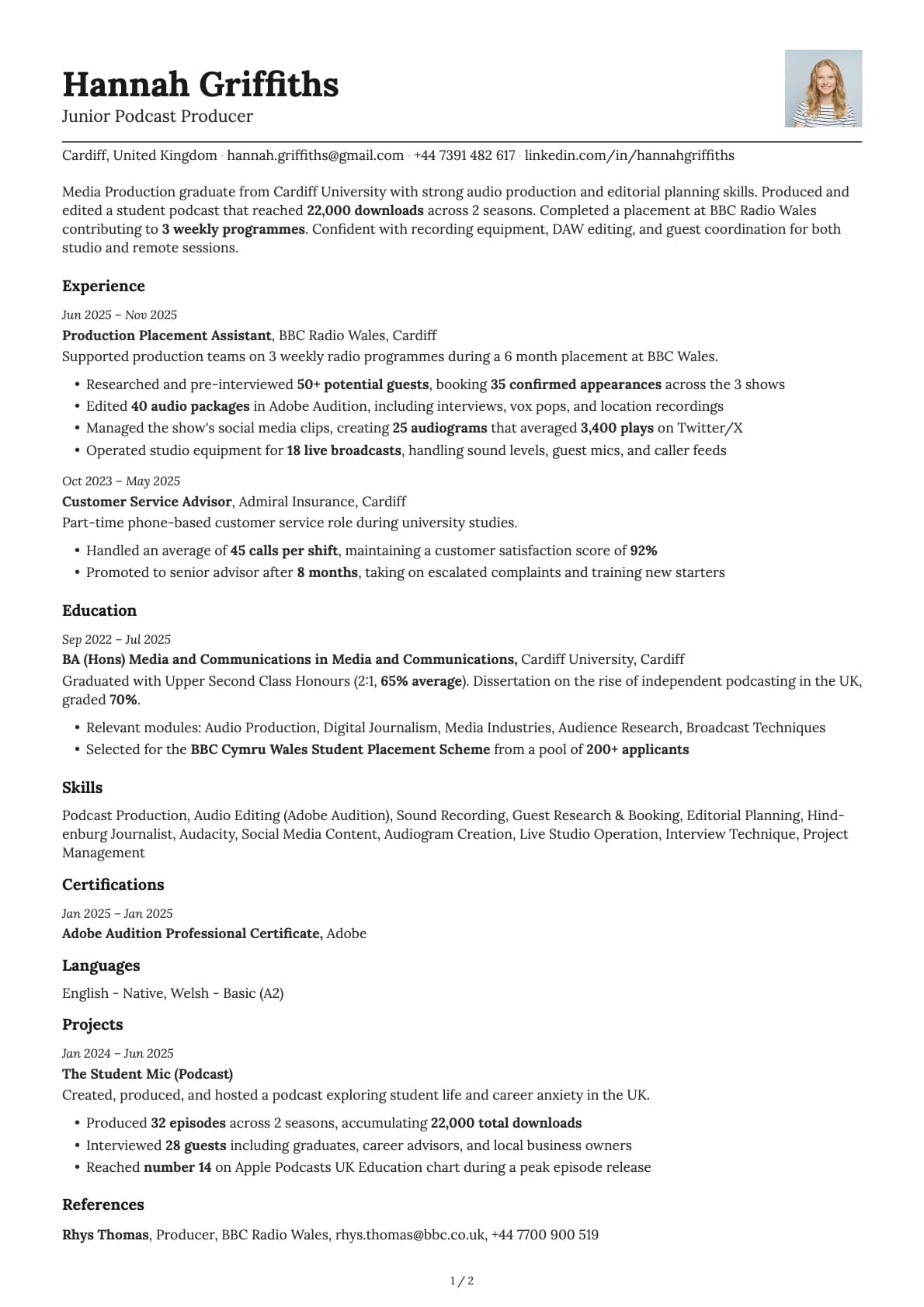
Junior Podcast Producer
A junior podcast producer resume example for graduates. See how to present audio production skills, download numbers, and broadcasting experience to land your first podcast role.
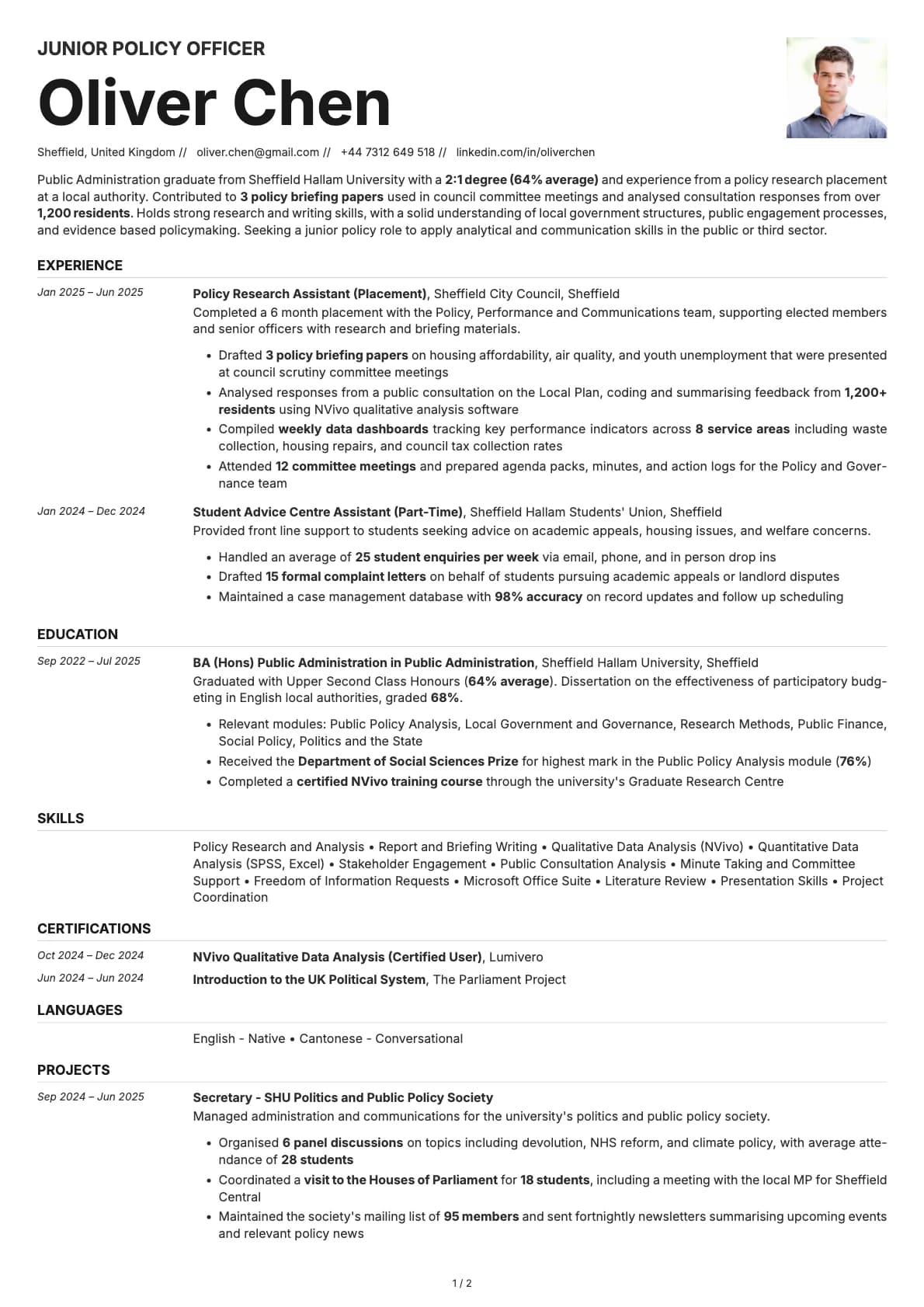
Junior Policy Officer
A junior policy officer resume example for public administration graduates. See how to present research skills, briefing writing, and council placement experience.
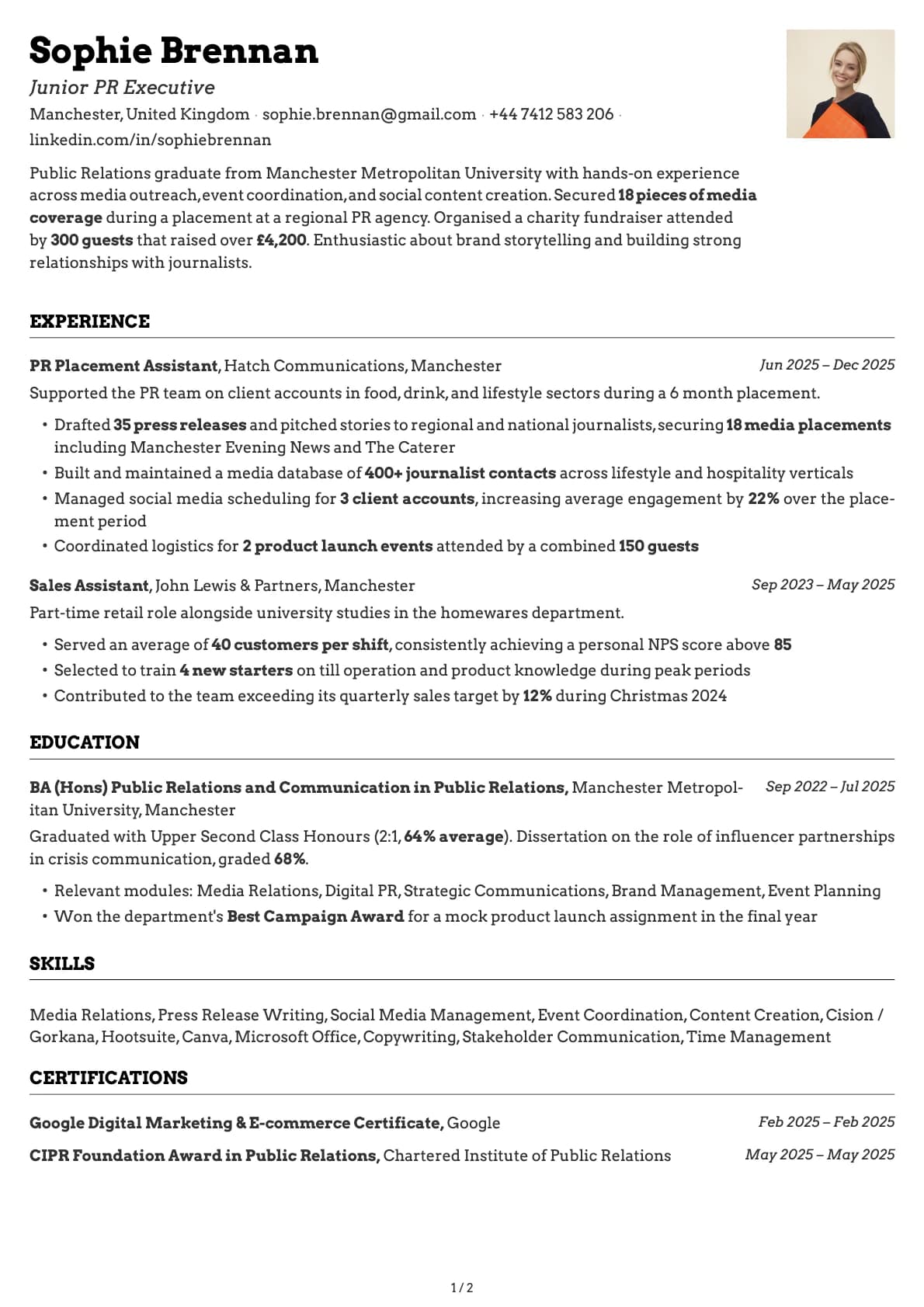
Junior PR Executive
A junior PR executive resume example for recent graduates. See how to showcase media placements, event coordination, and communication skills to land your first PR role.
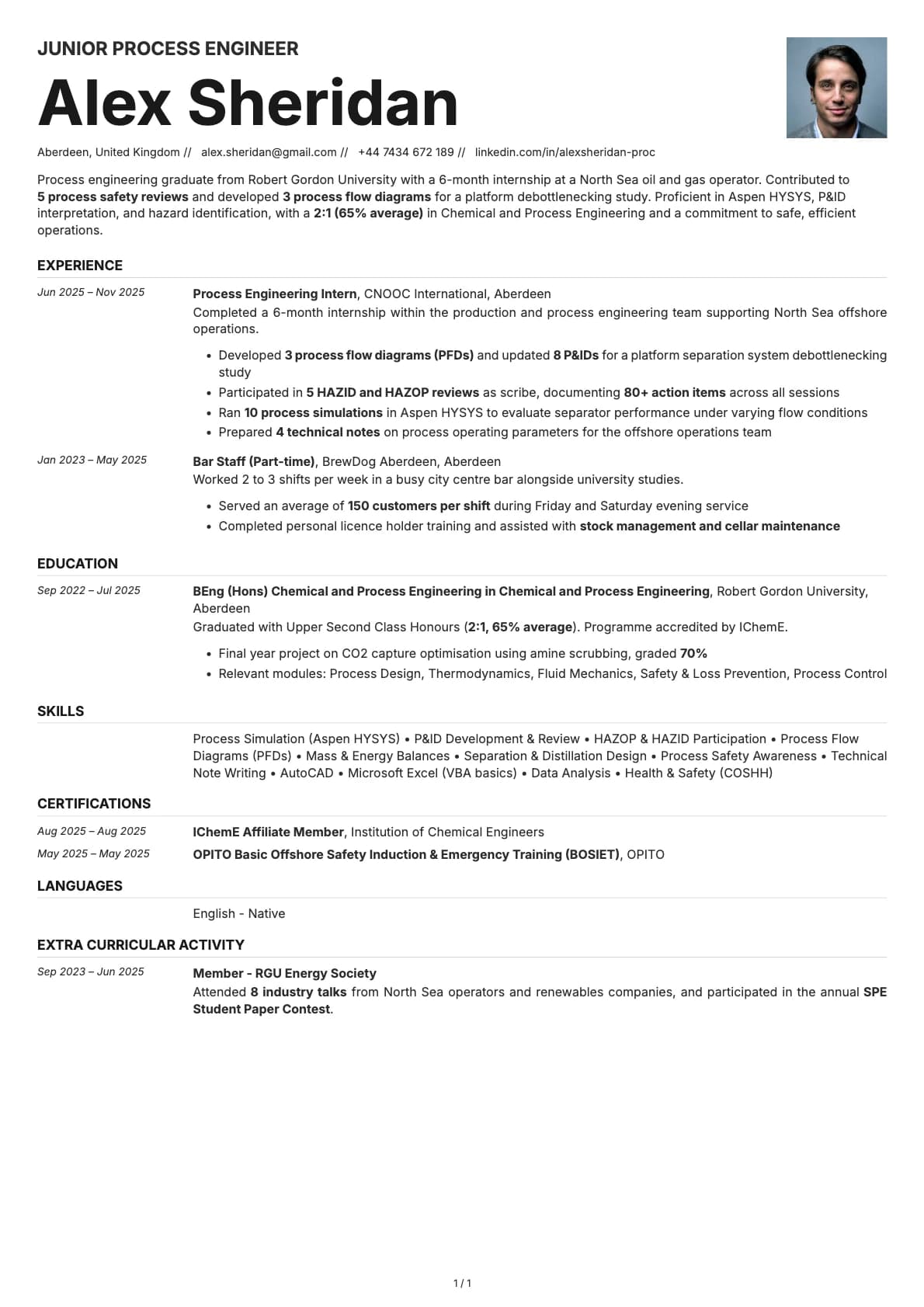
Junior Process Engineer
A junior process engineer resume example with oil and gas internship experience, HYSYS modelling, and HAZOP participation for graduates.
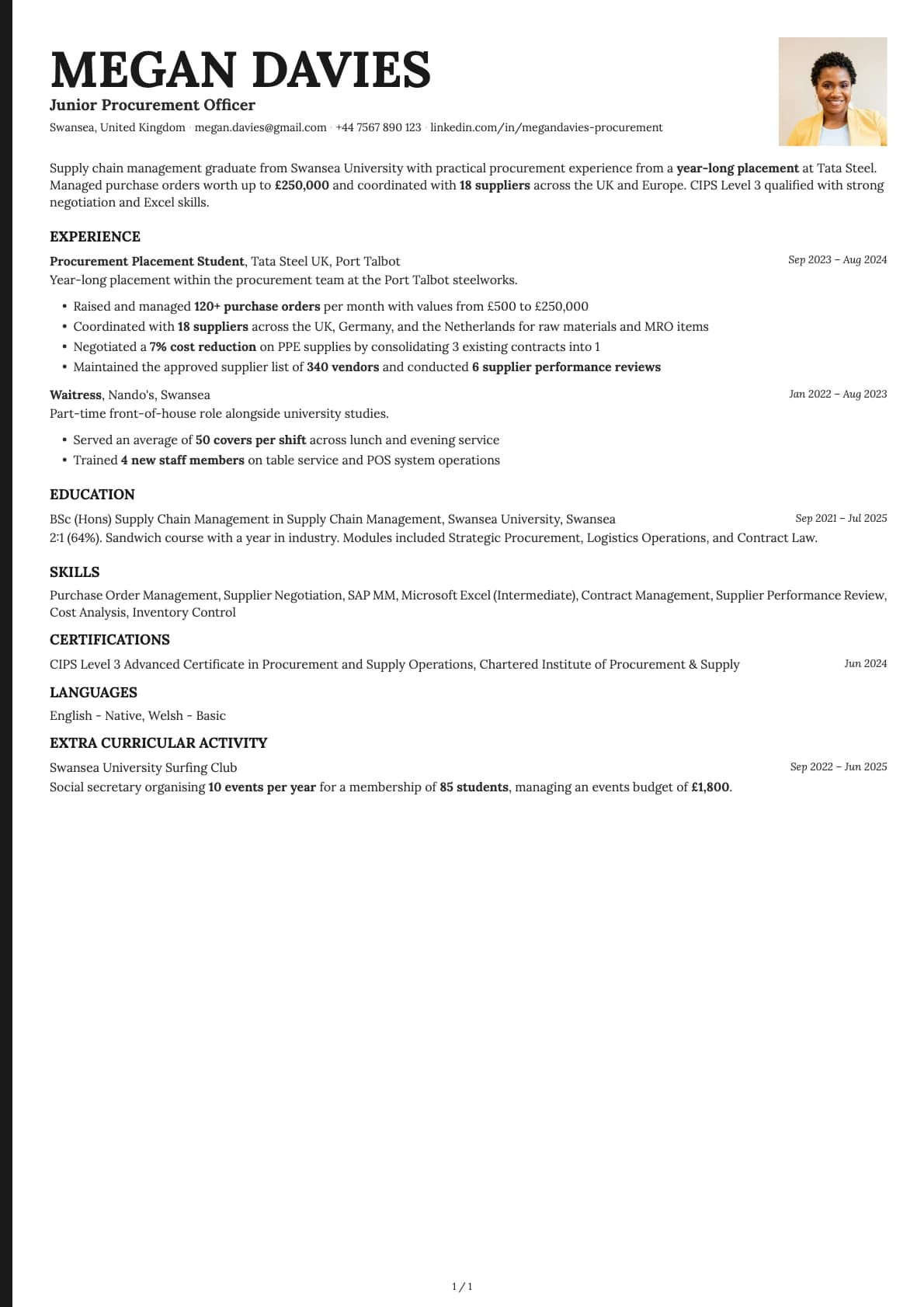
Junior Procurement Officer
A junior procurement officer resume example with Tata Steel placement experience and CIPS qualification.
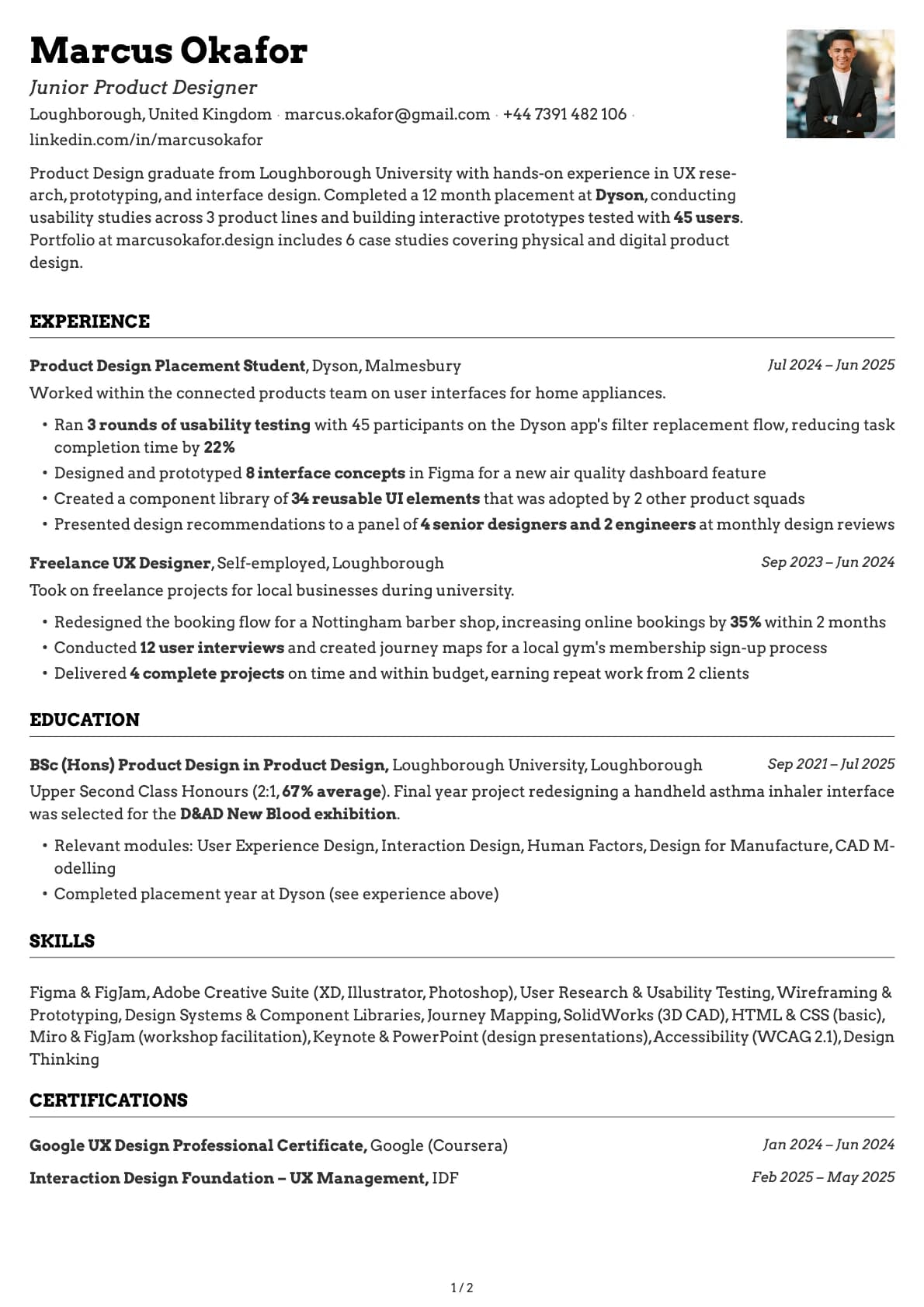
Junior Product Designer
A junior product designer resume example with UX research projects, Figma prototypes, and usability test results from a Product Design BSc at Loughborough.

Junior Product Support Engineer
A junior product support engineer resume example for graduates. See how to present ticket resolution metrics, knowledge base work, and technical troubleshooting to land your first support engineering role.
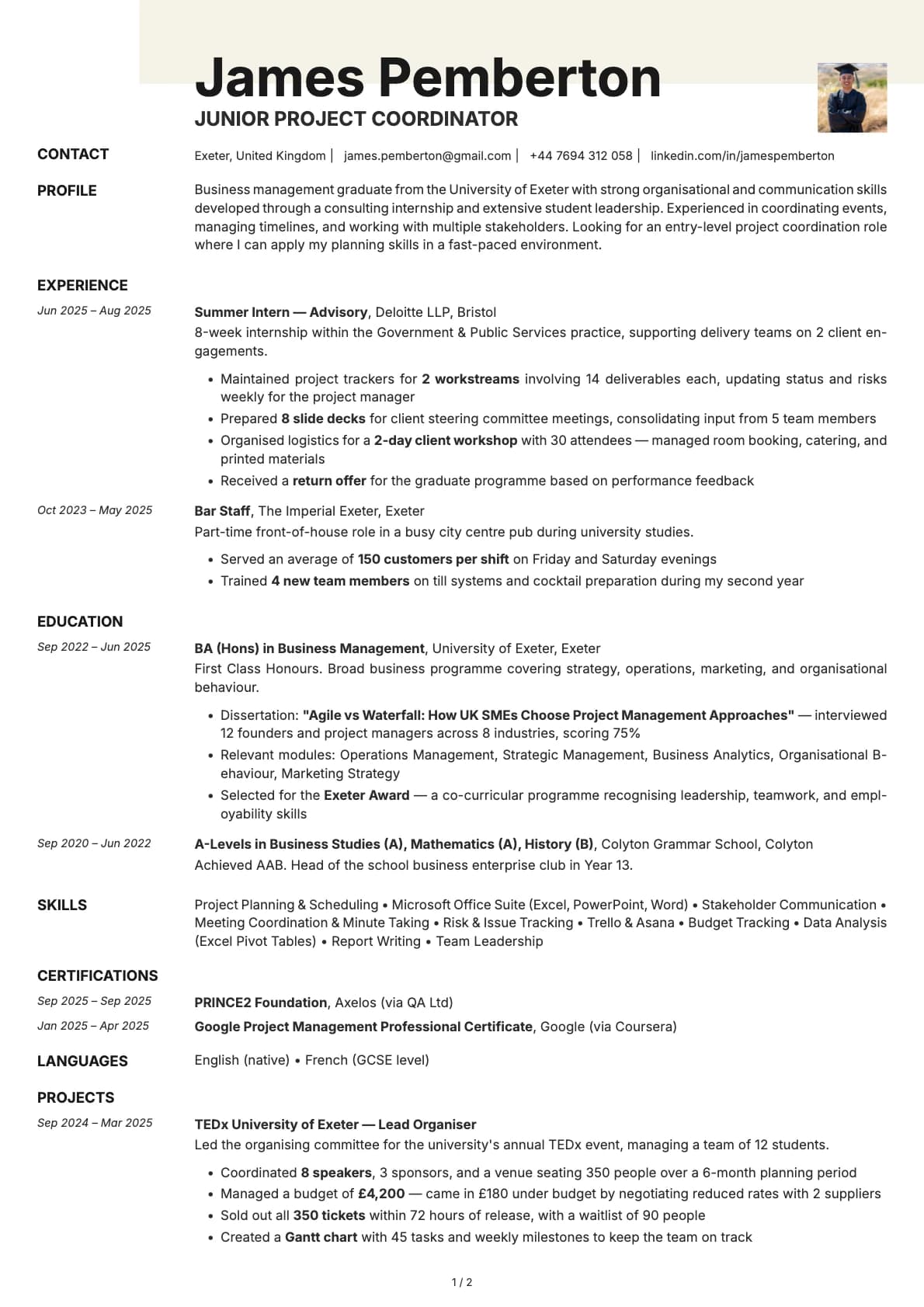
Junior Project Coordinator
A junior project coordinator resume example for recent graduates. Learn how to present your organisational skills, team projects, and coordination experience to get hired.
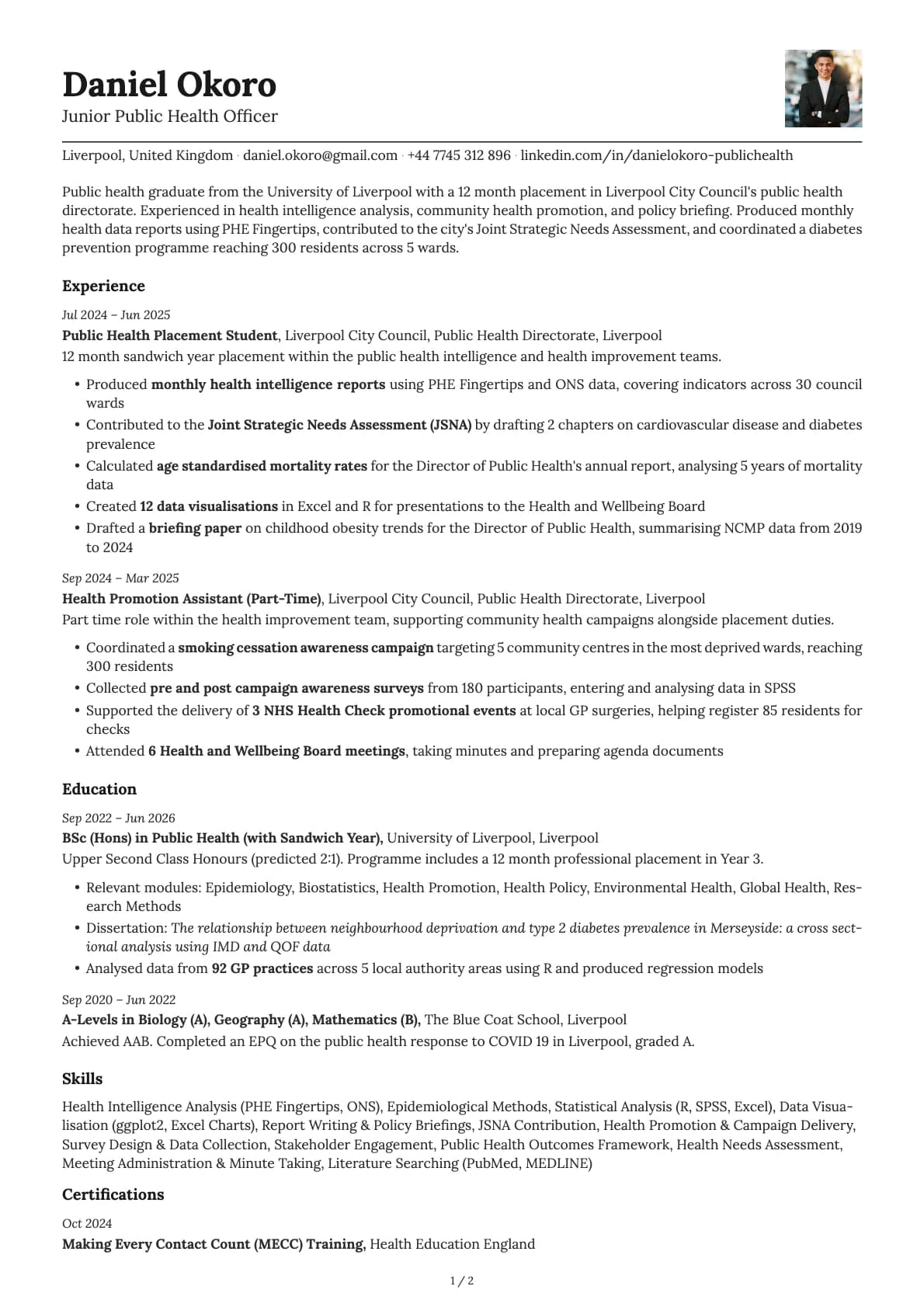
Junior Public Health Officer
A junior public health officer resume example for public health graduates showing how to present epidemiology skills, data analysis experience, and health promotion projects for local authority and NHS roles.