Teaching Assistant Graduate Resume Example
A teaching assistant resume example for recent graduates. See how to present your classroom experience, volunteer work, and education degree to get hired as a TA.

Laddro Team
Free to use. No account needed to start.
Free to use. No account needed to start.
Overview
Teaching assistant roles attract a lot of graduates, especially those with education degrees or anyone considering a career in teaching. Schools want to see that you can work with children, support classroom learning, and handle the day to day realities of a school environment. A generic resume about "loving to work with kids" will not stand out.
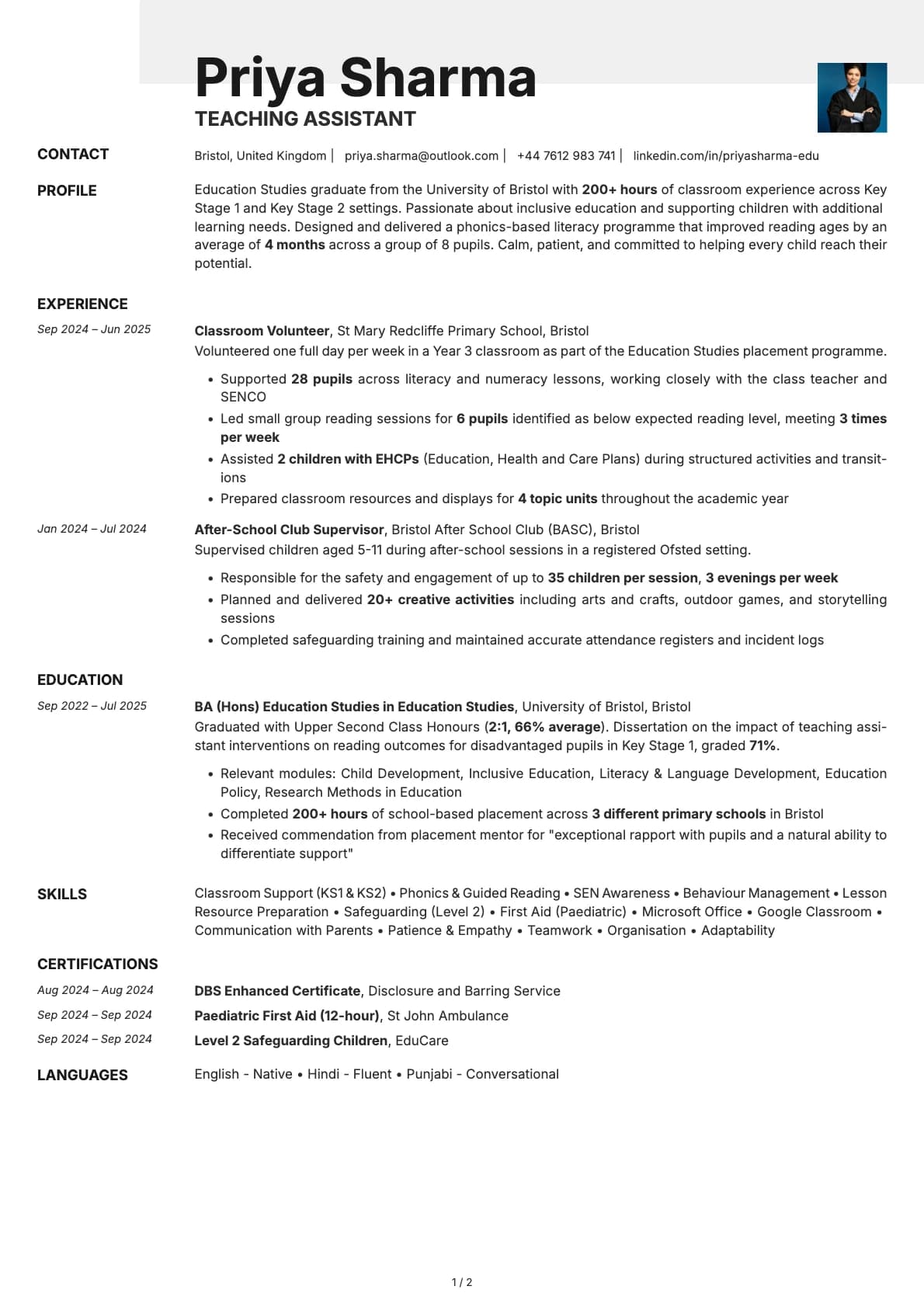
This resume belongs to Hannah Clarke, a primary education graduate from Edge Hill University. She completed two school placements during her degree and volunteered at an after school homework club for a year. Her resume works because it gives specific examples of what she did in the classroom and what happened as a result.
What Makes This Resume Work
Placements are described with detail. Hannah does not just say she observed lessons. She supported small group reading sessions with Year 3 pupils, working with groups of four to six children three times per week. She helped prepare classroom resources for 25 lessons over her eight week placement. This tells a headteacher she was actively contributing, not sitting at the back of the room.
Impact on pupils is mentioned. During her second placement, she worked one to one with a Year 5 pupil who was behind in maths. Over six weeks, the pupil moved from working at a Year 3 level to completing Year 4 level tasks independently. That is the kind of outcome schools want to see. It shows Hannah can support individual learners and track their progress.
Volunteer work adds credibility. Running a homework club for primary aged children every Wednesday for a full academic year demonstrates commitment. She supported an average of 12 children per session with reading, maths, and spelling. That consistency matters. Schools want reliability above almost everything else.
Relevant training is included. Hannah lists her paediatric first aid certificate, safeguarding training, and a phonics workshop she attended voluntarily. These are not just nice extras. Many schools require them, and having them already shows you are prepared to start working immediately.
Key Takeaways
Describe your school placements with the same detail you would use for a paid job. Include year groups, group sizes, frequency of sessions, and any measurable progress from the pupils you supported.
Volunteer work with children is genuinely valuable for TA applications. If you helped at a youth club, tutored younger students, or ran activities at a community centre, include it with numbers and specifics.
List every relevant certificate you hold. First aid, safeguarding, food hygiene, phonics training. Schools check for these, and having them ready removes a barrier to hiring you.
Build your own version
Open this layout in the builder and swap in your own details. It takes a few minutes.
Free to use. No account needed to start.
Was this resume example helpful?
Rate this example to help us create better content for you.
4.8 average from 97 ratingsRelated resume examples
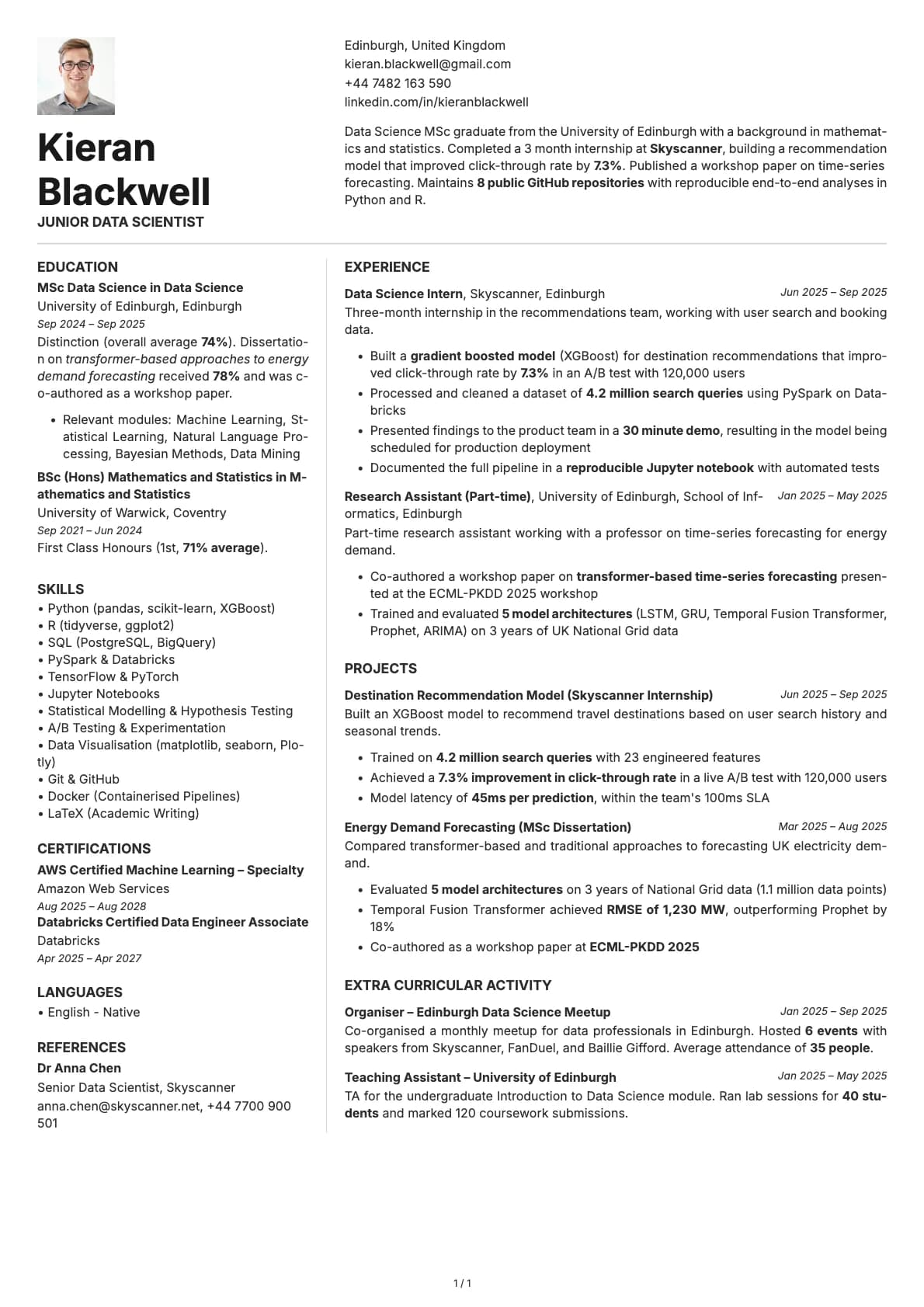
Junior Data Scientist
A junior data scientist resume example with Python projects, model accuracy metrics, and published research from a Data Science MSc graduate entering the field.
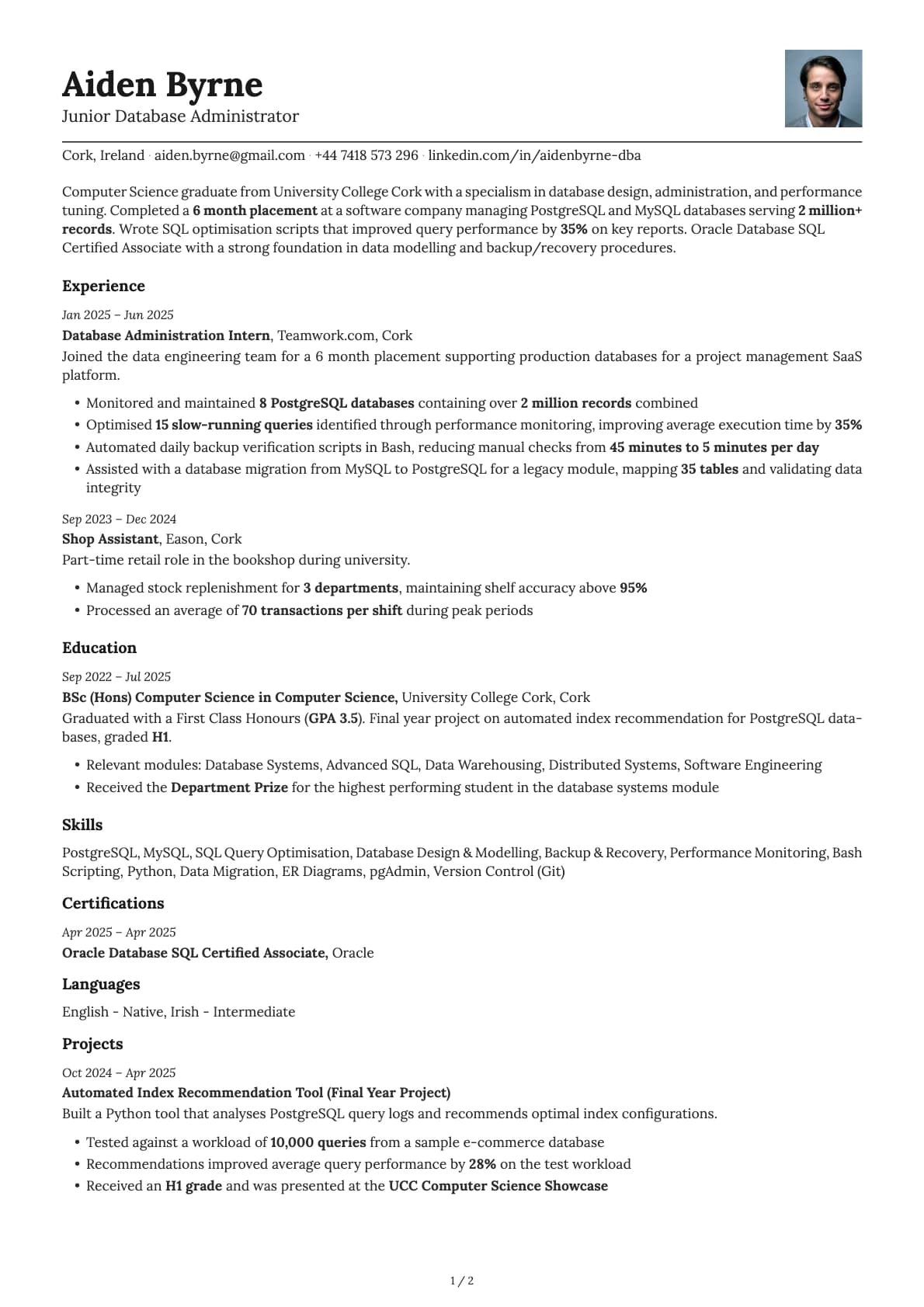
Junior Database Administrator
A junior database administrator resume example for graduates. See how to present SQL skills, performance tuning, and database management experience to land your first DBA role.
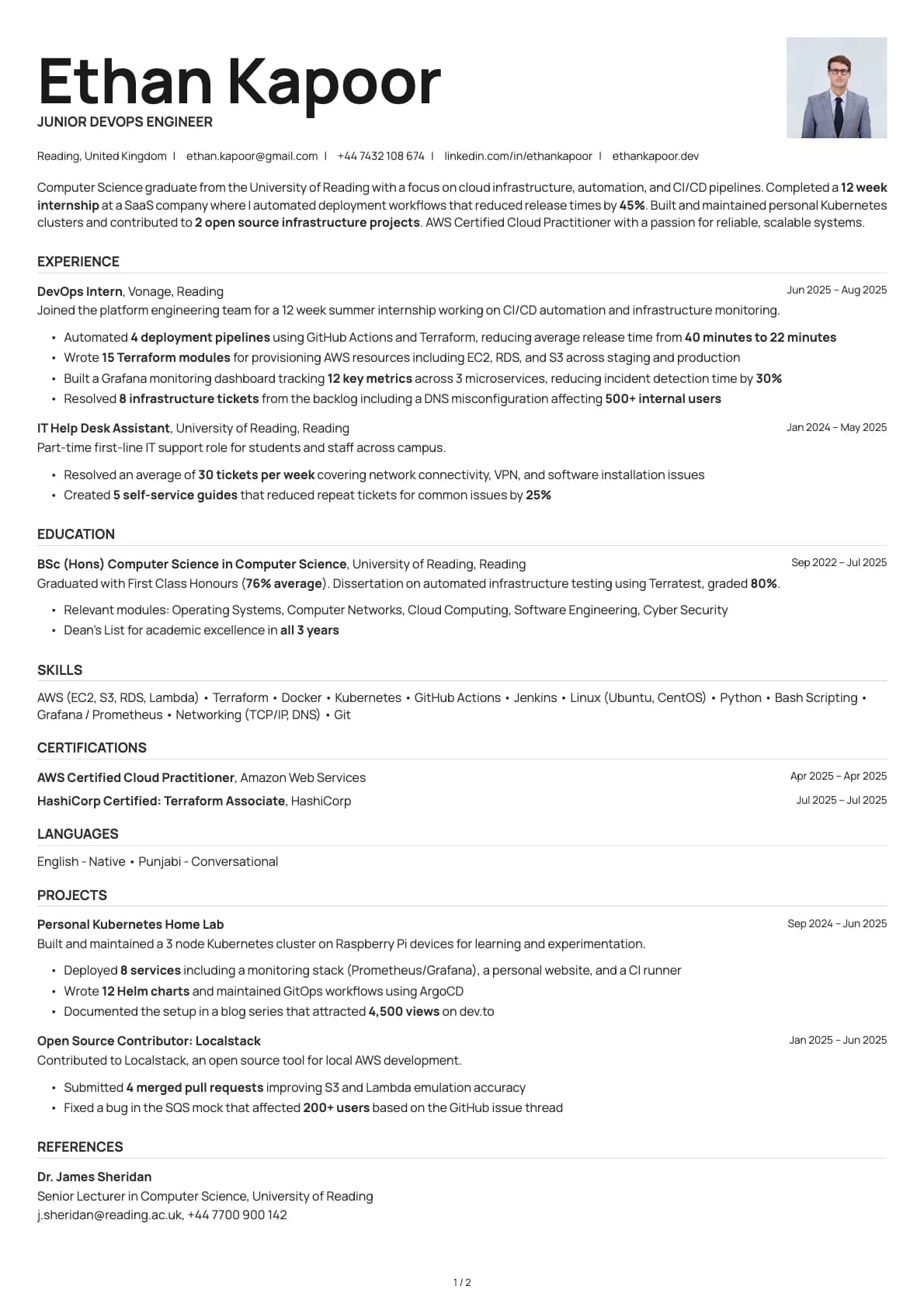
Junior DevOps Engineer
A junior DevOps engineer resume example for graduates. See how to present CI/CD experience, cloud certifications, and infrastructure projects to land your first DevOps role.
Junior Dietitian
A junior dietitian resume example with NHS clinical placement experience, HCPC registration, and patient caseload numbers for new graduates.
Junior Digital Commerce Executive
A junior digital commerce executive resume example showing how an e-commerce graduate used Shopify internships and campaign metrics to land a first role.
Junior Diplomat
A junior diplomat resume example showing how to combine an FCDO internship, a year at Sciences Po, and Model UN leadership into a Fast Stream application.
Junior Economic Analyst
A junior economic analyst resume example with government internship experience and strong quantitative skills.
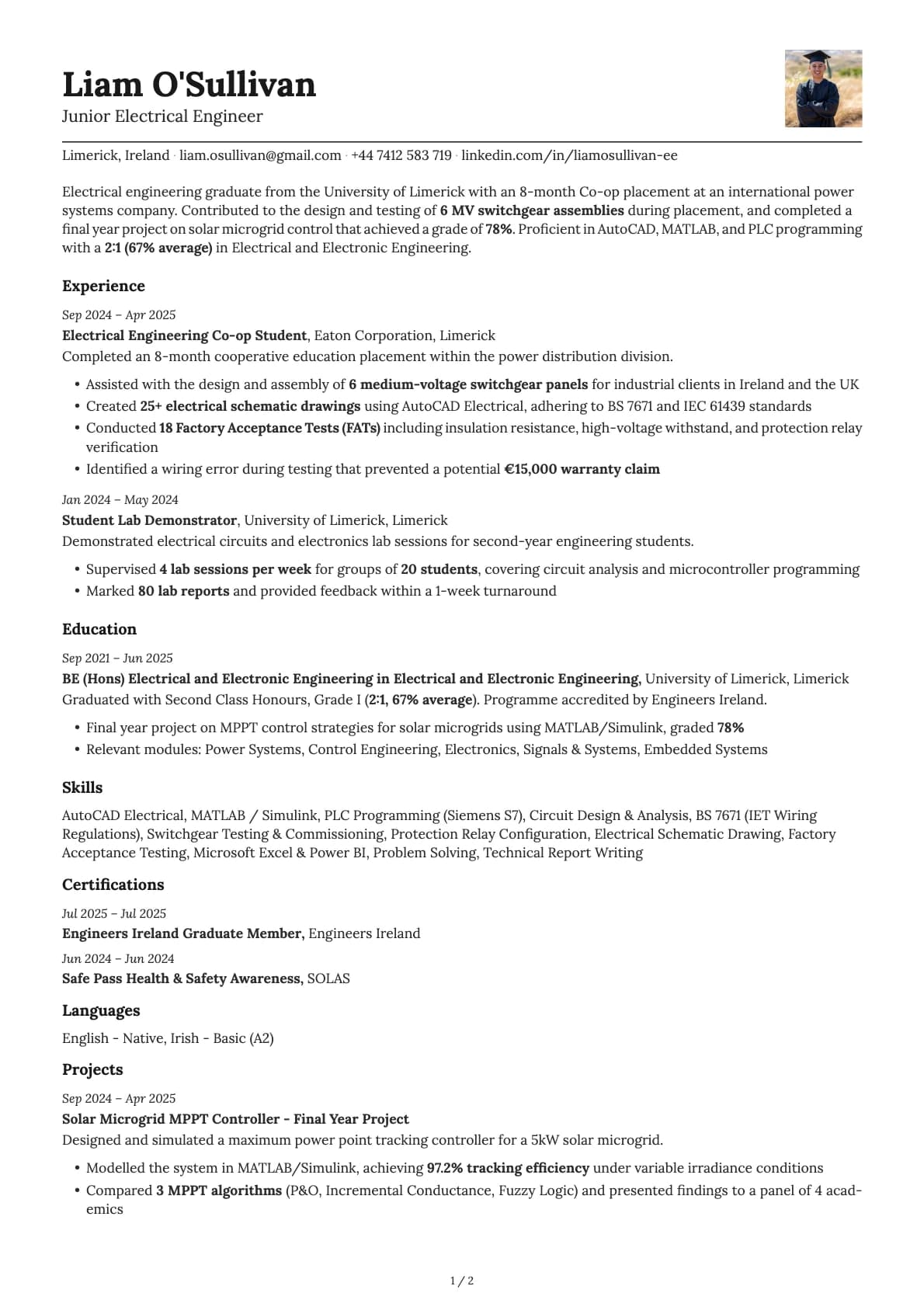
Junior Electrical Engineer
A junior electrical engineer resume example with power systems placement experience, AutoCAD skills, and Engineers Ireland membership.
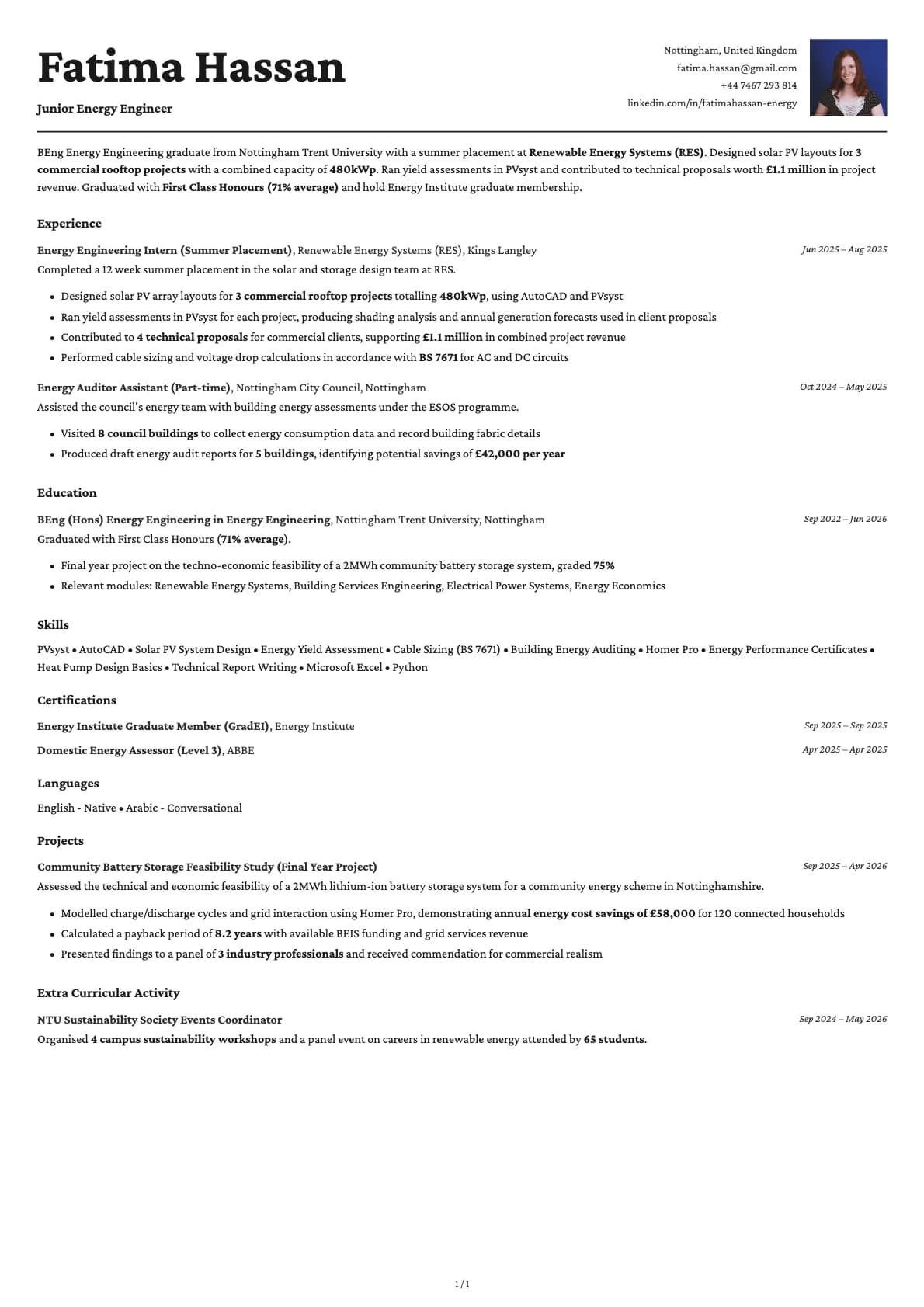
Junior Energy Engineer
A junior energy engineer resume example with renewable energy placement experience, solar PV design skills, and Energy Institute membership.
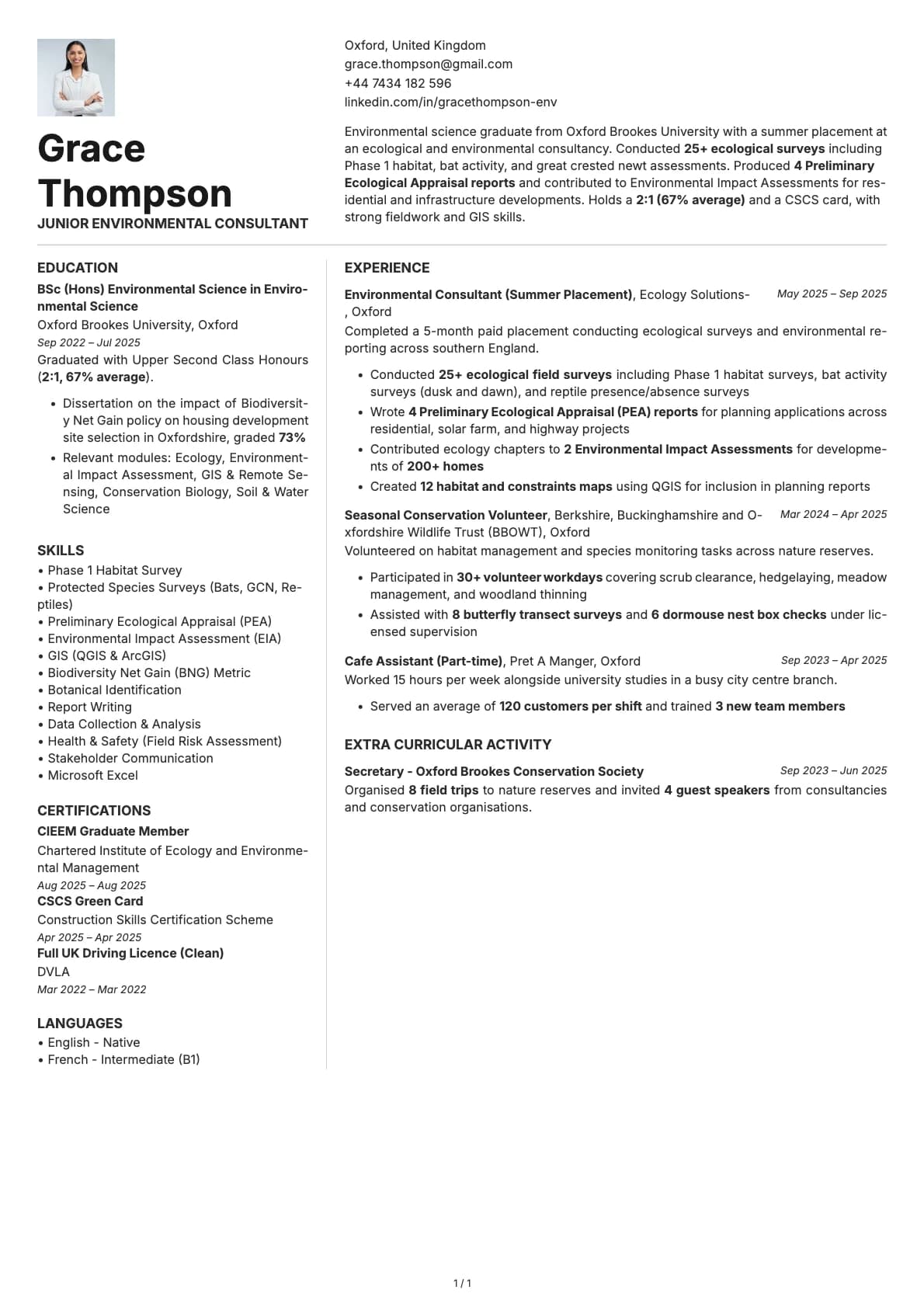
Junior Environmental Consultant
A junior environmental consultant resume example with ecological survey experience, PEA report writing, and GIS mapping skills for graduates.
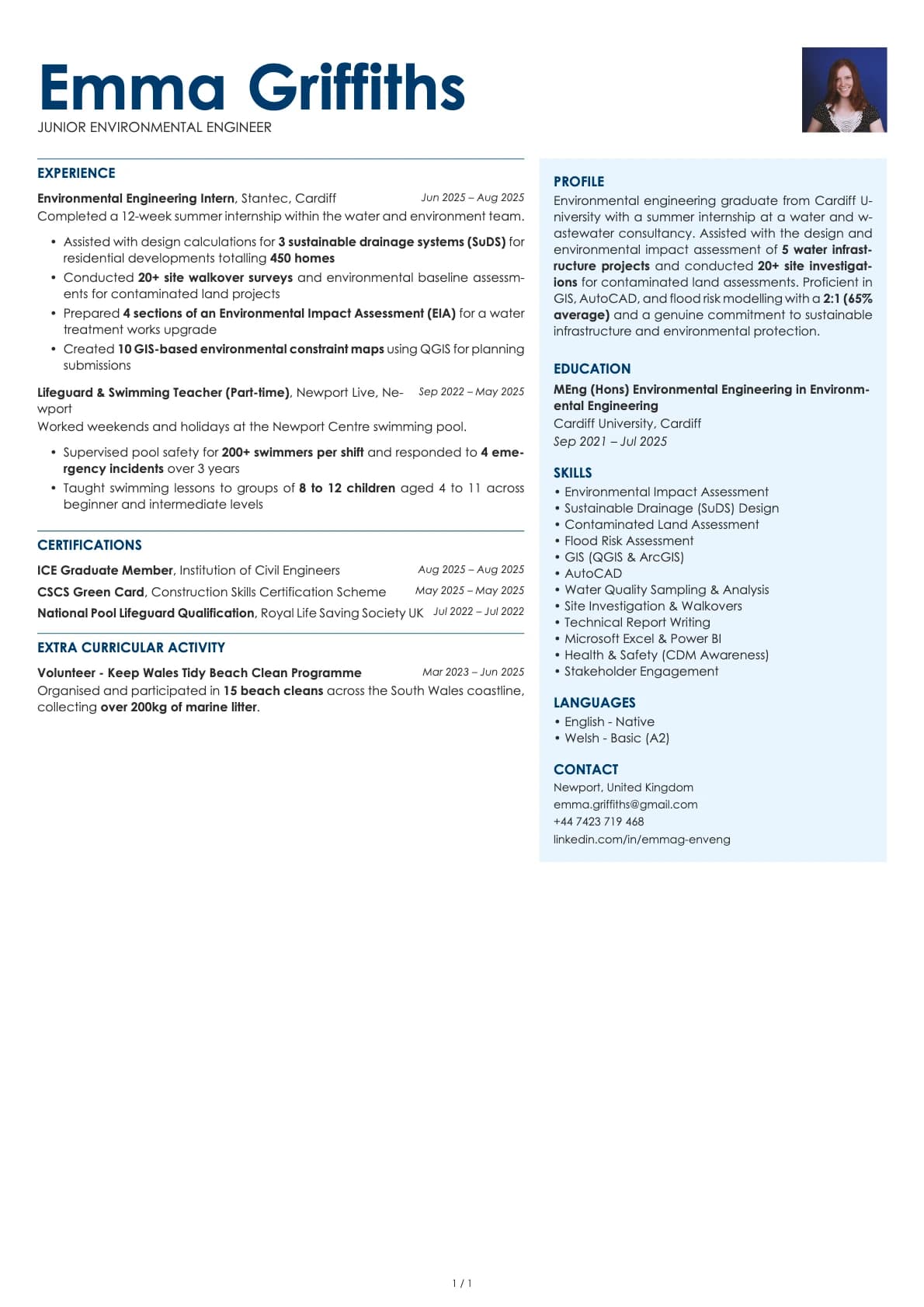
Junior Environmental Engineer
A junior environmental engineer resume example with EIA experience, SuDS design, and contaminated land site investigation numbers.
Junior Estate Agent
A junior estate agent resume example with sales negotiator experience and ARLA Propertymark qualification.