Junior Biomedical Engineer Resume Example
A junior biomedical engineer resume example with medical device R&D experience, ISO standards knowledge, and research publications.

Laddro Team
Free to use. No account needed to start.
Free to use. No account needed to start.
Overview
Biomedical engineering sits at the intersection of engineering, biology, and regulatory science. Whether you are targeting medtech R&D, clinical engineering, or regulatory affairs, employers want graduates who can demonstrate practical experience with medical device development, laboratory techniques, and the regulatory frameworks that govern the industry.
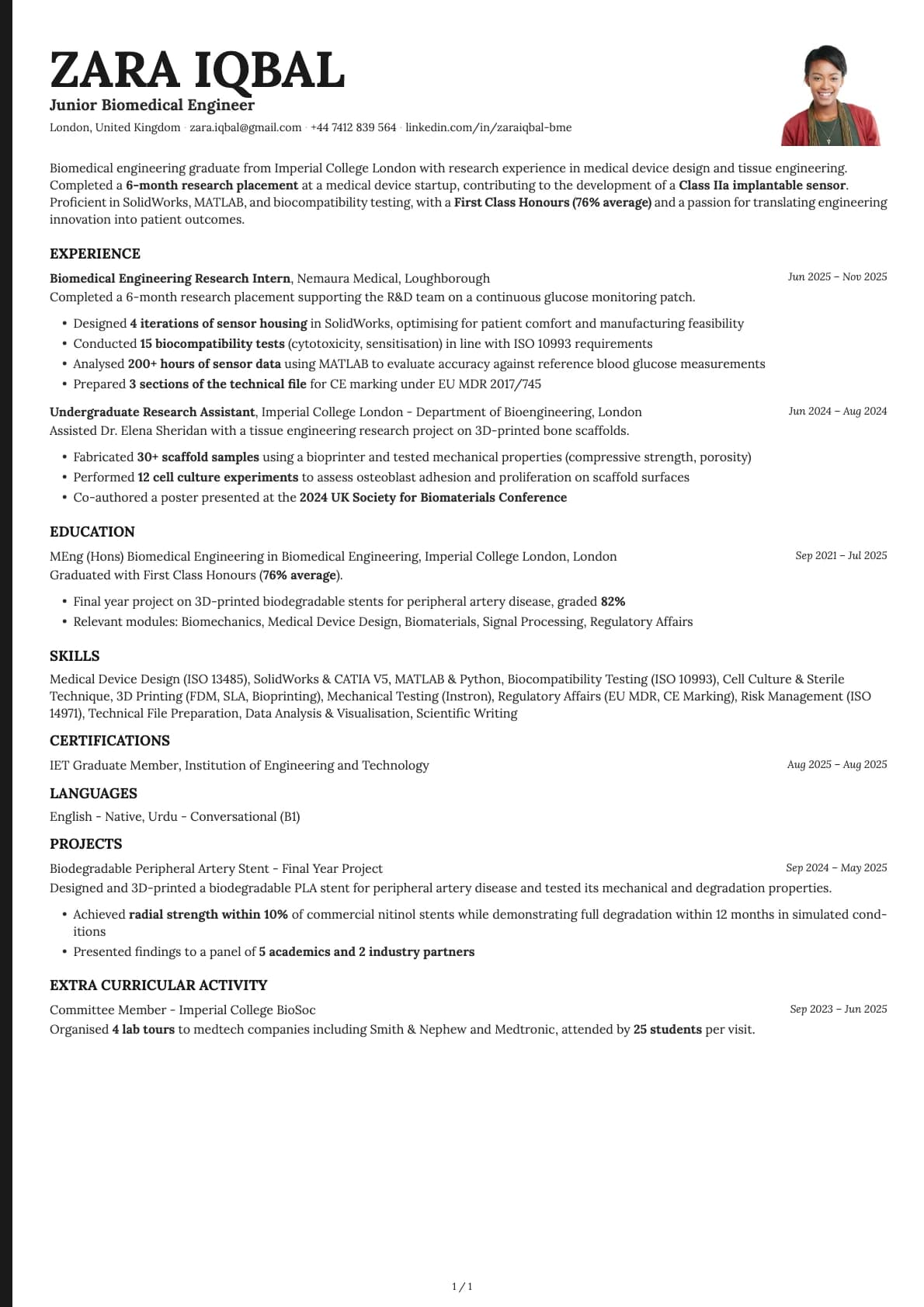
This resume belongs to Zara Iqbal, a biomedical engineering graduate from Imperial College London who completed a research placement at Nemaura Medical. She contributed to the development of a Class IIa glucose monitoring device, conducted biocompatibility testing, and helped prepare technical documentation for CE marking. Her undergraduate research on 3D-printed bone scaffolds resulted in a conference poster.
What Makes This Resume Work
Medical device development experience with regulatory context. Zara does not just describe engineering tasks. She references ISO 10993, ISO 13485, and EU MDR, which shows she understands the regulatory environment that governs every decision in medical device development. This awareness is essential and rare in new graduates.
Both industry and academic research are represented. The startup placement shows commercial awareness, while the Imperial research assistantship demonstrates scientific rigour. Together, they tell a story of a graduate who can bridge the gap between research and product development.
The final year project has translational potential. A biodegradable stent project with mechanical performance data and industry presentation experience shows Zara can take a concept from design through to evaluation and communication, which mirrors the medtech development process.
Key Takeaways
Junior biomedical engineers should highlight any experience with medical device standards (ISO 13485, ISO 10993, ISO 14971) and regulatory pathways (CE marking, EU MDR). Include specific laboratory techniques, CAD tools, and data analysis methods used. Research publications or conference presentations add significant value, even at poster level. Professional body membership (IET, IMechE) and a strong project in a clinically relevant area strengthen the application.
Build your own version
Open this layout in the builder and swap in your own details. It takes a few minutes.
Free to use. No account needed to start.
Was this resume example helpful?
Rate this example to help us create better content for you.
4.8 average from 121 ratingsRelated resume examples
Newly Qualified Secondary Maths Teacher
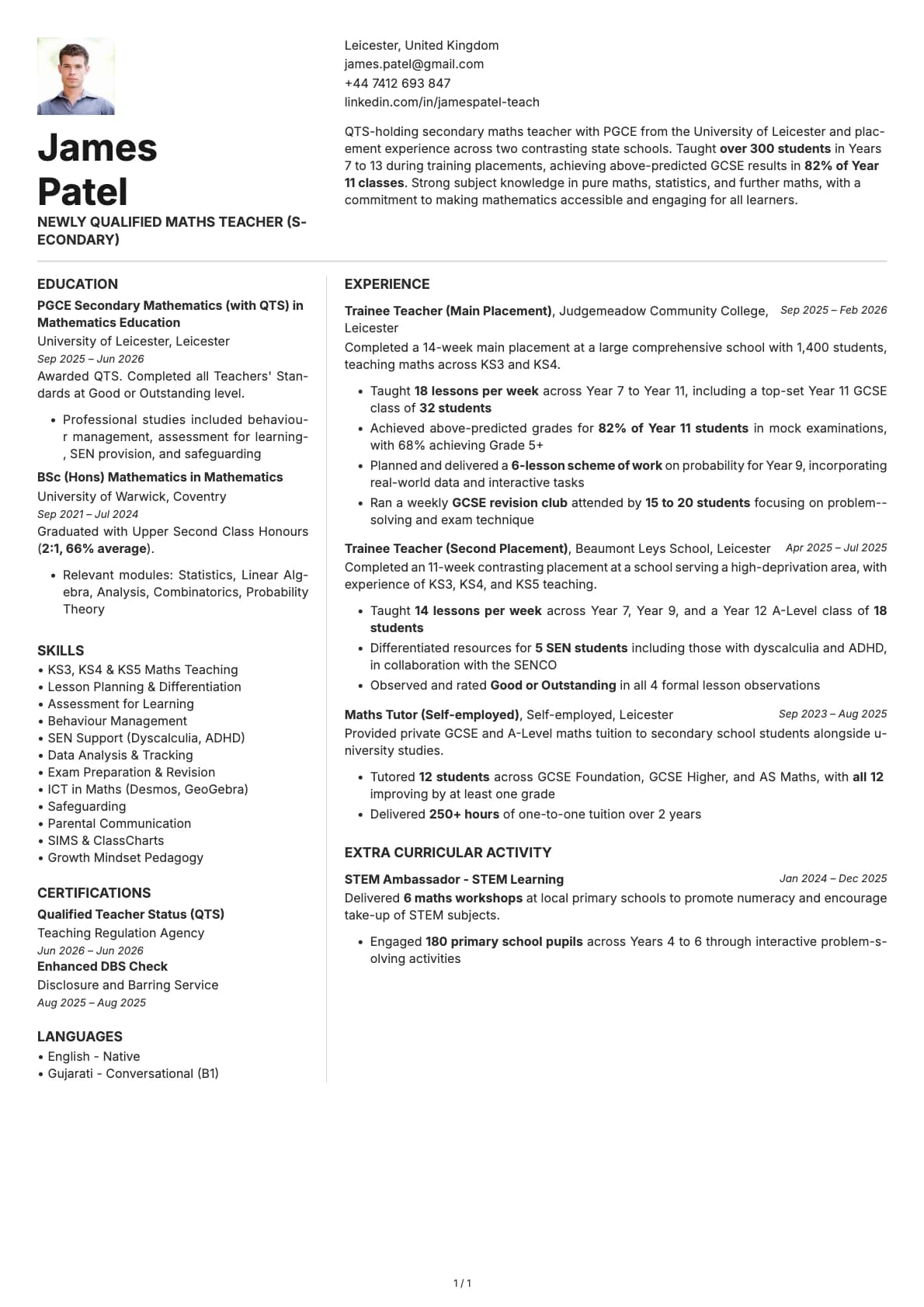
A newly qualified secondary maths teacher resume example with PGCE placement experience, student outcome data, and QTS for ECTs.
Newly Qualified Secondary Science Teacher
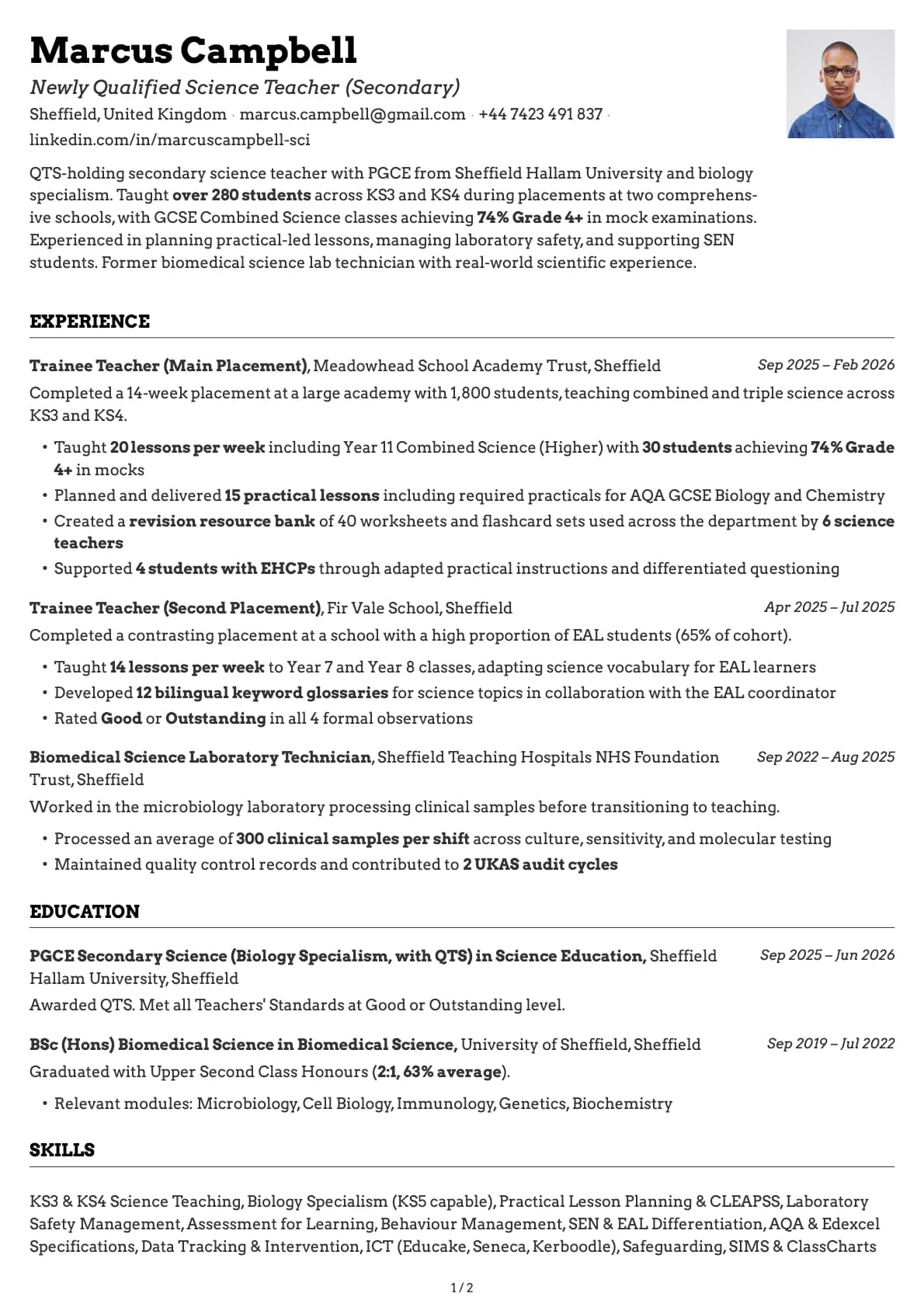
A newly qualified secondary science teacher resume example with PGCE placement data, GCSE results, and practical lesson experience for ECTs.

Newly Qualified Teacher
A newly qualified teacher resume example with school placements, QTS, and classroom experience. See how to present your training to stand out in NQT applications.
Paediatric Nurse
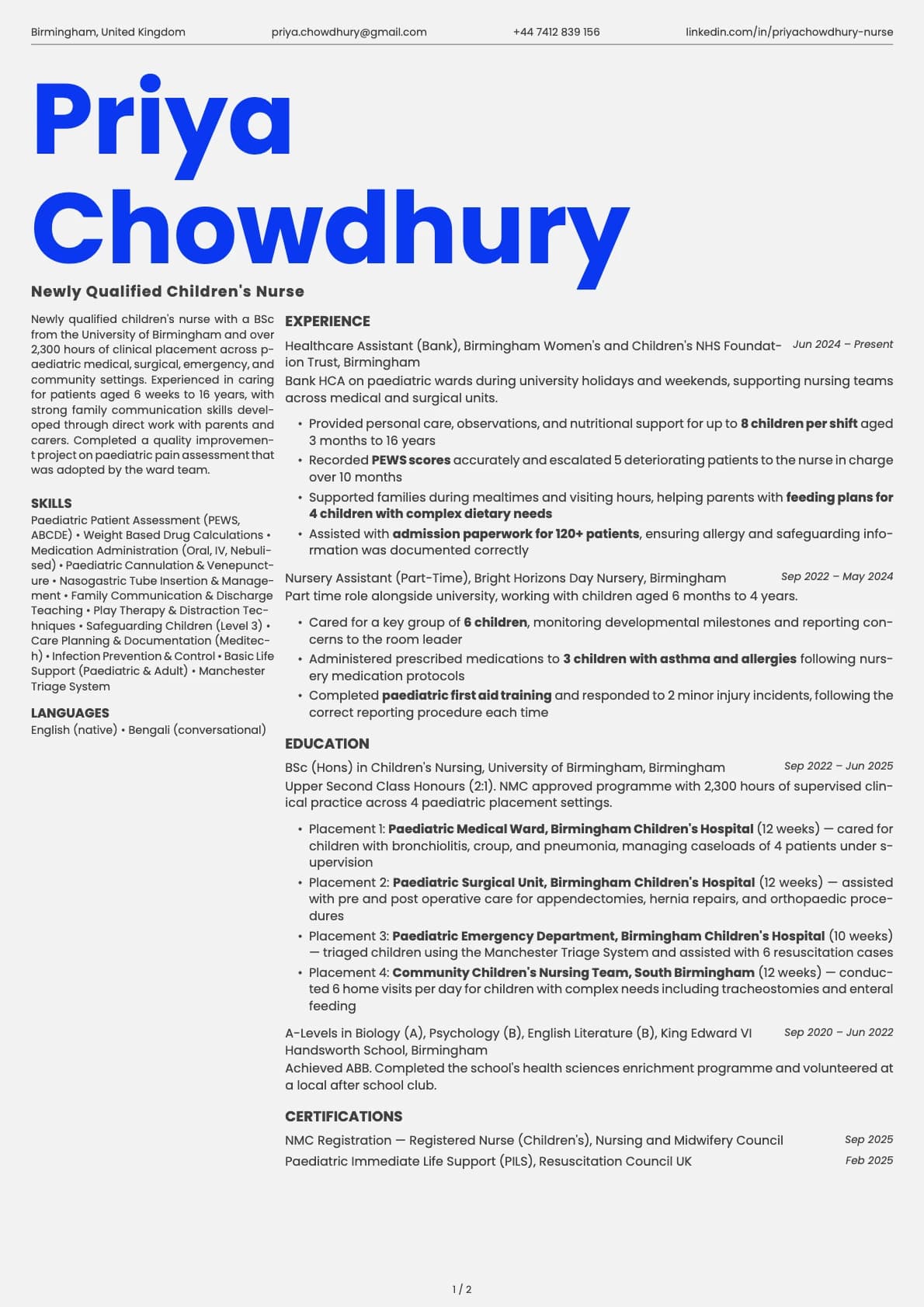
A newly qualified paediatric nurse resume example showing how to present children's nursing placements, family communication skills, and NMC registration for your first Band 5 role.
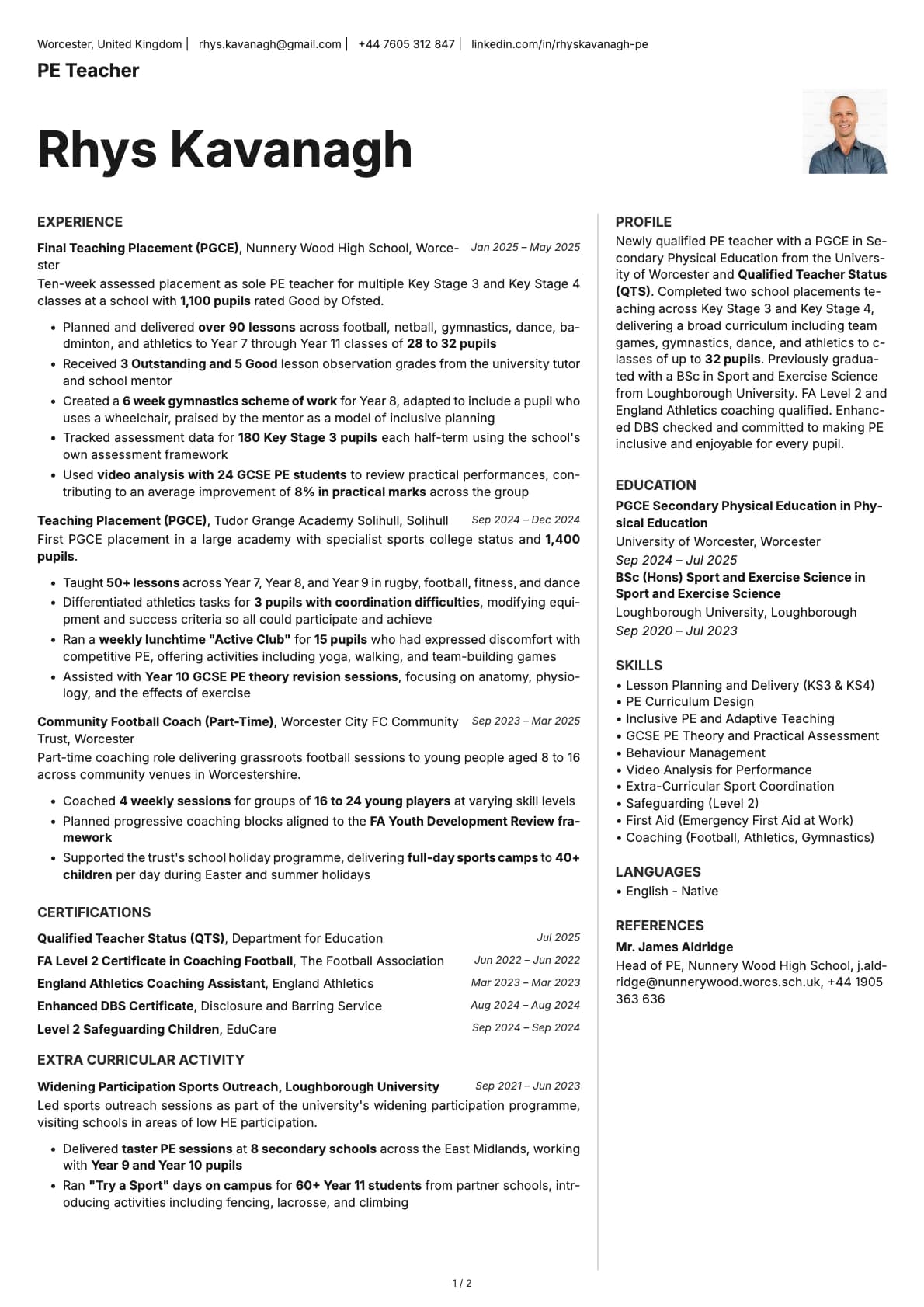
PE Teacher
A graduate PE teacher resume example with PGCE, QTS, and Key Stage 3/4 teaching placements. See how to present your coaching and teaching experience for PE teacher roles.
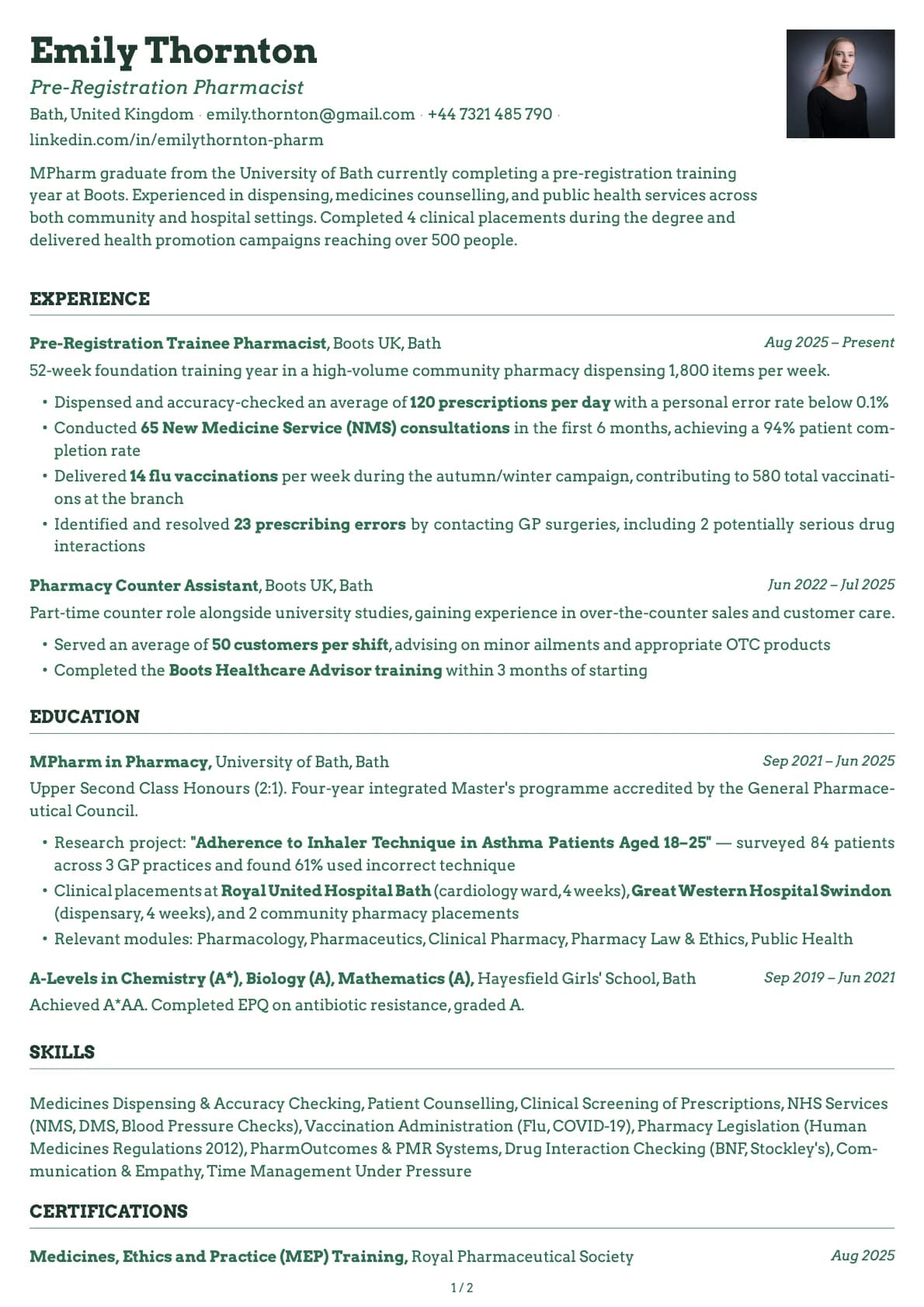
Pharmacy Intern
A pharmacy intern resume example for recent graduates. See how to present your dispensing experience, clinical placements, and patient interaction skills to land your first pharmacy role.
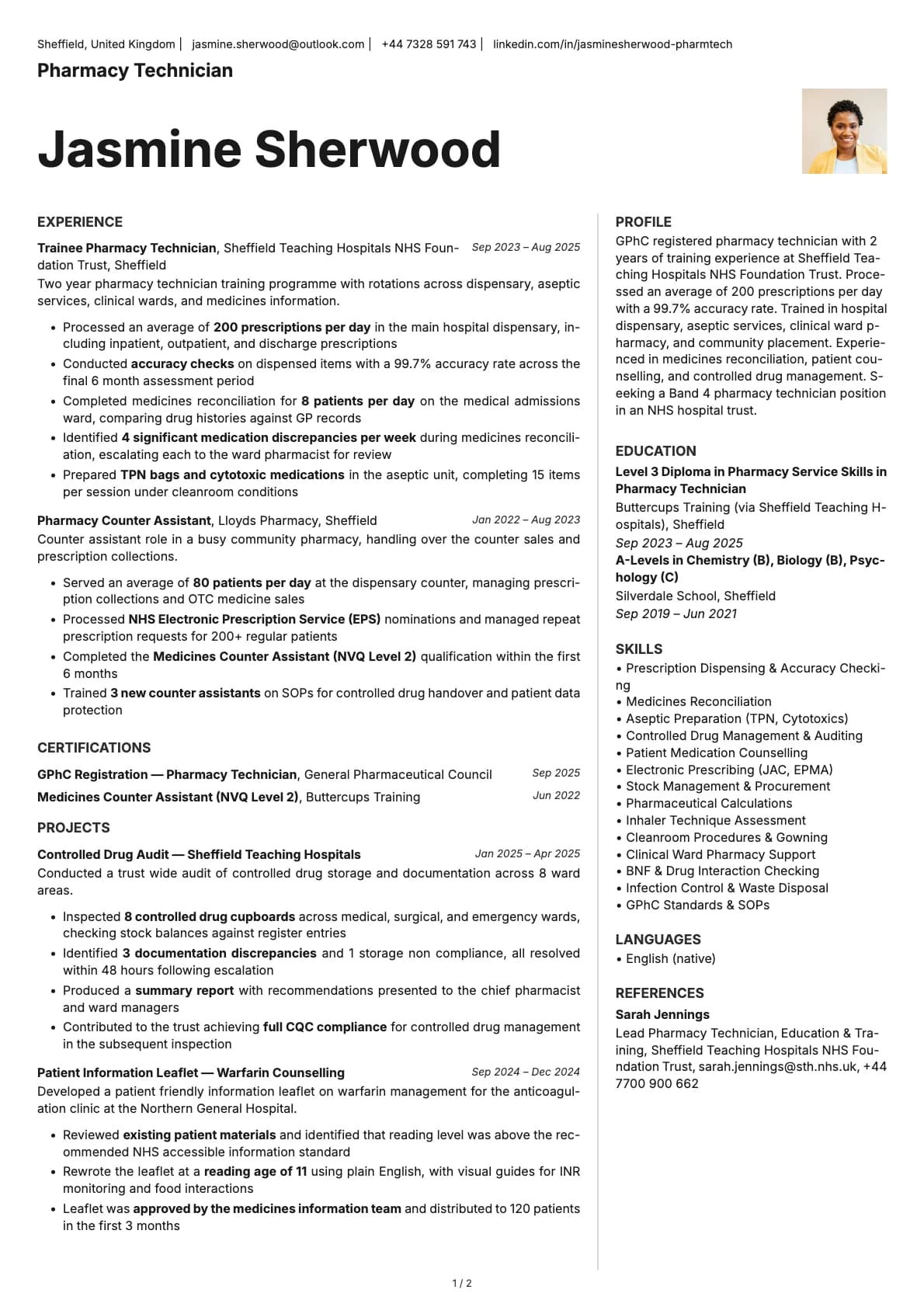
Pharmacy Technician
A pharmacy technician resume example for newly qualified candidates showing how to present GPhC registration, dispensing accuracy, and clinical skills for NHS and community pharmacy roles.
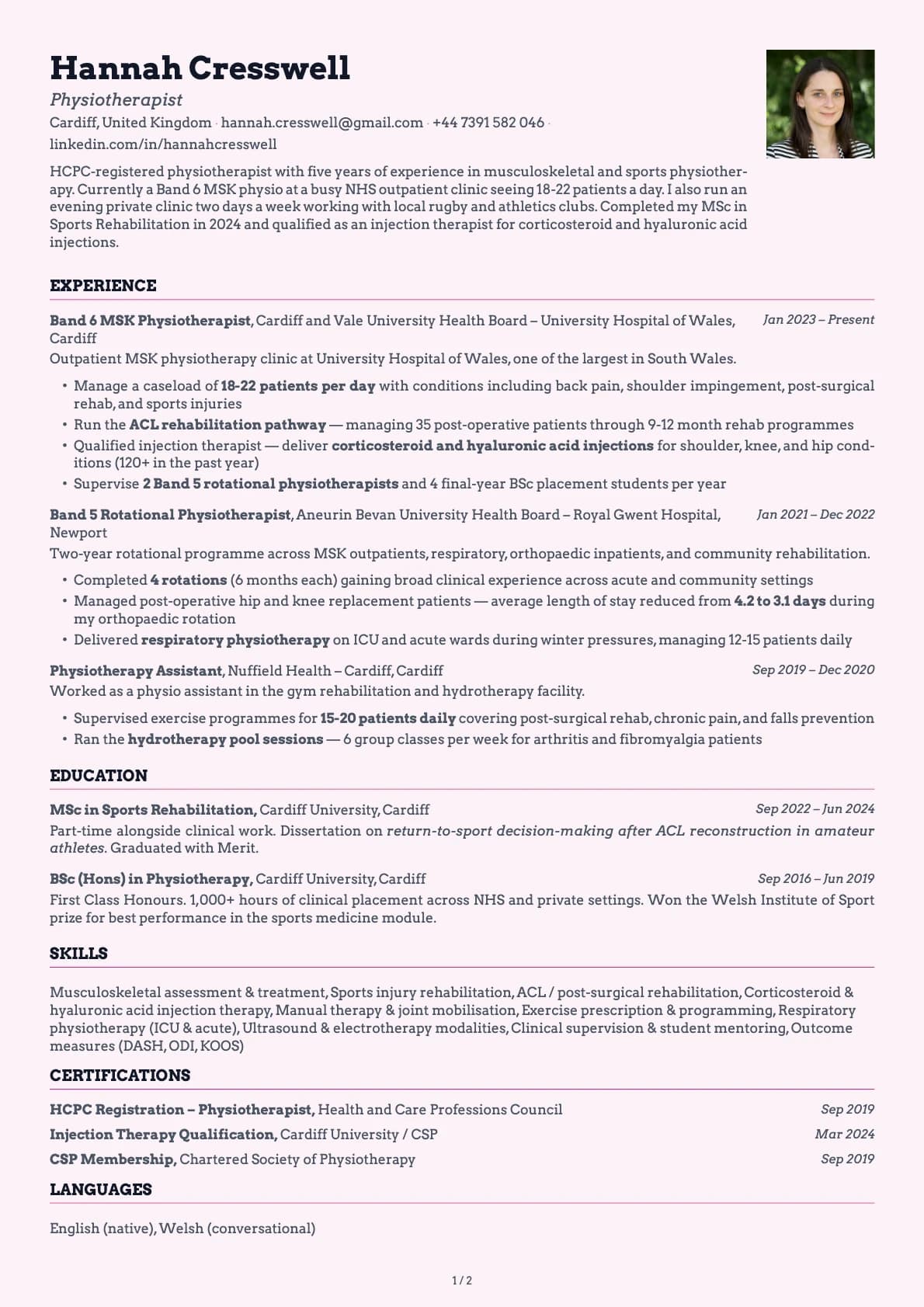
Physiotherapist
A physiotherapist resume example with NHS placement experience. See how to present clinical placements, patient outcomes, and HCPC registration on your first CV.
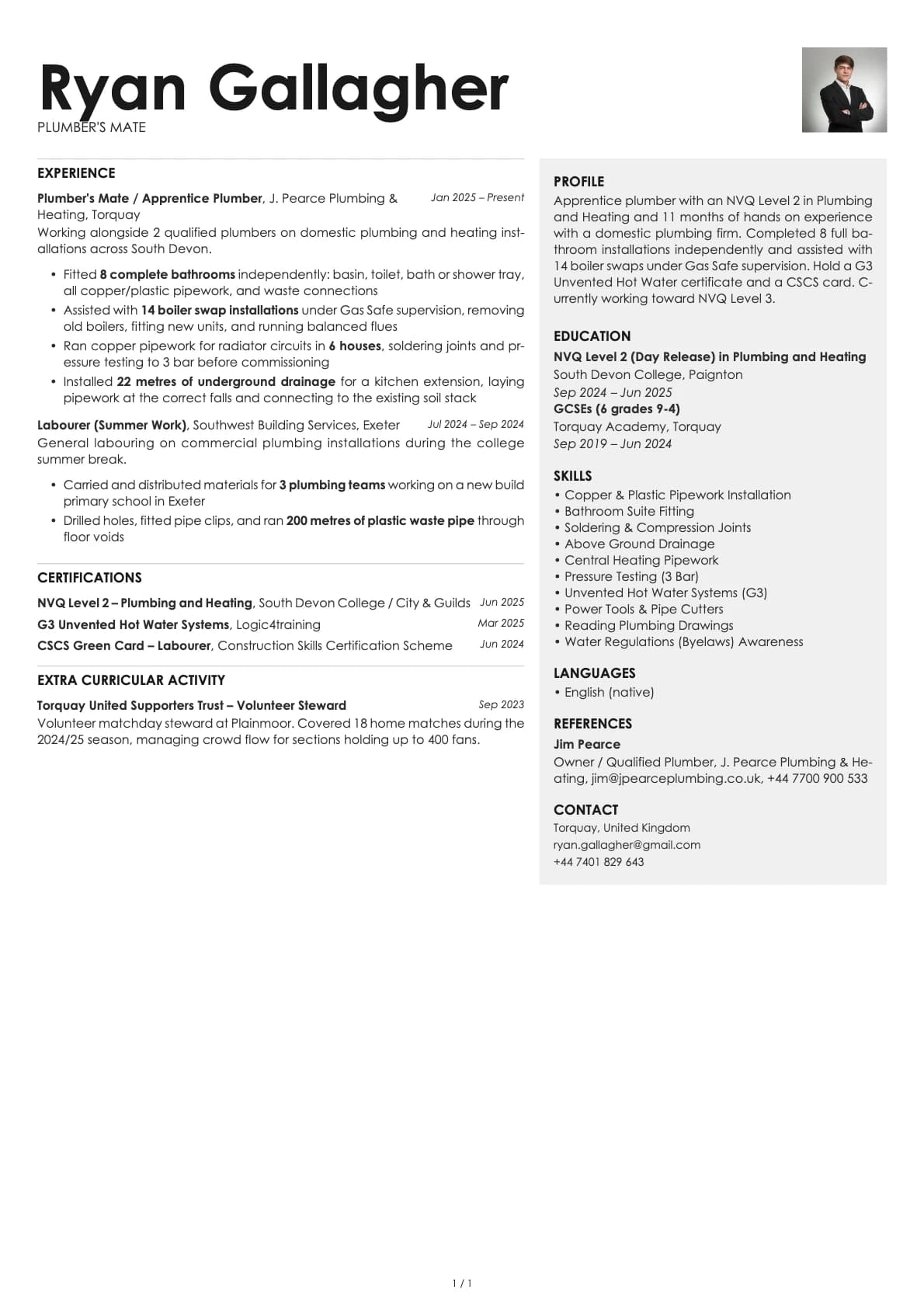
Plumber's Mate
A plumber's mate resume example for apprentice plumbers with NVQ Level 2 qualifications. See how to present your practical plumbing experience for your first employed role.
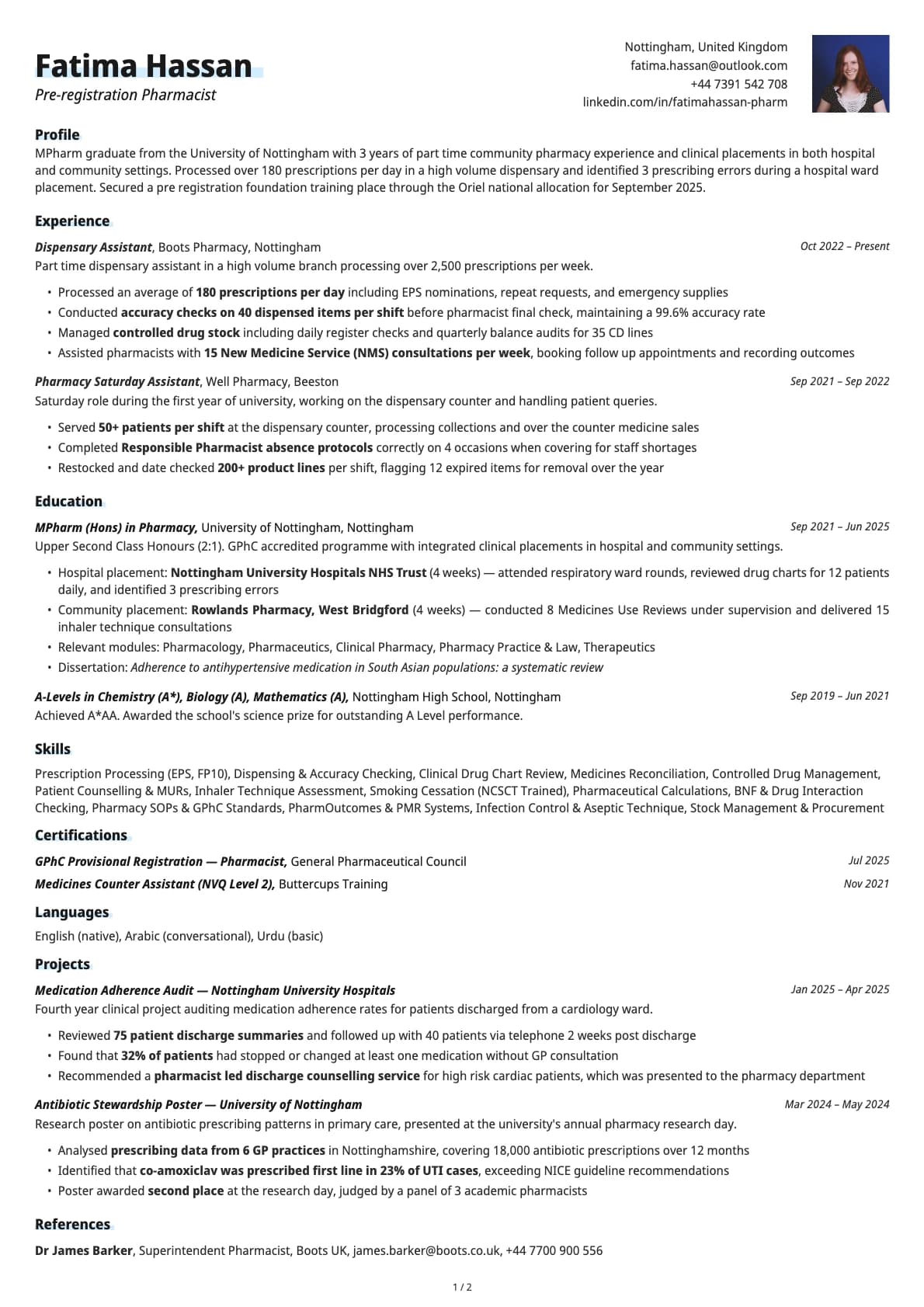
Pre-registration Pharmacist
A pre-registration pharmacist resume example showing how to present your MPharm degree, clinical placements, and GPhC registration progress for your foundation year role.
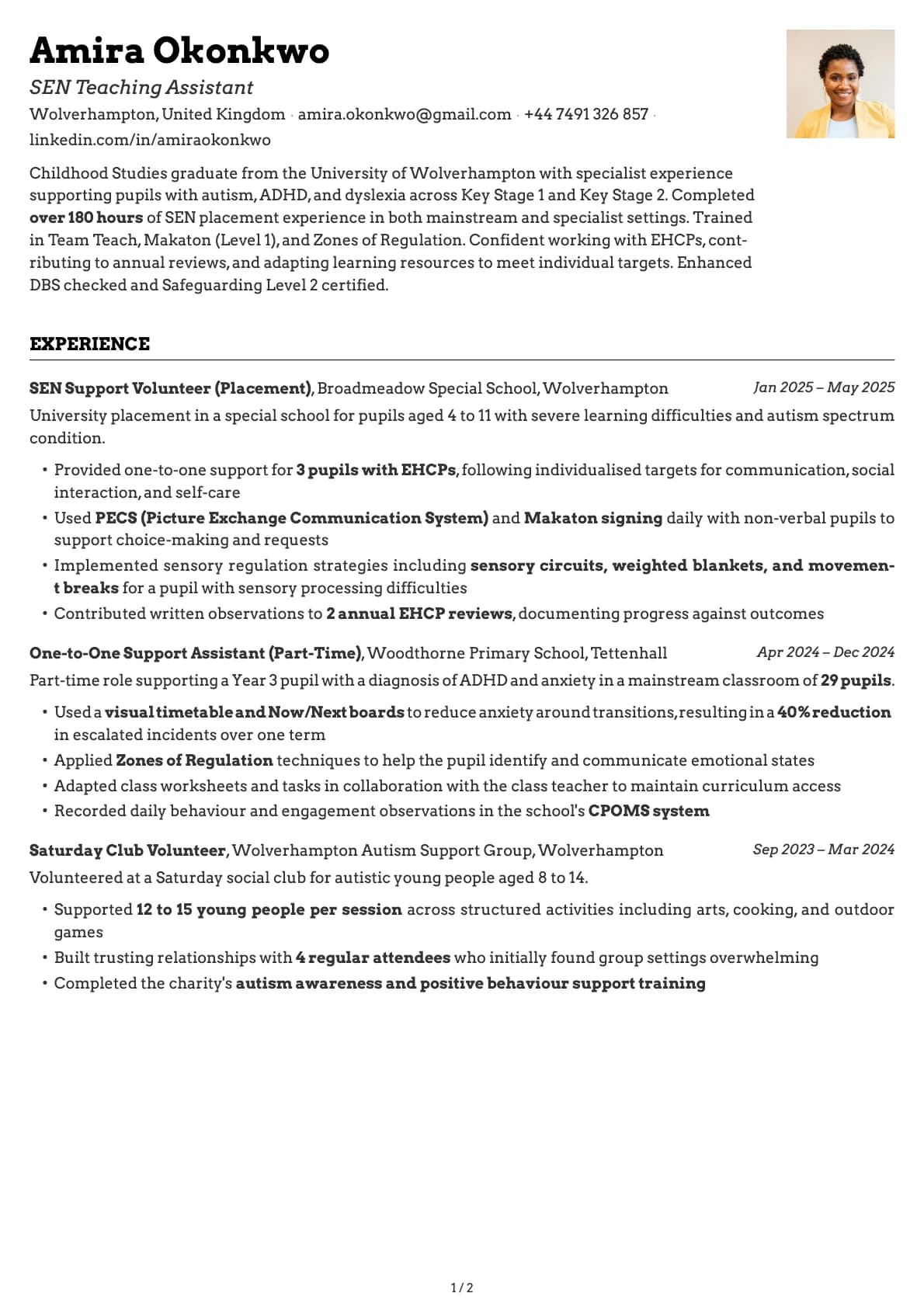
SEN Teaching Assistant
A graduate SEN teaching assistant resume example with SEND placement experience, EHCPs, and autism support. See how to present your specialist skills for SEN TA roles.
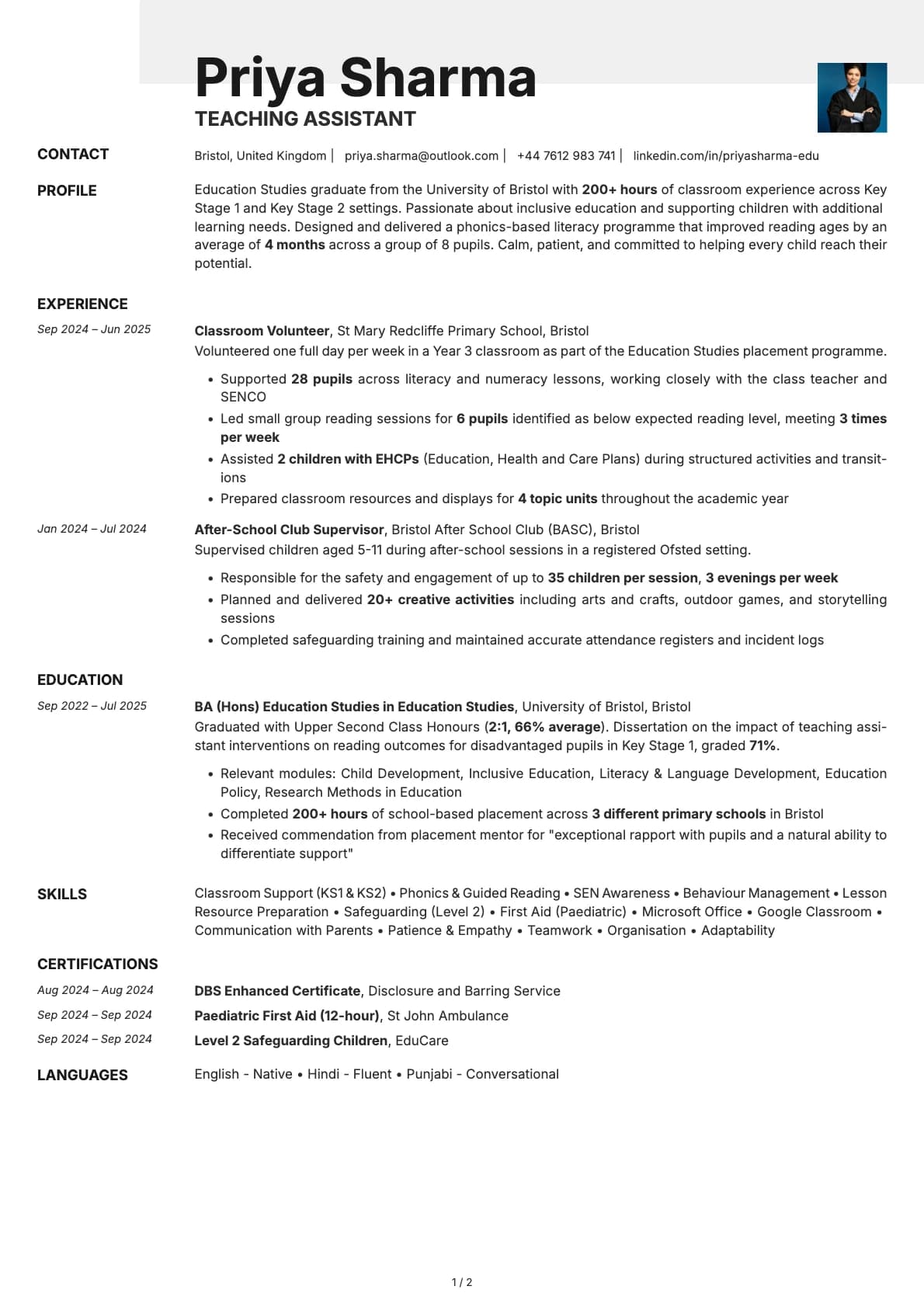
Teaching Assistant
A teaching assistant resume example for recent graduates. See how to present your classroom experience, volunteer work, and education degree to get hired as a TA.