Graduate Forensic Scientist Resume Example
A graduate forensic scientist resume example with police lab placement experience, DNA profiling skills, and chain of custody knowledge.

Laddro Team
Free to use. No account needed to start.
Free to use. No account needed to start.
Overview
Forensic science is one of the most competitive graduate fields, with far more applicants than positions available at forensic providers and police forces. What separates successful candidates is genuine laboratory placement experience, especially in an operational forensic setting where chain of custody and quality management are non-negotiable.
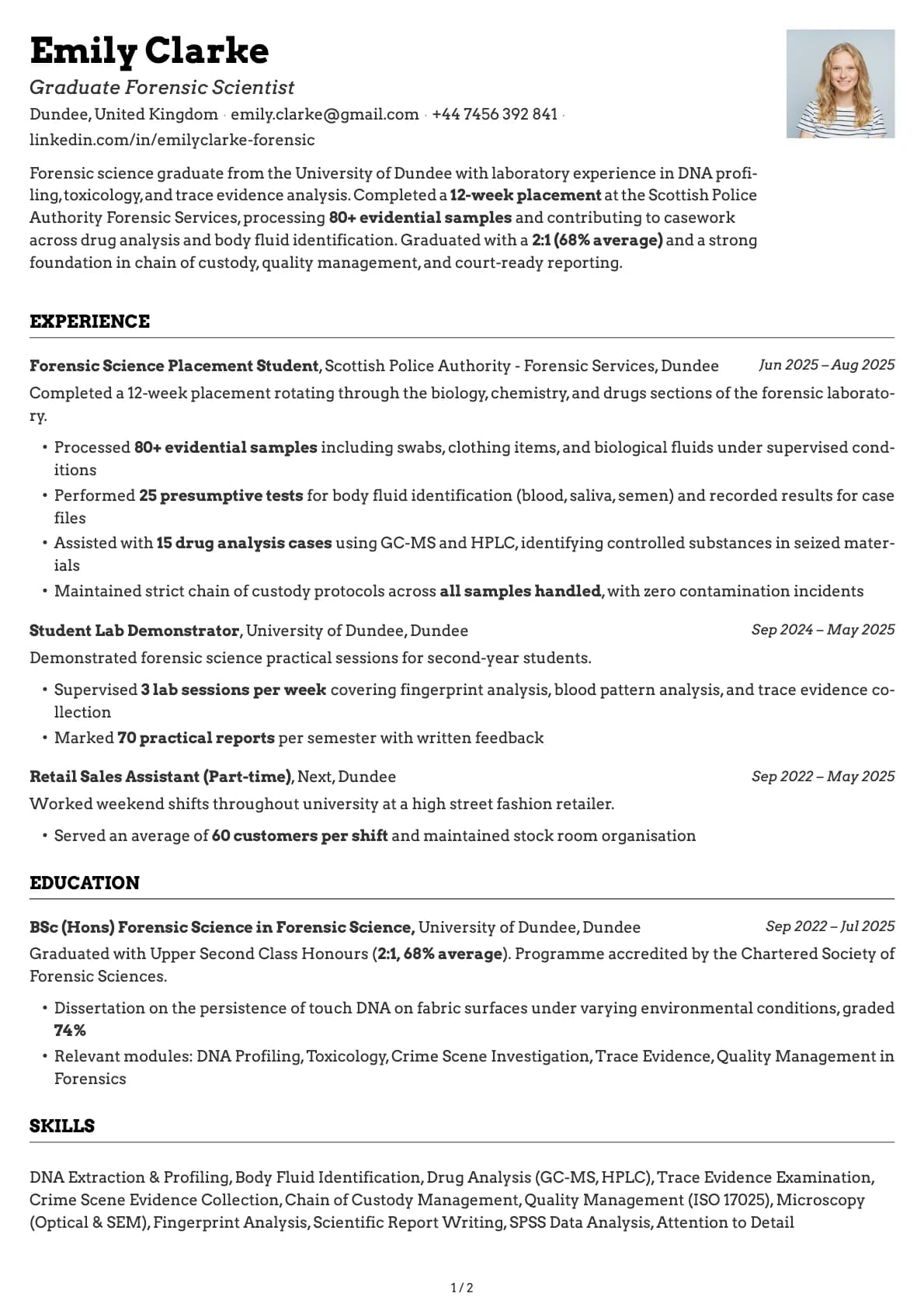
This resume belongs to Emily Clarke, a forensic science graduate from the University of Dundee who completed a 12-week placement at the Scottish Police Authority Forensic Services laboratory. She processed over 80 evidential samples, assisted with 15 drug analysis cases, and maintained zero contamination incidents across all samples handled. Her dissertation on touch DNA persistence demonstrates research capability in a directly relevant area.
What Makes This Resume Work
Operational forensic laboratory experience is extremely rare. Most forensic science graduates only have university lab experience. Emily's placement at an actual police forensic laboratory, working with real evidential samples under chain of custody protocols, immediately sets her apart from the majority of applicants.
Sample processing volume demonstrates competence. Handling 80 samples, performing 25 presumptive tests, and assisting with 15 drug analysis cases shows Emily has been productive in a real laboratory setting, not just observing from the sidelines.
Quality management awareness runs through the resume. Mentioning ISO 17025, chain of custody, and zero contamination incidents tells employers that Emily understands the quality culture that underpins all forensic science work. In a field where evidence integrity can determine criminal outcomes, this awareness is essential.
Key Takeaways
Graduate forensic scientists should highlight any placement or work experience in an operational forensic setting, with specific sample counts, test types performed, and quality metrics. Chartered Society of Forensic Sciences membership should be listed, and any research with forensic application (DNA, toxicology, trace evidence) adds depth. If you have experience with specific instruments (GC-MS, HPLC, CE) or software, describe what you used them for rather than just listing names.
Build your own version
Open this layout in the builder and swap in your own details. It takes a few minutes.
Free to use. No account needed to start.
Was this resume example helpful?
Rate this example to help us create better content for you.
4.7 average from 106 ratingsRelated resume examples
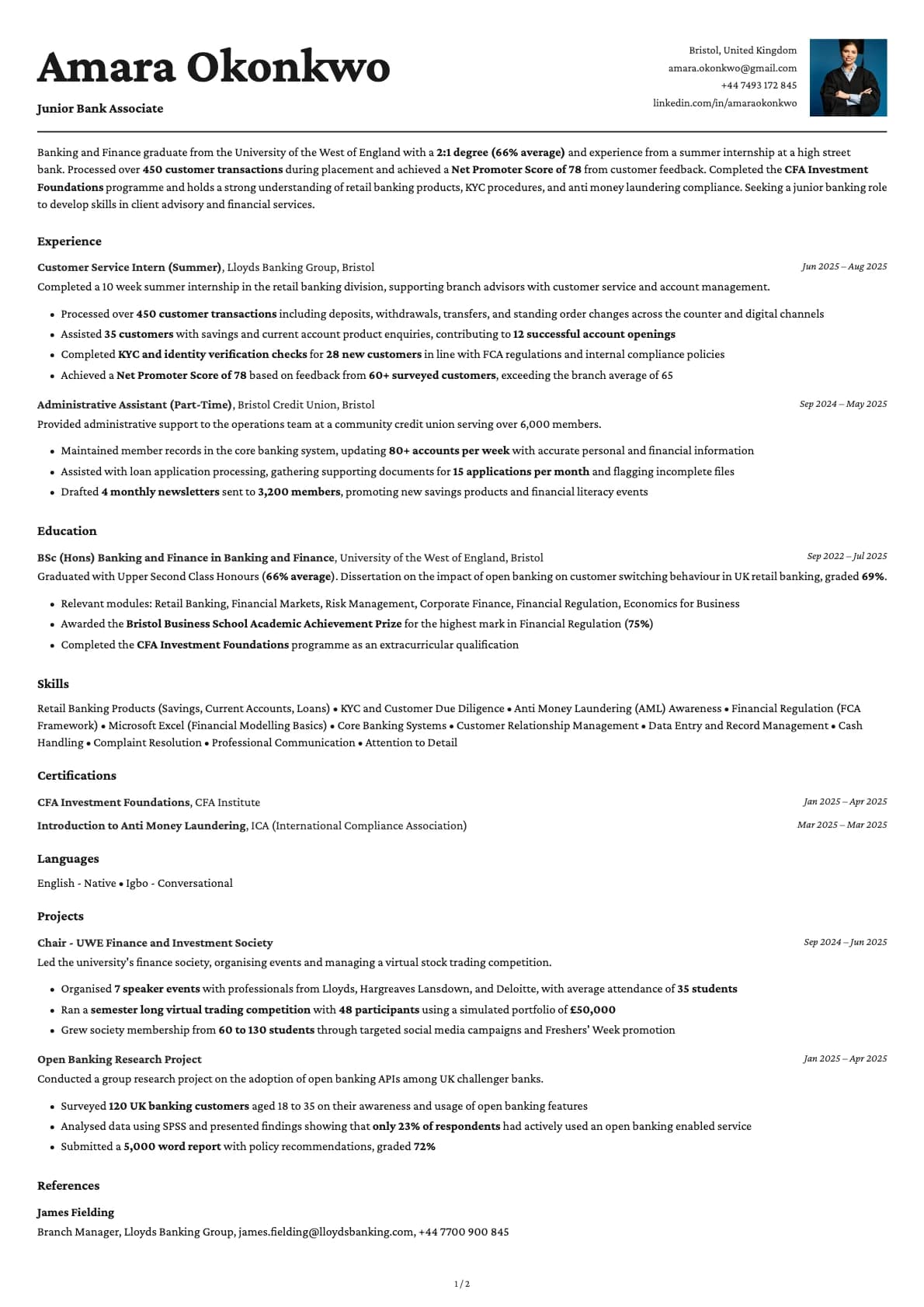
Junior Bank Associate
A junior bank associate resume example for banking graduates. See how to present your compliance knowledge, customer service skills, and internship experience.
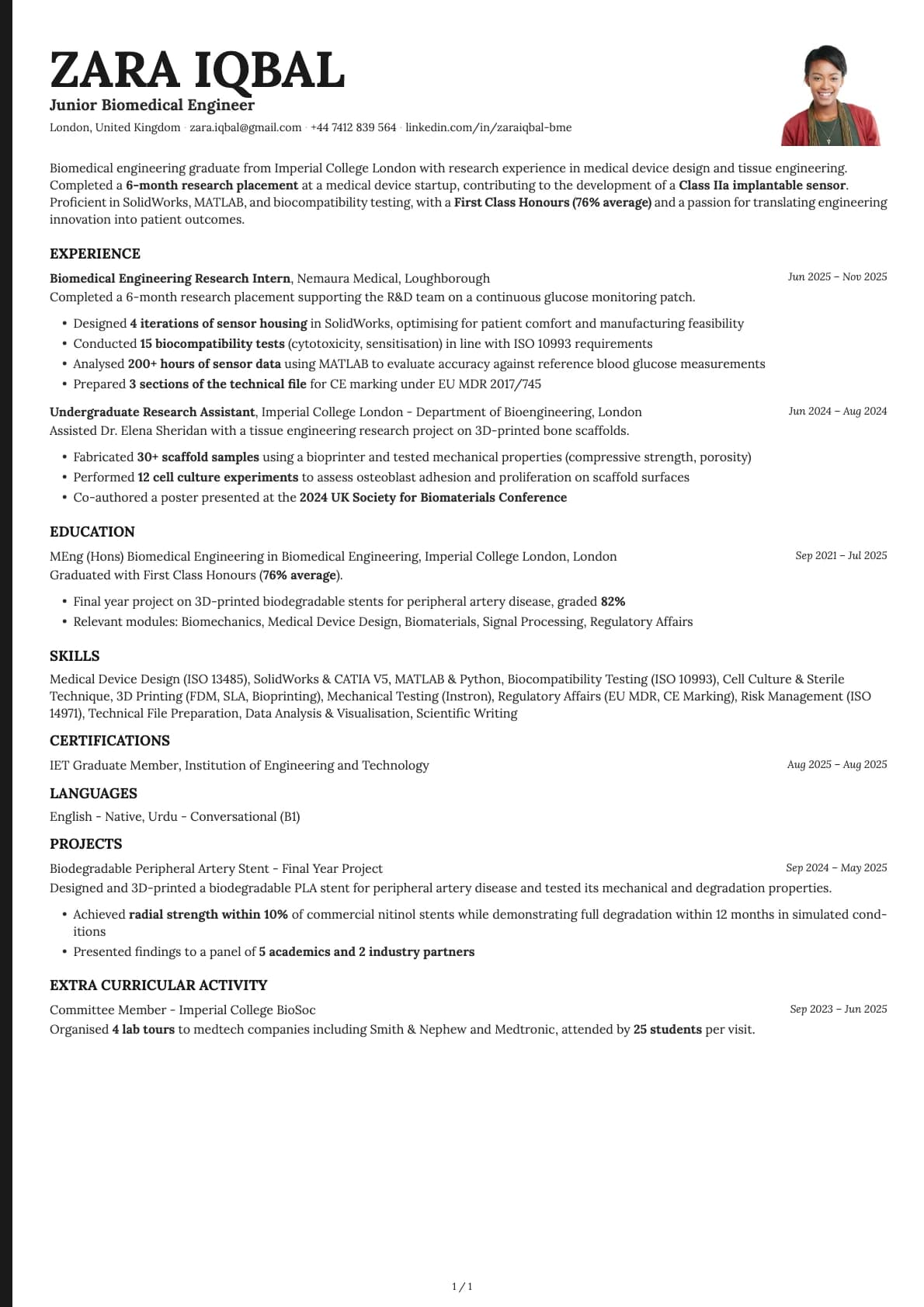
Junior Biomedical Engineer
A junior biomedical engineer resume example with medical device R&D experience, ISO standards knowledge, and research publications.
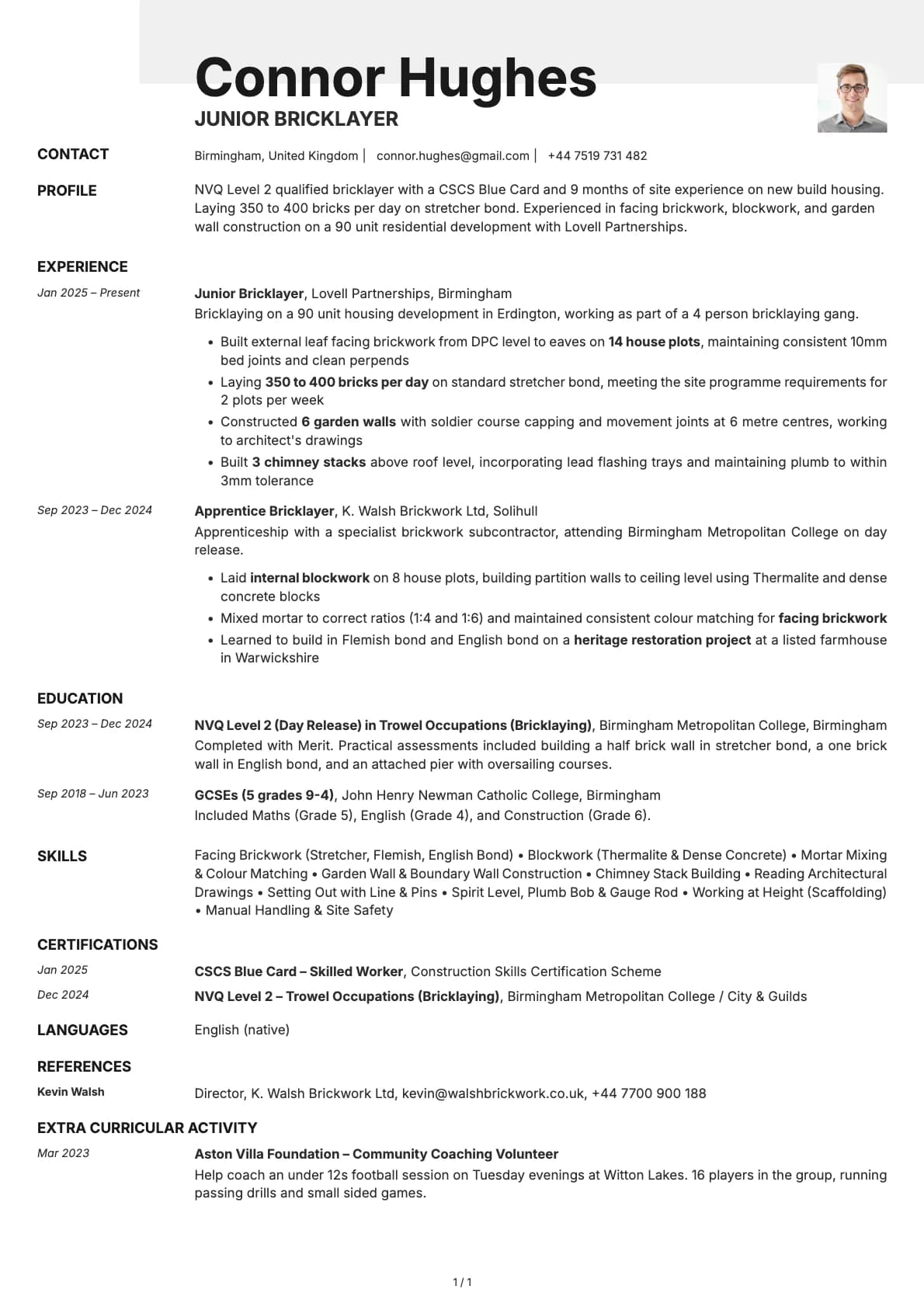
Junior Bricklayer
A junior bricklayer resume example for NVQ qualified bricklayers entering the trade. See how to present your bricklaying skills, CSCS card, and site experience.

Junior Business Analyst
A junior business analyst resume example for career changers. See how to use retail management and a business degree to break into business analysis.
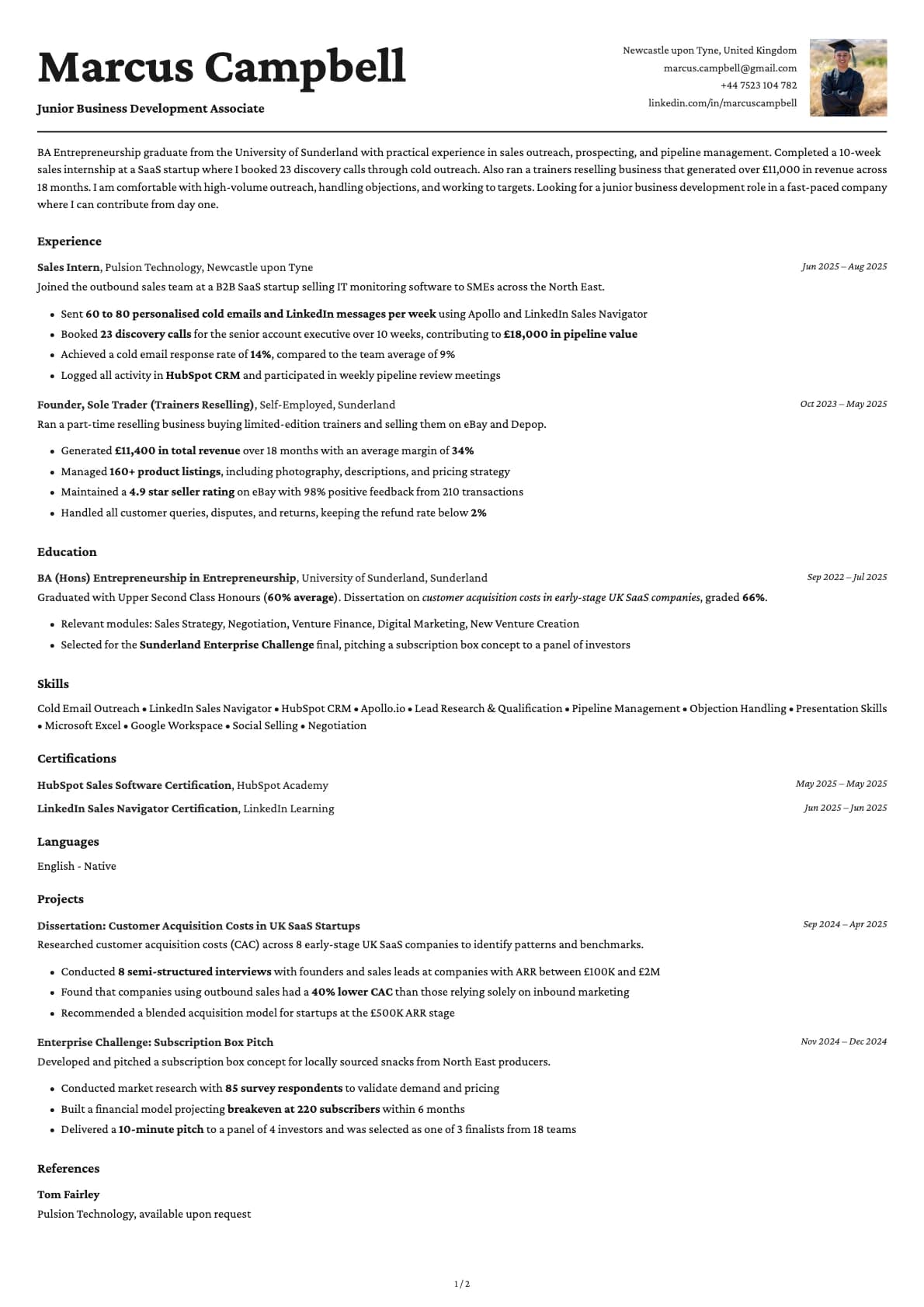
Junior Business Development Associate
A junior business development associate resume example for entrepreneurship graduates. See how cold outreach metrics and startup experience win interviews.
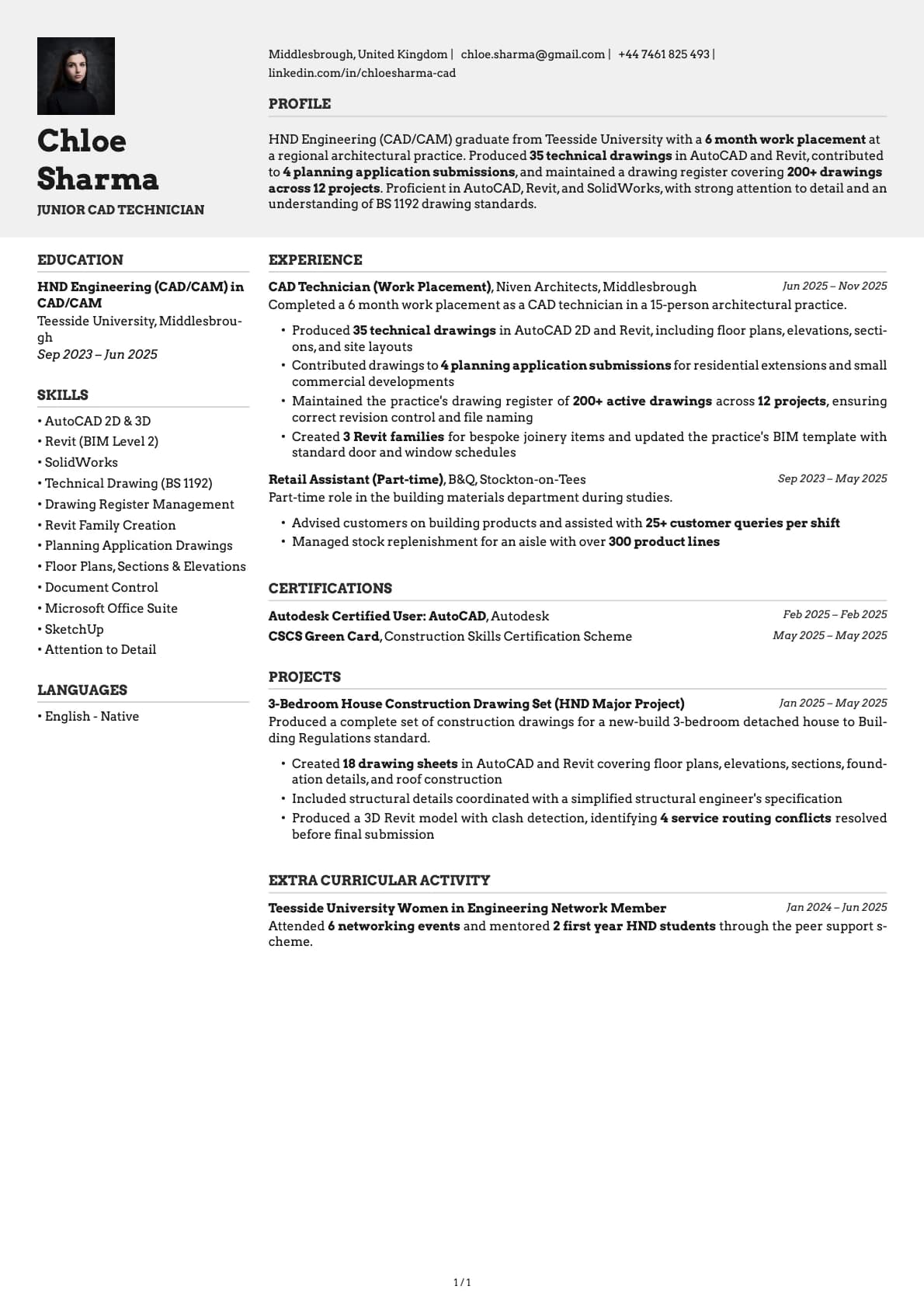
Junior CAD Technician
A junior CAD technician resume example with HND qualification, AutoCAD and Revit proficiency, and architectural practice experience.
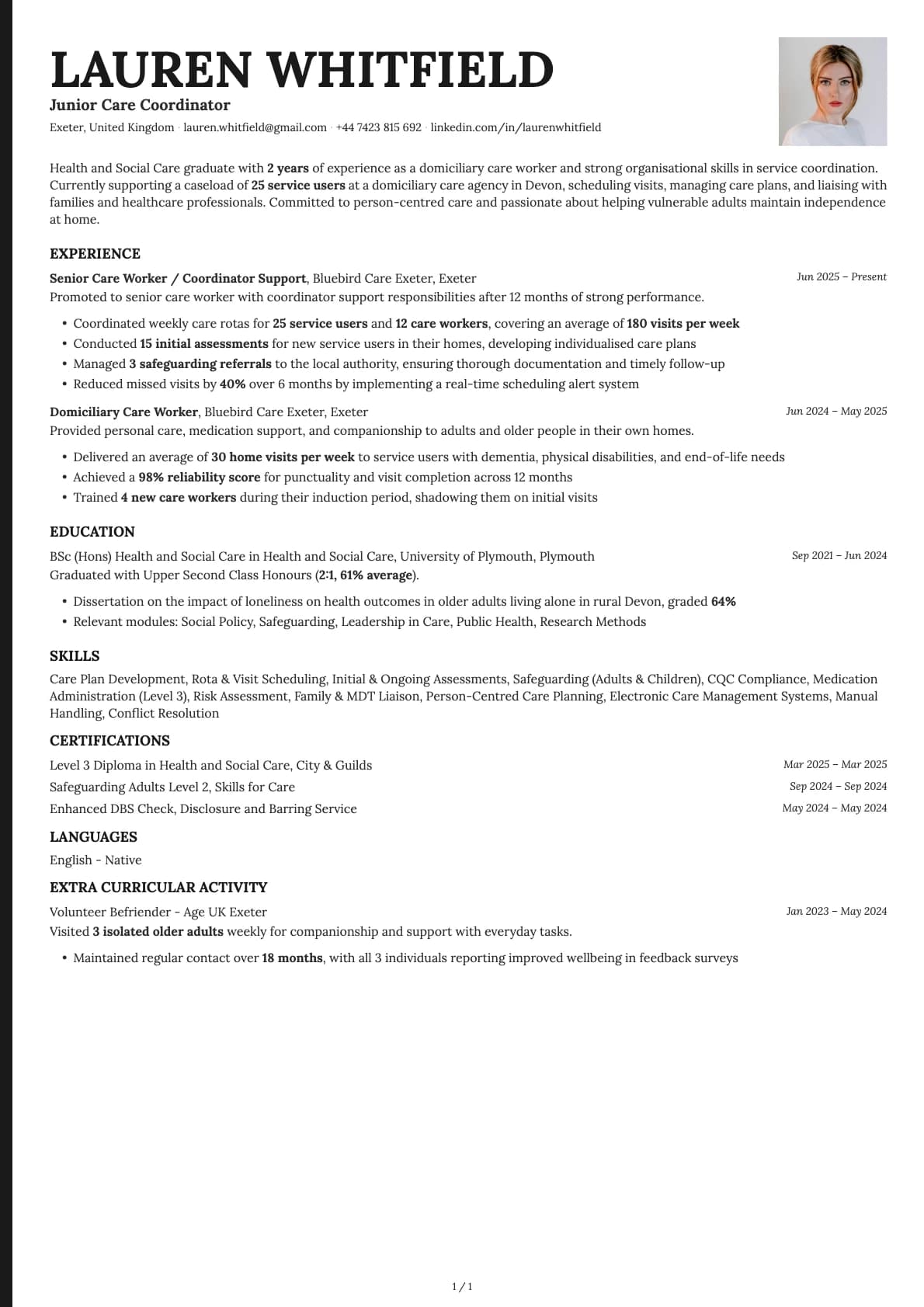
Junior Care Coordinator
A junior care coordinator resume example with domiciliary care experience, rota management numbers, and CQC compliance for new coordinators.
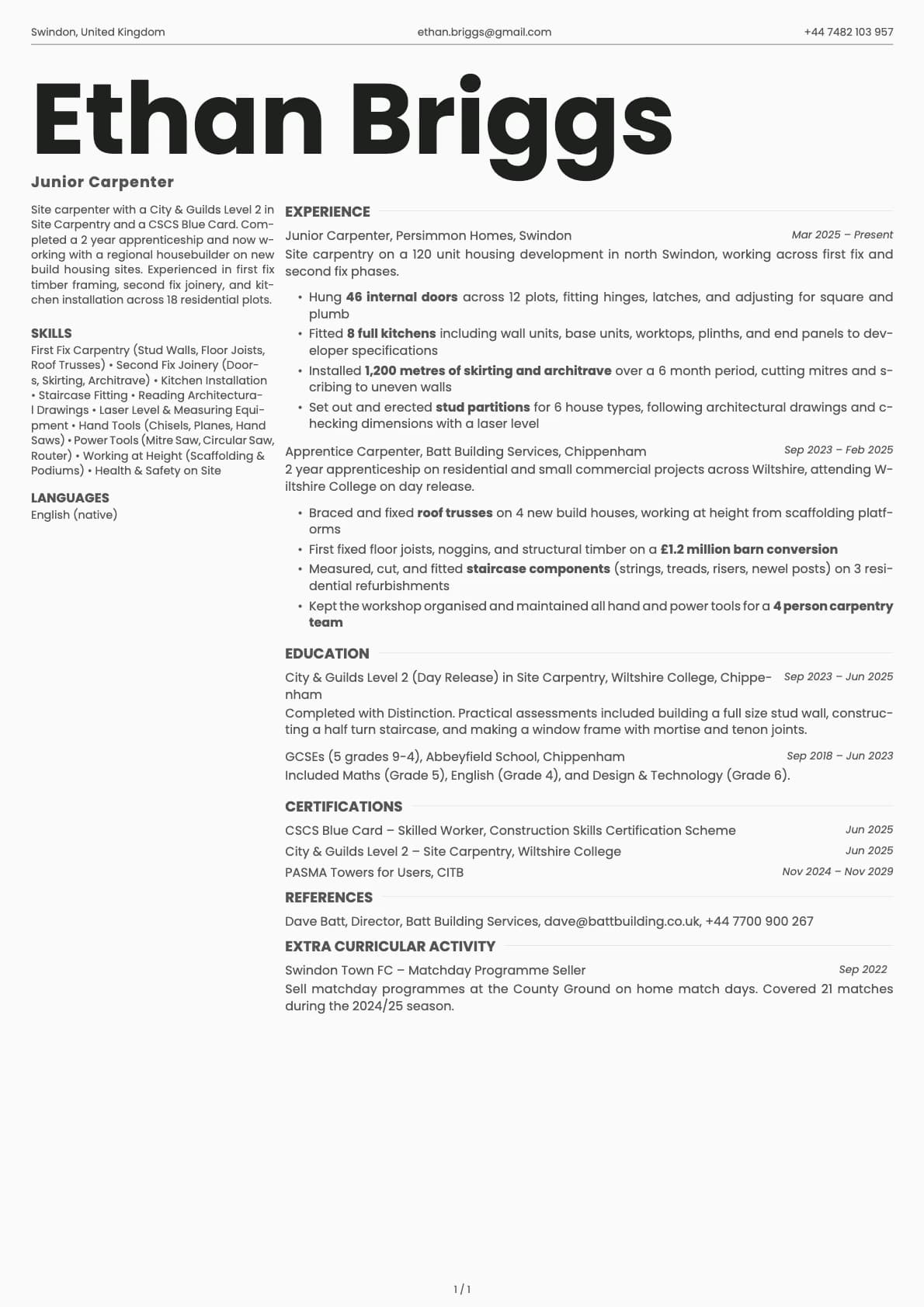
Junior Carpenter
A junior carpenter resume example for carpentry apprenticeship graduates. See how to present your City & Guilds, site joinery experience, and CSCS card details.
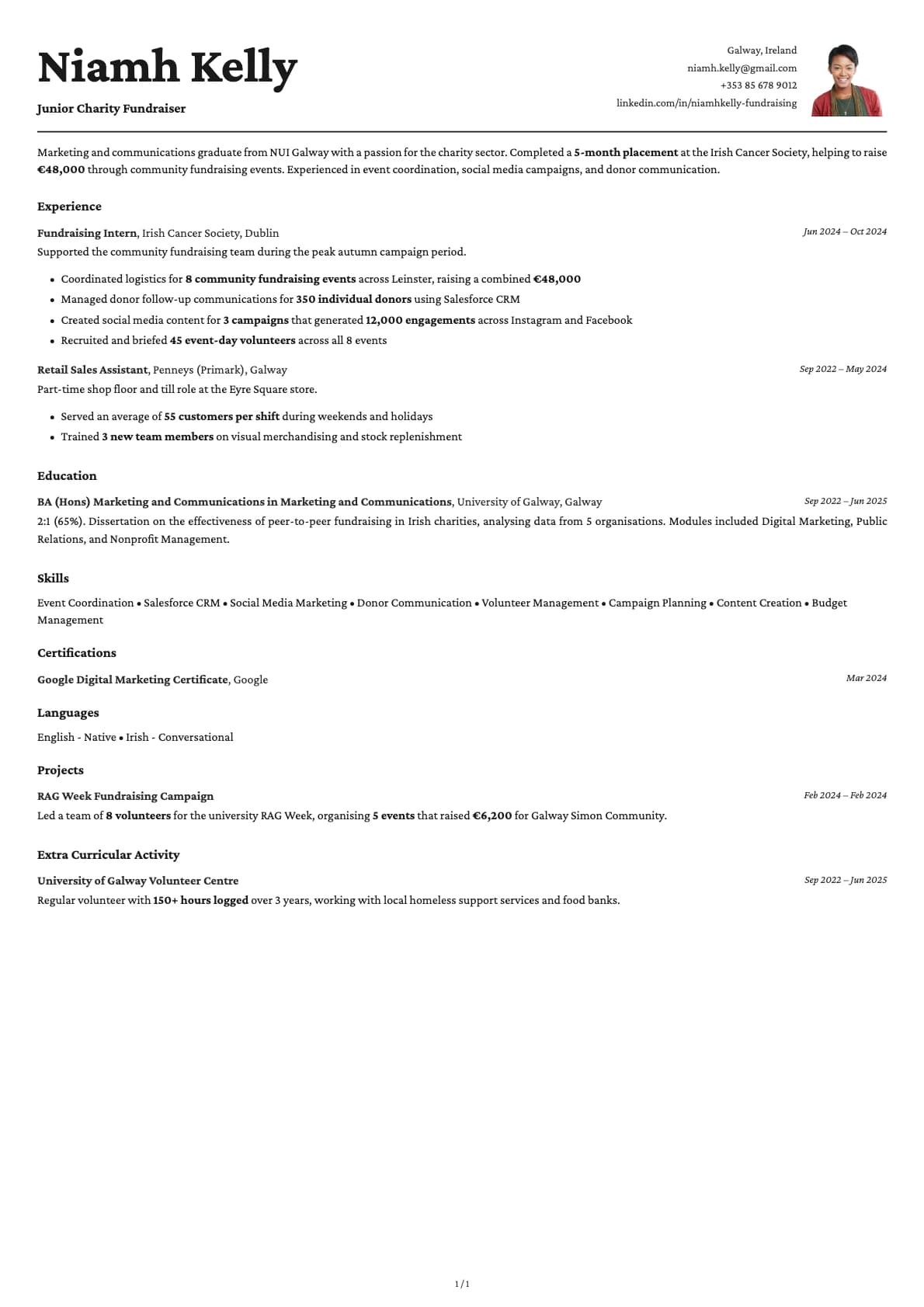
Junior Charity Fundraiser
A junior charity fundraiser resume example with Irish Cancer Society internship and event coordination experience.
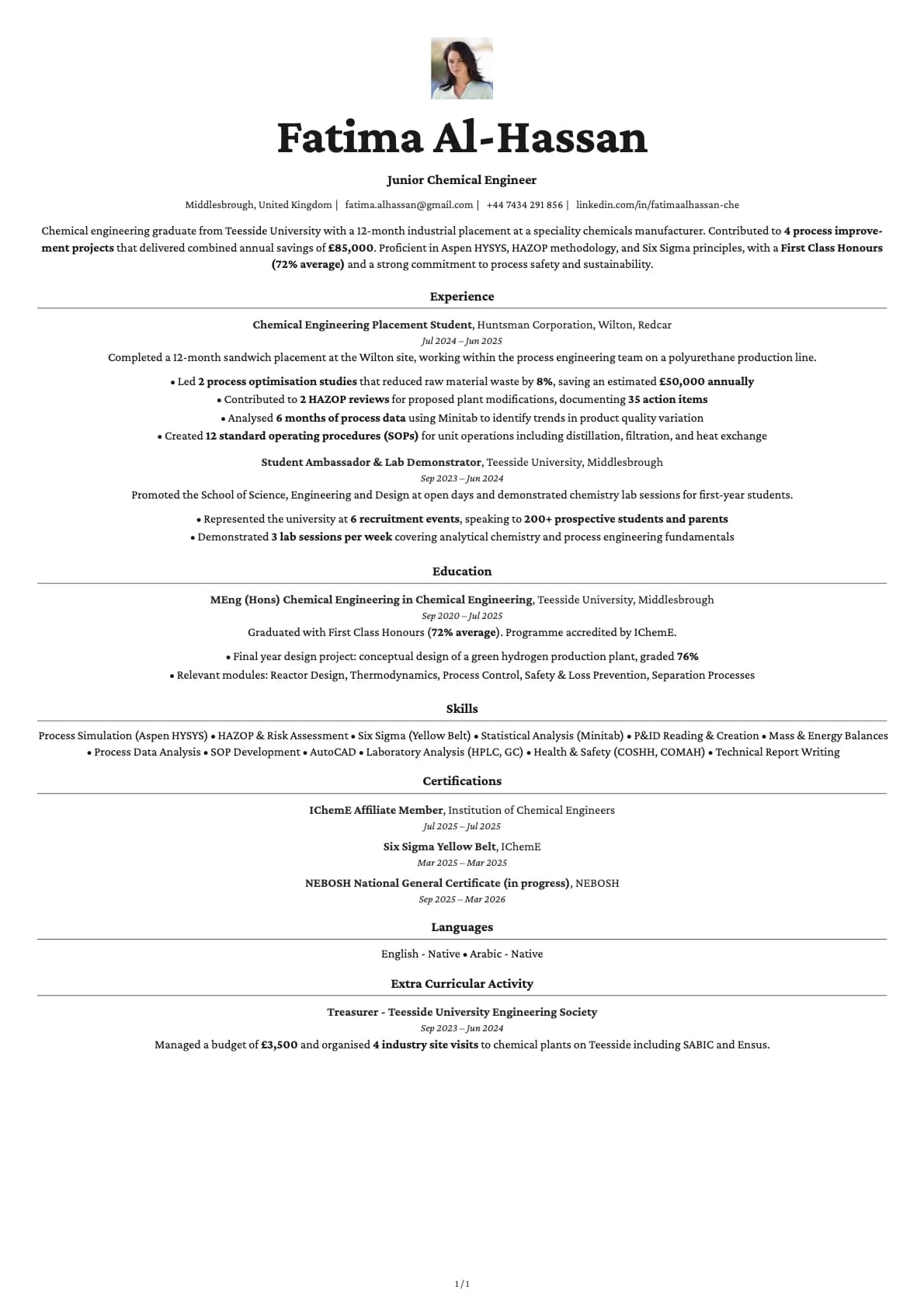
Junior Chemical Engineer
A junior chemical engineer resume example with industrial placement experience, process improvement savings, and IChemE membership for graduates.
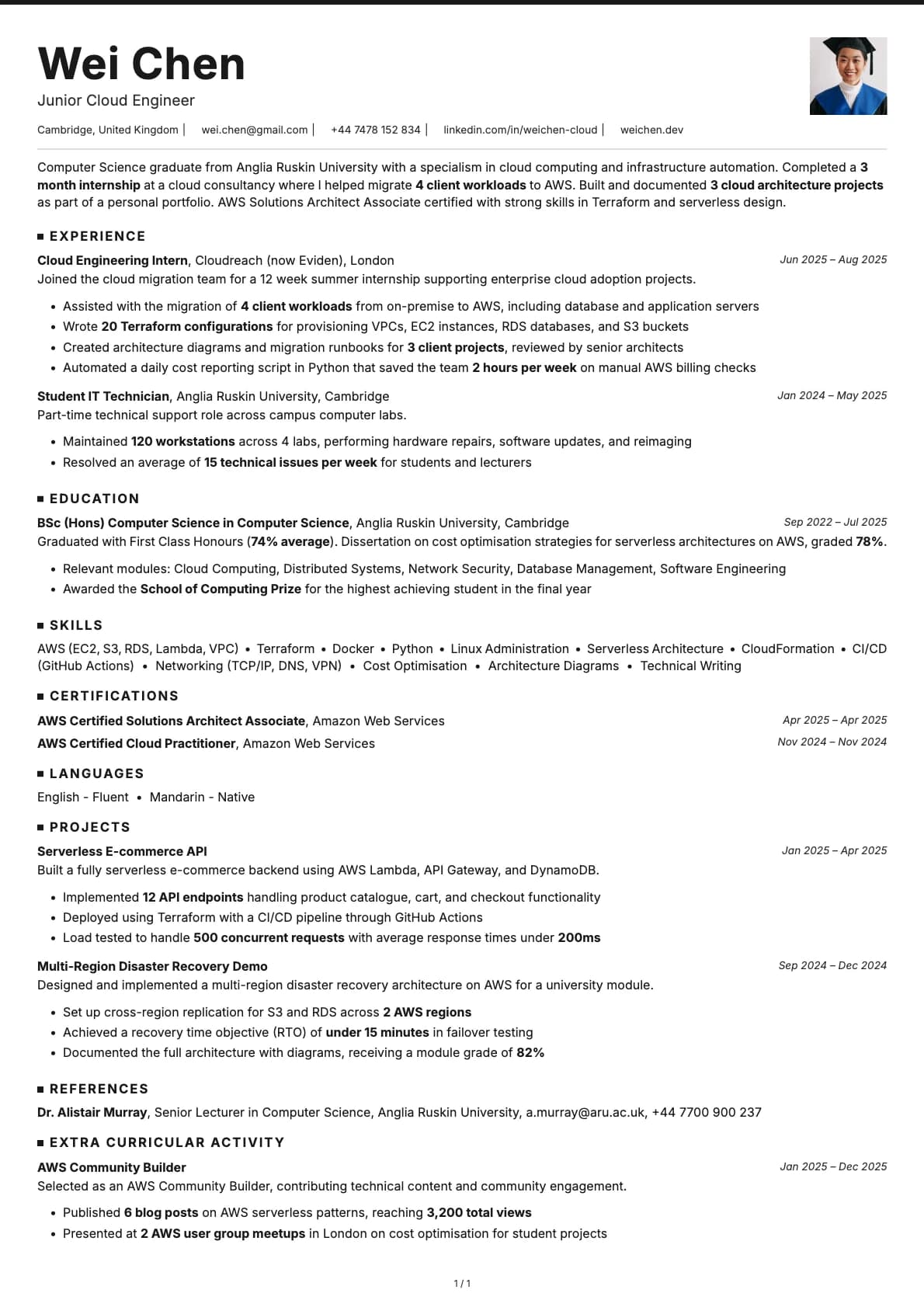
Junior Cloud Engineer
A junior cloud engineer resume example for graduates. Learn how to present AWS experience, Terraform skills, and cloud certifications to land your first cloud engineering role.
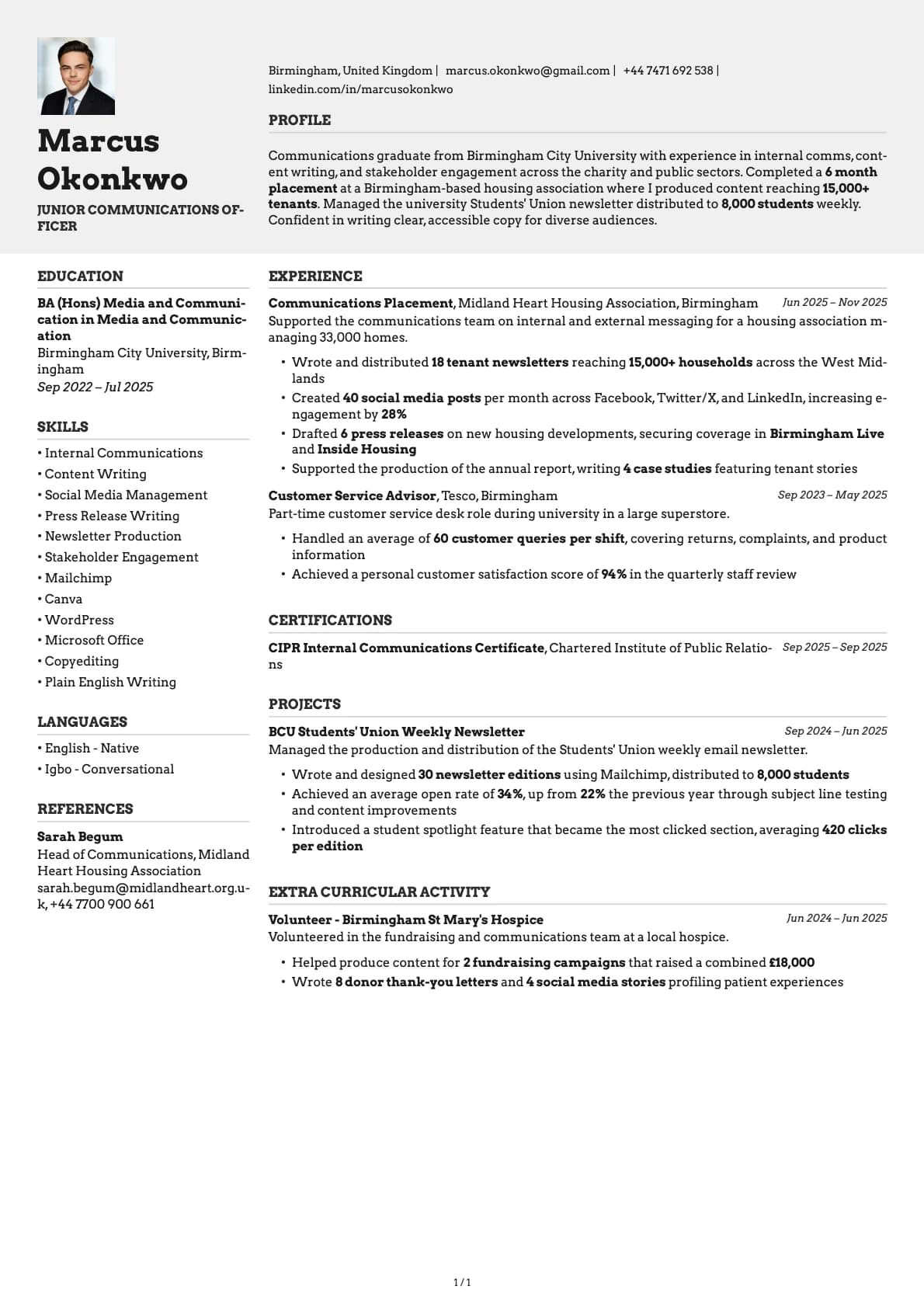
Junior Communications Officer
A junior communications officer resume example for graduates. See how to present internal comms, content writing, and stakeholder engagement experience to land your first comms role.